

Beef Giants JBS and Minerva Stockpile for China's 2027 Quota
Brazilian meatpackers JBS and Minerva are stockpiling beef to prepare for China's 2027 import quota, temporarily weighing on cash flows and leverage.
Key takeaways
- Brazilian meatpackers are stockpiling beef ahead of China's 1.128 million metric ton 2027 quota, per the Brazil Stock Guide
- Brazil's 1.106 million metric ton 2026 export quota was fully exhausted in September, per Rico aos Poucos
- JBS reported its net debt-to-EBITDA leverage rose to 3.54 times in Q3 2026, per its SEC filing on November 9, 2026
- Minerva posted a net loss of R$717 million for Q3 2026 as cash generation slowed, per company financial results reported on November 11, 2026
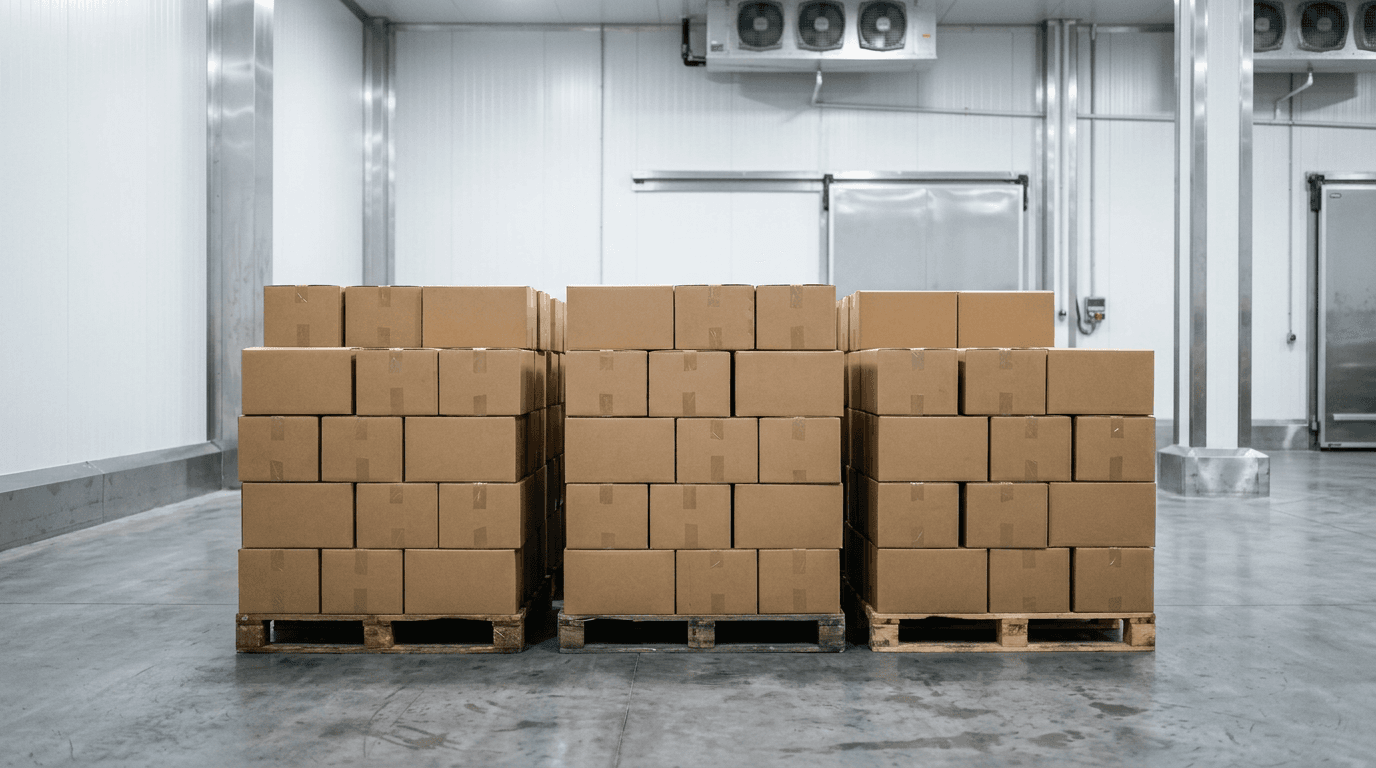
Brazilian meatpacking giants JBS S.A. and Minerva S.A. are aggressively building up beef inventories to prepare for China's upcoming 2027 import quota, which is capped at 1.128 million metric tons [1.21]. For global investors tracking these major exporters, the cash-flow impact of these jbs minerva beef inventories china 2027 quota strategies has temporarily heightened leverage and weighed on third-quarter balance sheets [1.21]. This strategic stockpiling aims to secure early-year quota allocations, according to a report by the Brazil Stock Guide [1.21].
The aggressive inventory build-up began after Brazil's 2026 duty-free beef export allocation of 1.106 million metric tons was fully exhausted in September. According to official customs data reported by Rico aos Poucos, hitting the limit triggered a steep 55% additional tariff on shipments exceeding the quota, raising the total import duty to a prohibitive 67%. That tariff practically halted new shipments to China for the remainder of the year, forcing meatpackers to divert volumes or freeze production for future delivery.
Balance Sheet Pressure
Tying up working capital to build massive beef inventories has created immediate balance-sheet friction during a period of high domestic cattle costs [1.21]. In its Q3 earnings report submitted to the U.S. Securities and Exchange Commission (SEC) on November 9, 2026, JBS S.A. reported that its net debt-to-EBITDA leverage rose to 3.54 times [1.21]. Advance purchasing and production weighed heavily on operating cash flow, which dropped 54% to R$2.8 billion for the period [1.21].
Meanwhile, competitor Minerva S.A. posted a net loss of R$717 million for the third quarter of 2026 as cash generation slowed. Financial results for Minerva were heavily impacted by derivative hedges and currency fluctuations, which exacerbated the cash drag of holding unsold export volumes. However, analysts expect the cash positions of both exporters to recover gradually in early 2027 as these accumulated inventories are converted into cash when China's new quota window officially opens [1.21].
In your brokerage app
For retail investors holding JBS S.A., which trades via its parent vehicle JBS N.V. (NYSE: JBS) in New York, or Minerva S.A. (B3: BEEF3) on the Brazilian exchange, the current cash squeeze represents a strategic timing mismatch rather than a structural collapse in global demand. While broader emerging market funds like the iShares MSCI Brazil ETF (NYSE Arca: EWZ) hold diversified exposure to Brazil's agricultural leaders, individual stock performance in the near term will depend on how quickly these firms liquidate their stockpiles once the 2027 quota becomes active [1.21].
Related coverage
 Itaú and Bradesco Join B3 to Launch Brazil Real StablecoinBrazil's stock exchange B3 and six major financial firms, including Itaú and Bradesco, will launch the real-backed stablecoin Open BRL in early 2027.
 Petrobras Slides on Taking 100% Control of Campos Basin BlockPetrobras's unilateral buyout of ExxonMobil and QatarEnergy's stakes in the C-M-789 block raised investor concerns over capital expenditures and dividends.
 Adecoagro Under Pressure as Itaú Cuts Brazil Sugarcane ForecastHeavy rains disrupt Brazil's sugarcane harvest, prompting Itaú BBA to cut its forecast to 620 million tons and squeezing margins for Adecoagro.