The price of MercadoLibre defending its e-commerce turf in Brazil
MercadoLibre is spending billions to expand its logistics network in Brazil, defending its market share against global rivals at the expense of near-term margins.
If you hold shares of Latin American e-commerce giant MercadoLibre in your brokerage account, you have likely noticed a persistent tug-of-war in its financial statements. The company’s top-line revenue is growing at a breakneck pace, yet its operating margins have steadily compressed. The explanation for this divergence lies in a massive, capital-intensive defensive strategy playing out thousands of miles away.
MercadoLibre committed to investing a record 57 billion reais (approximately $10.9 billion) in Brazil, according to its March 24, 2026 strategic plan. This represents a massive 50% increase from its 2025 budget in its largest and most critical market. Rather than a general expansion, this capital push is a direct response to aggressive moves by global rivals Amazon and Southeast Asia’s Shopee, which have both scaled up their Brazilian operations to chip away at the regional leader’s market share.
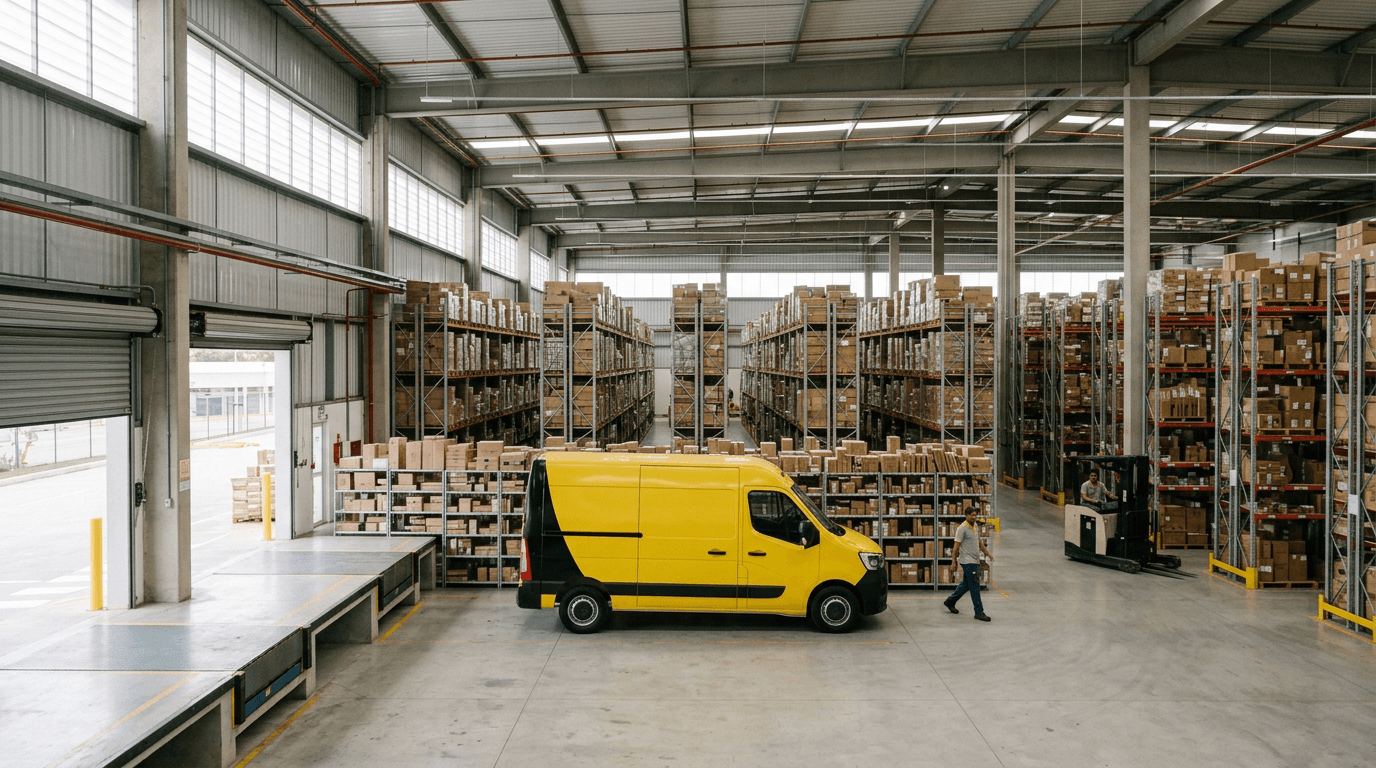
The bulk of this $10.9 billion budget is being funneled directly into physical infrastructure. According to the company's logistics division, MercadoLibre plans to expand its total logistics network in Brazil to 42 fulfillment centers, representing a 50% capacity increase. This includes boosting its dedicated fulfillment centers—warehouses that store, pack, and ship merchant inventory directly. By owning the logistics chain, the company is establishing a delivery speed that third-party couriers simply cannot match.
The Margin Trade-off
This aggressive infrastructure push is a double-edged sword for global investors. On one hand, the strategy is successfully defending MercadoLibre's home turf. In the third quarter ended September 30, 2026, the company’s net revenue and financial income surged 45% year-over-year to $10.75 billion, driven by a 36% jump in currency-neutral gross merchandise volume in Brazil, according to its Q3 2026 earnings release.
On the other hand, the cost of building this physical moat is hitting the bottom line. MercadoLibre's operating margin fell to 6.3% in the third quarter of 2026, down from 9.8% a year earlier. Chief Financial Officer Martín de los Santos attributed the margin pressure directly to the costs of expanding fulfillment capacity ahead of the peak holiday season and subsidizing more free shipping to keep shoppers from straying to cheaper competitors. Following the November 4, 2026 earnings report, the stock fell over 7.8% in after-hours trading as investors reacted to the margin compression.
A Digital Moat Beyond Delivery
MercadoLibre’s management is banking on the idea that once consumers are locked into its delivery ecosystem, they will adopt its highly profitable fintech arm, Mercado Pago. The digital bank is quietly becoming the company's real engine of profitability, processing over $109 billion in payments in a single quarter—far eclipsing the transaction volume of the e-commerce marketplace itself.
Whether this $10.9 billion investment ultimately rewards shareholders depends on whether the company can eventually scale back its capital expenditure and let margins recover. For now, the land grab in Latin America's largest economy shows no signs of slowing down.
In your brokerage app
MercadoLibre, Inc. is listed in New York on the Nasdaq exchange. For retail investors seeking diversified exposure to Latin American e-commerce and logistics infrastructure, the company is also a heavyweight holding in broad emerging-market and regional exchange-traded funds, such as the iShares MSCI Brazil ETF and the Franklin FTSE Brazil ETF.