
Why global grocery and food stock prices hang on South American crops
Speculative betting on soybean futures reflects shifting supply dynamics as Brazil's record-setting planting pace reshapes global agricultural markets.
The price of everyday groceries and animal feed in the United States remains highly sensitive to the positioning of large financial speculators in the global agricultural markets. When hedge funds and institutional money managers pile into or out of crop contracts, the ripple effects eventually reach the balance sheets of major food processors and the retail prices paid by consumers. For retail investors holding broad commodity exchange-traded funds, these shifting speculative balances serve as a crucial barometer of global supply expectations rather than a direct price forecast.
According to the weekly Commitments of Traders report released by the U.S. Commodity Futures Trading Commission (CFTC) for the observation date of October 20, 2026, non-commercial speculators held a substantial net-long position of 246,596 contracts in Chicago Board of Trade (CBOT) soybeans. This net position was built on 330,528 long contracts (bets that prices will rise) against 83,932 short contracts (bets that prices will fall), within a total market open interest of 1,093,612 contracts.
The South American Supply Engine
While these figures reflect trading activity on the Chicago exchange, the underlying fundamentals of the soybean market are increasingly dictated by South America. Brazil is the world's largest exporter of soybeans, and its planting progress and weather patterns are the primary drivers of global price discovery. Speculative positioning in Chicago often acts as a mirror for how international investors view the risks surrounding Brazil's upcoming harvest, which begins early next year.
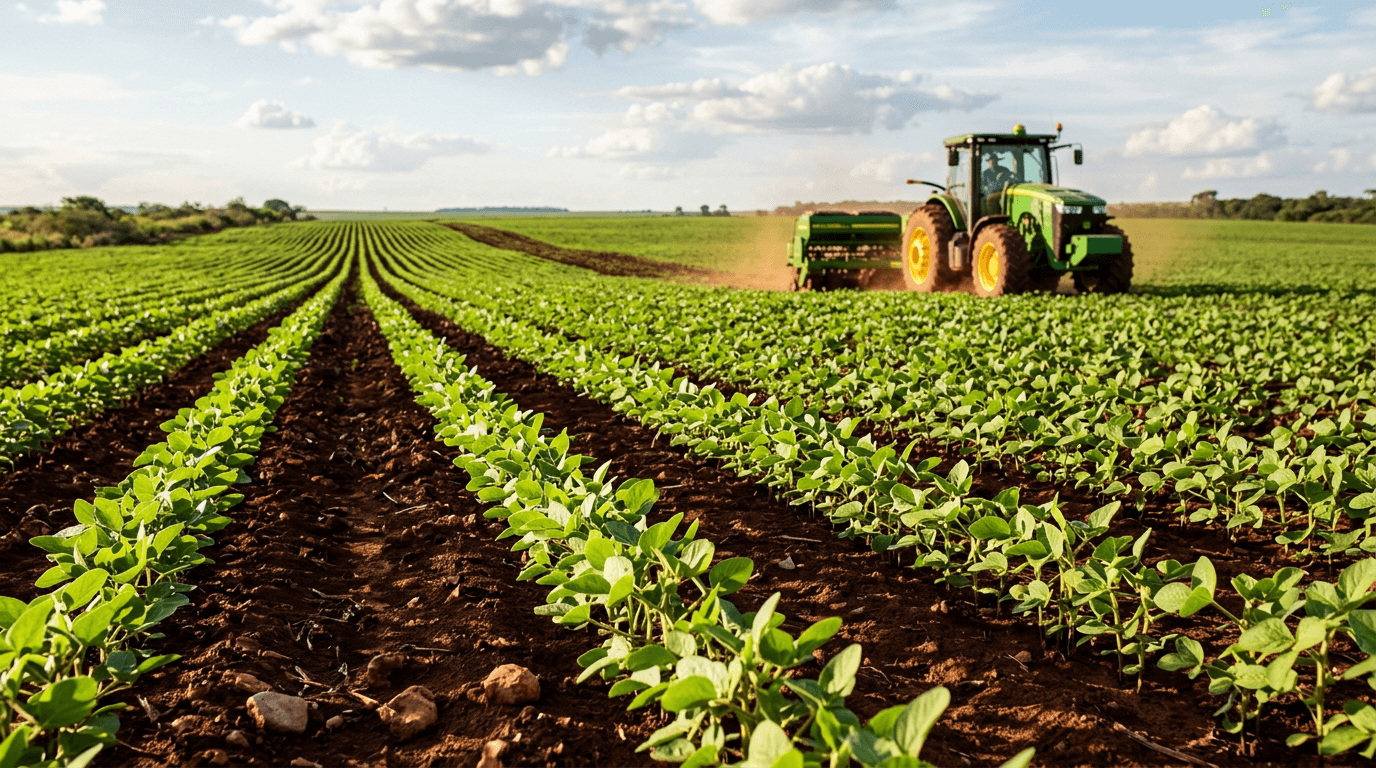
In Brazil, the 2026/27 planting campaign is advancing at a remarkably fast pace under favorable weather conditions. According to data released on October 20, 2026, by Brazil's National Supply Company (Conab)—the state-run agency responsible for agricultural statistics—soybean planting had reached 30.1% completion, up from 15.6% the previous week and ahead of the 21.4% recorded at the same point in the prior year. This rapid progress, particularly in the key agricultural state of Mato Grosso, has reinforced expectations of a record-breaking harvest.
Currency Shifts and Export Competition
The immediate outlook for global soybean pricing is also heavily tied to political risk and currency fluctuations in Brazil. Following the country's recent presidential election, the Brazilian real has experienced sharp volatility. A weaker real makes Brazilian agricultural exports cheaper and more competitive on the global stage compared to U.S. supplies. This currency dynamic directly influences speculative flows in Chicago, as traders adjust their portfolios to account for a potential surge in Brazilian export competitiveness.
For global investors, this speculative appetite highlights the critical role of South American agricultural giants. While the rapid pace of the U.S. autumn harvest typically exerts downward pressure on prices, the massive scale of Brazilian production means that any shift in South American weather or currency value can quickly reshape the global balance sheet.
In your brokerage app
Retail investors can observe these global agricultural dynamics through several broad asset classes available in standard brokerage accounts. International agribusiness equities, which are listed in New York, own and manage vast portfolios of South American farmland to produce crops like soybeans, corn, and sugar. Additionally, diversified commodity exchange-traded funds (ETFs) and specialized agricultural funds offer exposure to these markets by tracking baskets of agricultural futures contracts rather than individual corporate equities.