
Why Chicago soybean futures are bracing for Brazil's record harvest
The CFTC reports a net-long soybean position as of October 13, 2026, while Brazil's Conab projects a record-breaking 181.6 million metric ton harvest.
American retail investors holding agricultural exchange-traded funds or commodity-linked equities are keeping a close watch on the Chicago Board of Trade, where soybean futures are navigating shifting trader sentiment. According to the U.S. Commodity Futures Trading Commission (CFTC), non-commercial traders held a net-long position of 271,099 contracts for Chicago Board of Trade soybeans (contract 005602) as of October 13, 2026. This positioning—consisting of 356,266 long contracts against 85,167 short contracts—unfolded within a total contract open interest of 1,072,235.
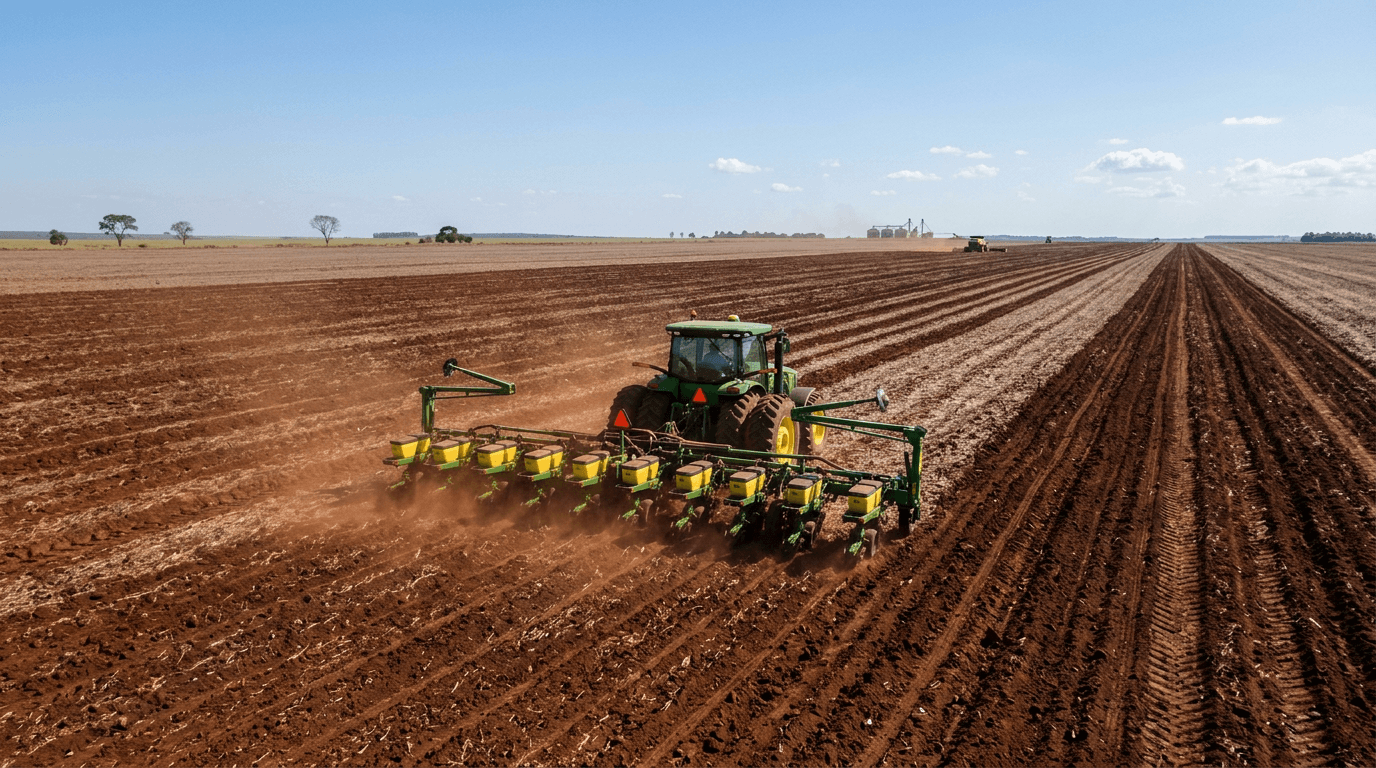
While these weekly figures provide a snapshot of speculative positioning rather than a price forecast, the broader pressure on global grain markets is originating directly from South America. Brazil, the world's largest exporter of the oilseed, is preparing to flood the international market with another massive crop. On October 15, 2026, Brazil's national supply agency, Conab, released its first official survey for the 2026/27 cycle, projecting a record-breaking soybean harvest of 181.6 million metric tons. This represents a 0.7% increase from the previous season, driven by a 1.4% expansion in planted area to 49.3 million hectares.
For global investors, this supply outlook highlights the growing dominance of Brazilian agriculture and its capacity to cap price rallies in Chicago. Sowing in key Brazilian states like Mato Grosso and Paraná was already 25% and 36% complete, respectively, by mid-October 2026. Despite localized planting delays caused by irregular early-season rainfall, the sheer scale of Brazil's agricultural infrastructure means domestic production is plateauing at historically high volumes. Conab expects Brazilian soybean exports to reach 117.97 million tonnes for the cycle, up 1.5% year-on-year, intensifying competition for U.S. exporters.
The massive South American supply comes at a time of heightened political and regulatory scrutiny in Brazil. With the country heading toward its next presidential election cycle, global markets are highly sensitive to fiscal policy changes and state interventions that could impact agricultural logistics, export taxes, or biodiesel mandates. Any sudden shift in the regulatory framework managed by the Ministry of Agriculture or changes to transport subsidies could rapidly alter the cost of Brazilian grain at port, directly influencing how speculative funds position themselves in U.S. futures markets.
In your brokerage app
Investors looking for exposure to South American agribusiness can monitor Adecoagro S.A., a farming and land development company listed in New York that operates extensive agricultural properties across South America. Additionally, broader exposure to the country's macroeconomic performance is available through the iShares MSCI Brazil ETF, the benchmark exchange-traded fund that tracks large and mid-sized Brazilian equities.