
US Soybean Speculators Build Net-Long Bets Amid Brazil Crop Delays
CFTC data shows non-commercial traders held a net-long position of 271,099 soybean contracts on October 13, 2026, as dry weather in Brazil slows planting.
Speculators in the Chicago agricultural markets are increasing their bullish bets on soybeans as weather disruptions in South America threaten to tighten global supplies. According to the weekly Commitments of Traders report released by the U.S. Commodity Futures Trading Commission (CFTC) for the observation week ending October 13, 2026, non-commercial traders held 356,266 long contracts against 85,167 short contracts in Chicago Board of Trade soybean futures (contract code 005602). This positioning represents a net-long stance of 271,099 contracts, set against a total market open interest of 1,072,235 contracts.
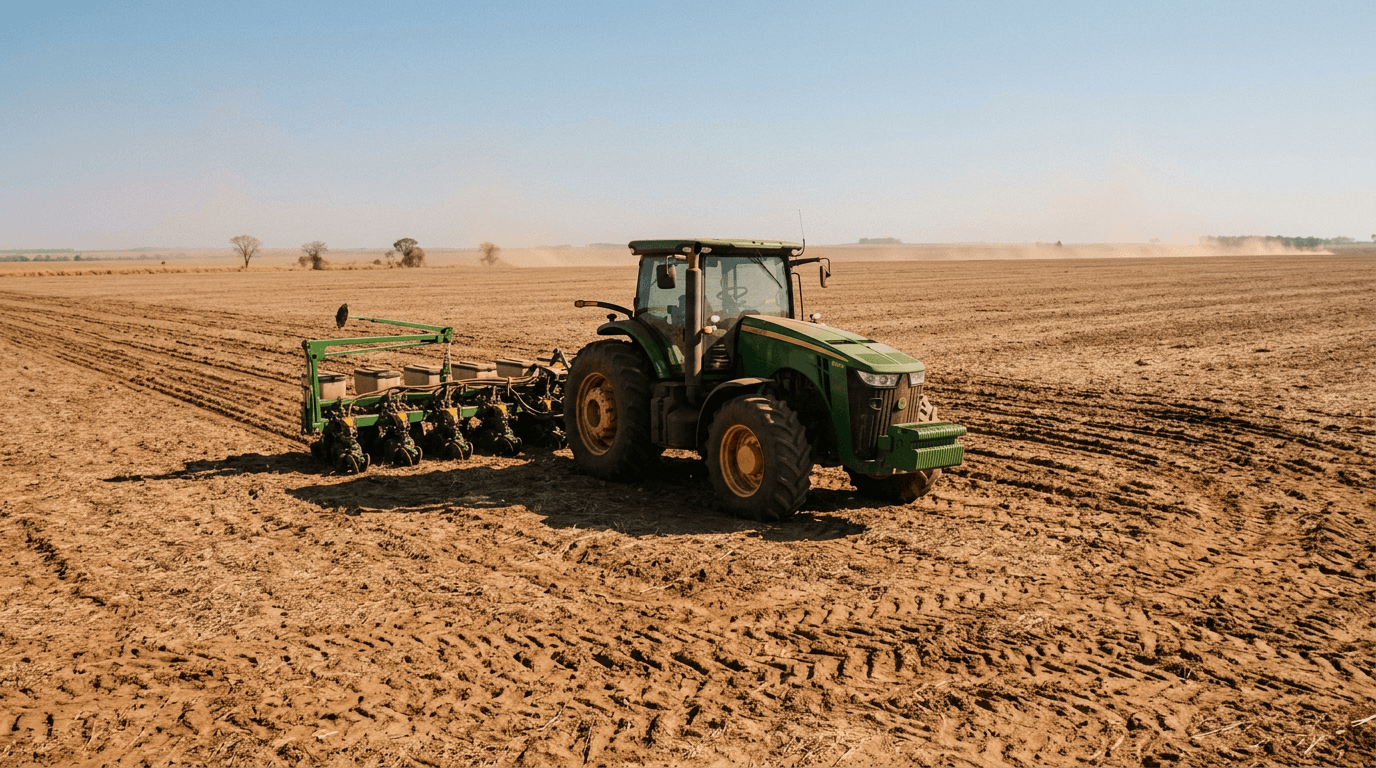
This positioning reflects growing concern over the planting pace in Brazil, the world’s largest exporter of the oilseed. Brazilian farmers, particularly in the central-western state of Mato Grosso—the country's agricultural powerhouse—have faced severe delays in starting their 2026/2027 crop cycle due to prolonged dry weather and irregular rainfall. Because global grain markets rely on a smooth transition from the North American harvest to South American supply, any delay in Brazil's planting schedule shifts the burden back to U.S. stockpiles, driving speculative interest in Chicago.
For global investors, these weekly regulatory snapshots provide crucial context on market sentiment rather than a direct price forecast. While the net-long position indicates that large money managers are leaning bullish, the physical reality on the ground in South America remains the ultimate driver. If seasonal rains materialize across Brazil's key agricultural belts in late October, the current speculative premium could quickly dissolve as planting accelerates.
Beyond the fields, the agricultural sector is a primary pillar of the Brazilian economy and a key driver of the country's financial markets. Swings in global commodity prices directly influence the fiscal health of the nation and the performance of its largest corporate entities.
In your brokerage app
For retail investors tracking agricultural exposure, these global supply dynamics directly impact companies listed in New York. Adecoagro S.A., an agricultural and farmland company with extensive operations in South America, is listed on the New York Stock Exchange. Additionally, global food processor JBS N.V., also listed in New York, remains highly sensitive to soybean prices as a primary input cost for its global animal feed operations. For broader exposure, the iShares MSCI Brazil ETF is the primary exchange-traded fund tracking the country's equity market, where agribusiness performance heavily influences overall returns.