
US investors face OTC transition as Cosan advances Rumo rail stake sale
Brazilian conglomerate Cosan is advancing the sale of its stake in rail operator Rumo to cut debt, just as its US shares transition off the New York Stock Exchange.
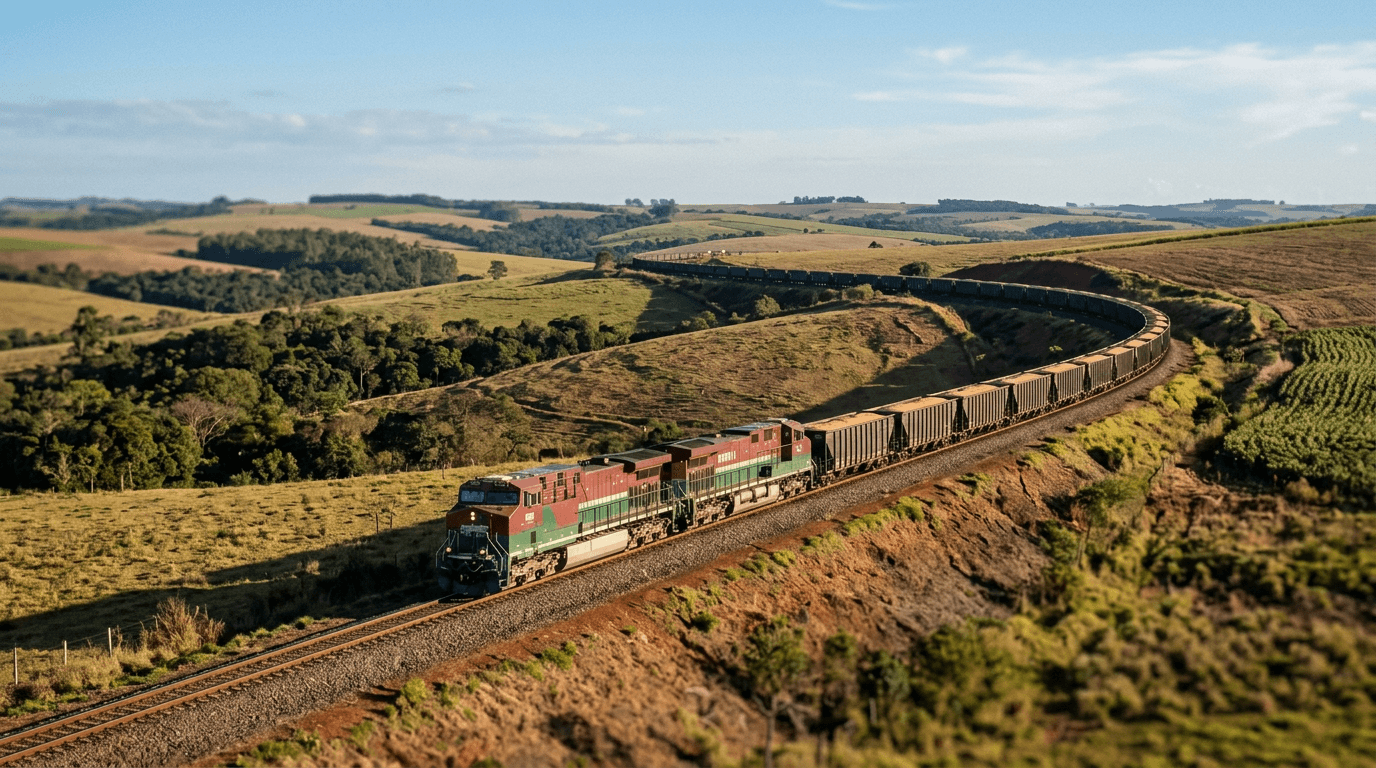
A major corporate restructuring is shifting the landscape for international investors holding shares in one of Brazil’s largest industrial conglomerates. Cosan S.A., a massive holding company with interests spanning energy, logistics, and agriculture, is executing a dual-track strategy to simplify its corporate structure and clean up its balance sheet. The moves directly affect how global investors trade the company’s equity in the United States.
In regulatory filings submitted to the U.S. Securities and Exchange Commission, Cosan confirmed that its strategic evaluation to sell a portion of its equity stake in the major Brazilian rail operator Rumo S.A. has advanced to the phase of receiving binding proposals. The asset sale is a core pillar of Cosan’s broader balance-sheet deleveraging strategy. The conglomerate is actively targeting a debt-service interest-coverage ratio of 0.8x to 1.2x by the end of fiscal year 2026, aiming to ease the financial pressure of high local interest rates.
This aggressive asset-disposal program coincides with a major change in how Cosan is accessed by foreign capital. The company voluntarily delisted its American Depositary Shares (ADSs) from the New York Stock Exchange, with the final day of main-board trading occurring on September 18, 2026. To reduce administrative costs and simplify its corporate structure, Cosan has transitioned its US-traded shares to Level I over-the-counter (OTC) trading.
Balancing Debt and Valuations
The push to sell down its 30% stake in Rumo—the largest railway operator in Brazil—comes as Cosan manages a complex web of capital-intensive holdings. Historically, the holding company has faced a steep "conglomerate discount" from public market investors due to its highly leveraged structure and reliance on subsidiary dividends to cover its own holding-company interest expenses.
While the sale process has advanced to binding bids, the final execution remains highly sensitive to price. In October 2026, market reports indicated that some of the initial binding proposals received for the Rumo stake valued the rail operator at roughly 30% below its current market price. Because Cosan successfully halved its holding-company debt over the prior year through farmland sales and a major capital injection, executives now have more breathing room to reject lowball offers and negotiate better terms.
Political Risk and the Rate Outlook
For international investors, the structural overhaul at Cosan unfolds against a backdrop of shifting political risk in South America's largest economy. The Brazilian stock market has experienced heightened volatility tied to the country's presidential election cycle, with the second-round vote scheduled for late October 2026.
The election outcome is a critical mechanism for corporate borrowers like Cosan. A market-friendly political shift could relieve the heavy discount applied to Brazilian equities, stabilize the local currency, and potentially pave the way for a more favorable interest rate environment. Conversely, prolonged fiscal uncertainty or interventionist policy risks would keep local borrowing costs high, maintaining pressure on leveraged conglomerates to continue selling off prized operational assets to protect their balance sheets.
In your brokerage app
Cosan S.A., which previously traded on the New York Stock Exchange under the ticker CSAN, now trades in the United States as a Level I American Depositary Receipt on the over-the-counter (OTC) market. Each US share represents four common shares listed on the Brazilian B3 exchange. US retail investors using standard brokerage accounts can still buy, sell, or hold the security, though OTC trading typically carries lower liquidity and wider bid-ask spreads than a major exchange listing.