
Starlink mobile push in Brazil triggers alarms for telecom investors
Elon Musk's Starlink has secured a critical S-band spectrum license in Brazil, paving the way for direct-to-cell mobile service in its second-largest global market.
United States telecom investors recently felt the shockwaves of Elon Musk’s ambitions when SpaceX announced an $8 billion deal on October 8, 2026, to acquire low-band spectrum from Grain Management. The news immediately sent shares of AT&T, T-Mobile, and Verizon tumbling as much as 6% to 9% on fears of a new, space-based mobile competitor. Now, that same disruptive playbook is moving south to one of the world's most lucrative emerging telecom markets.
On October 9, 2026, Brazil’s telecommunications regulator, Anatel, voted 4-to-1 to approve a critical S-band spectrum license for Starlink. The regulatory greenlight allows Starlink to deploy its Direct-to-Device (D2D) technology, which connects standard smartphones directly to satellites without the need for traditional cell towers or satellite dishes. The decision opens the 2 GHz mid-band frequency to Starlink in Brazil—which is already the company's second-largest global market.
The regulatory approval grants Starlink a 15+15 MHz block of spectrum, consisting of a primary 10+10 MHz block valid until 2039 and a temporary 5+5 MHz block running through mid-2029. While this is only half of the spectrum block Starlink originally requested, it is enough to position the satellite provider as a potential fourth major mobile player. The decision has triggered immediate alarms for the established oligopoly of local carriers—Vivo (owned by Telefônica Brasil), TIM, and Claro—which have historically dominated the country's mobile landscape.
However, local industry veterans and investment analysts caution that Starlink’s path to becoming a fully fledged mobile operator in Brazil is more complex than in the U.S. According to an analysis by Brazil Journal on October 14, 2026, very few mobile phones currently in use in Brazil are compatible with the newly licensed S-band spectrum. To truly compete nationwide and bypass rural dead zones, Starlink will either need to acquire terrestrial spectrum in future Anatel auctions or pursue a local mergers-and-acquisitions strategy to buy out an existing carrier.
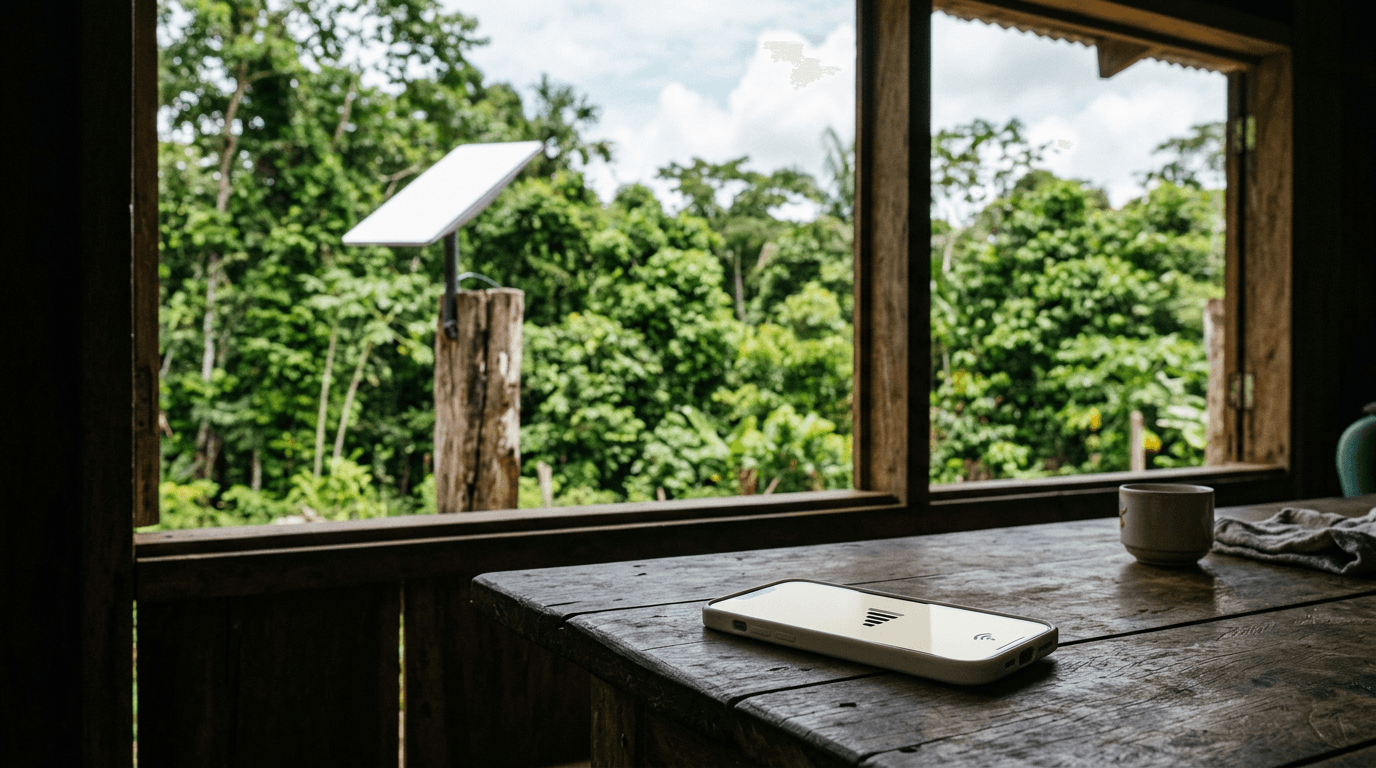
The regulatory victory also carries political significance. It comes amid heightened scrutiny of Elon Musk's business operations in Brazil, following high-profile clashes with the country's Supreme Court over content moderation and digital sovereignty. By securing the license through Anatel, Starlink has demonstrated that its commercial expansion remains highly functional despite the political noise, leveraging its massive popularity in remote regions like the Amazon where terrestrial infrastructure does not exist.
In your brokerage app
For investors holding broad emerging-market funds or Latin American telecom equities, Starlink's regulatory advance introduces a long-term structural risk to dividend-paying giants. Telefônica Brasil, which operates under the Vivo brand, is listed in New York and is a major holding in the iShares MSCI Brazil ETF (EWZ). While Vivo is currently testing D2D technology in partnership with Starlink, any future move by SpaceX to build an independent, terrestrial-backed mobile network in Brazil could erode the high-margin wireless revenues that US retail investors rely on for yield.