
Speculators Hold Near-Record Long Position in Chicago Soybeans as Brazilian Planting Nears
Speculative traders have amassed their largest net-long position in Chicago soybean futures in three years, signaling market bullishness just as Brazil prepares to plant its next crop.
Large speculative traders on the Chicago Board of Trade (CBOT) have taken their most aggressive long position in soybean futures in years, according to the latest data from the U.S. Commodity Futures Trading Commission (CFTC). The weekly Commitment of Traders (COT) report, a snapshot of positioning as of September 22, 2026, revealed that non-commercial participants—largely hedge funds and other money managers—held a net-long position of 281,581 contracts.
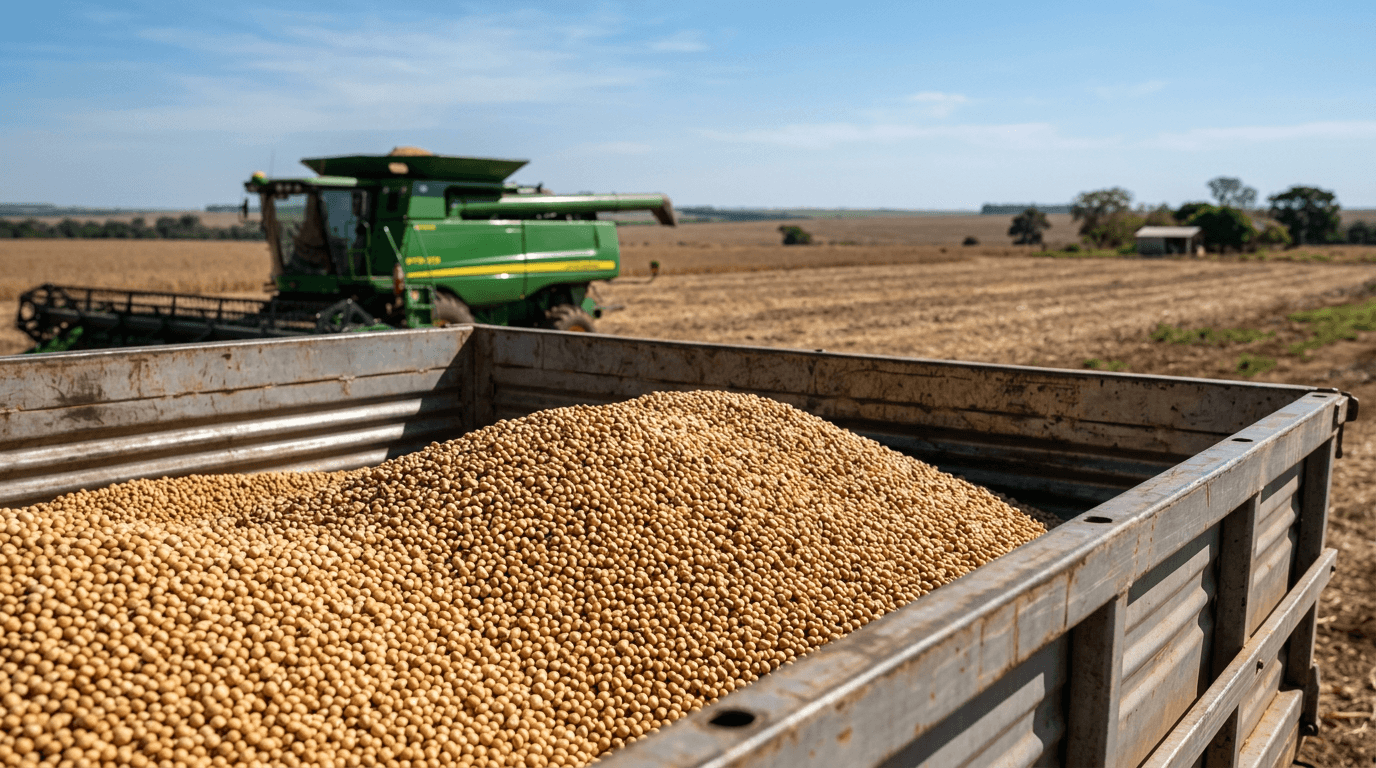
This massive bet on rising prices for the key agricultural commodity is near a three-year peak, and reflects the intense short-term pressure on global supplies. The positioning comes as a direct result of a rain-delayed U.S. soybean harvest, which has temporarily tightened supply and forced grain processors to pay premiums for immediate delivery. The non-commercial long position of 370,525 contracts against a short position of 88,944 contracts underscores a near-unanimous view among speculators that prices will move higher in the near term.
The Brazilian Context
The heightened speculative activity on the Chicago exchange is crucial for the Brazilian economy because the country is the world’s largest producer and exporter of soybeans, a product that generates tens of billions of dollars in annual export revenue. While traders in the U.S. contend with delayed harvesting, Brazilian farmers are preparing for the start of their planting season, which typically begins in early October.
The market’s current bullish view, fueled by U.S. weather issues, stands in contrast to the backdrop of ample supply coming from Brazil soybean stocks. The South American giant is still working through a recently completed record harvest from the 2025/2026 cycle. This creates a tension: the Chicago futures market is pricing in a temporary U.S. shortage while the world's top supplier is about to sow its next crop.
What to Watch Next
The enormous speculative position recorded in the CFTC report creates a precarious situation, as the long-term price direction will pivot on South America's agricultural cycle. Analysts are now watching for any sign of weather improvement in the U.S. that could accelerate harvest and lead to a mass liquidation of these speculative long contracts, which would put sharp downward pressure on global commodity prices.
Furthermore, attention is rapidly shifting south of the equator. The size of Brazil’s upcoming 2026/2027 soybean crop will ultimately determine the world’s supply balance. Early projections for the new Brazilian crop already point to potential yield risks tied to the El Niño weather pattern, which has the potential to support prices if those fears materialize in the coming months.
What it touches
The speculative positioning on the Chicago Board of Trade directly influences the price paid to Brazilian farmers for their exports. The price is based on the CBOT futures contract and is therefore exposed to the risk of a sharp correction if the managed money net-long position of 281,581 contracts is forced to unwind. This is relevant to companies like JBS (NYSE: JBS), which is heavily involved in the global protein supply chain, and Adecoagro S.A. (NYSE: AGRO), which owns and operates farmland in the region.
Related coverage
Markets
Brazil’s Central Bank Data Shows PIX Transactions Plummet 10% After Betting Ban
Published
Markets · PRO
Brazil’s Job Growth and Political Fights Set Stage for Central Bank’s Next Rate Decision
Published
Markets · PRO
Brazil's Widened 2026 Fiscal Deficit Projection Revives Market Uncertainty Ahead of October Election
Published