
Speculators Hold Large Net-Long Position in Soybeans, Signaling Optimism for Global Price That Impacts Brazilian Agriculture
Large financial traders increased their net-long position in Chicago soybeans to 273,424 contracts, a key benchmark for Brazilian farmers.
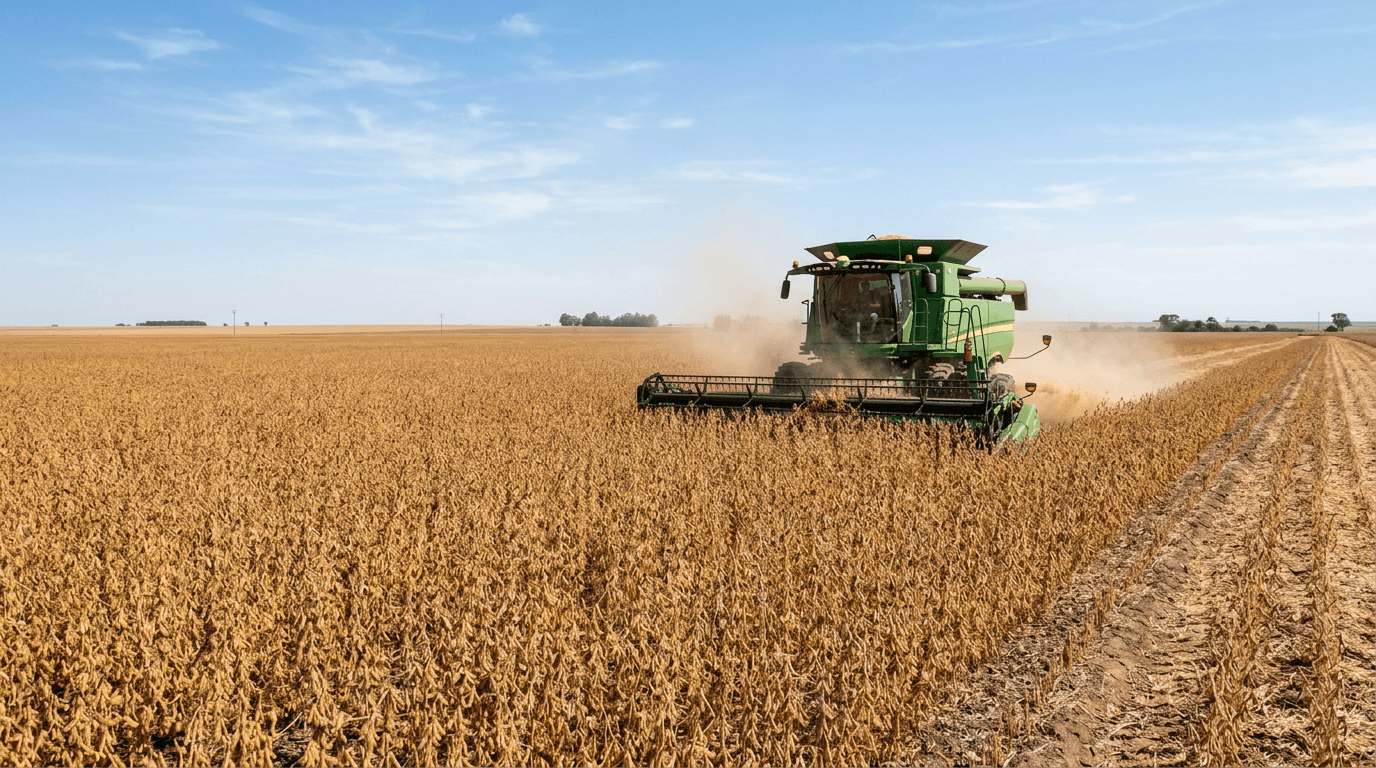
Large speculative traders on the Chicago Board of Trade (CBOT) held a significant net-long position of 273,424 futures contracts in soybeans as of September 8, according to the latest Commitment of Traders (COT) report from the U.S. Commodity Futures Trading Commission (CFTC). The substantial bullish positioning by non-commercial traders—a category that includes large hedge funds and institutional money managers—signals strong financial market conviction that the global benchmark price for the oilseed is poised to continue higher.
For an intelligent foreigner looking at Brazil, this market data is a vital indicator of the health and profitability of the nation’s powerhouse agricultural sector. While the futures market is based in the U.S., the price discovered on the CBOT is the reference point for practically all physical soybean trade worldwide, including the immense volumes exported by Brazil. When speculators hold a large net-long position, it suggests they anticipate future price rises due to factors like tight supply or surging demand.
Brazil is the world's largest exporter of the crop, and the soybean complex is an indispensable engine of its national economy, driving billions of dollars in revenue and creating hundreds of thousands of jobs, particularly in the mid-western state of Mato Grosso. The financial sentiment reflected in the CFTC report directly impacts how profitable the current and upcoming planting seasons will be for the nation's farmers.
A higher price outlook incentivizes Brazilian producers to expand planting and make large purchasing decisions for fertilizers and equipment, often using the expected CBOT price as a critical component in their future contracts and hedging strategies. Brazilian producers, who have increasingly turned to using CBOT futures to manage risk, are expecting a record harvest for the 2026/2027 season, with export volumes projected to exceed 115 million tonnes and total trade revenue for the complex topping $60 billion, according to industry estimates. This strong financial positioning on the world’s key commodity exchange underscores the favorable global outlook for one of Brazil’s most important products.
What it touches
The commodity’s price is a material component for companies across the Brazilian agro-industrial chain. While not an investment recommendation, the positive pricing environment reflected by the CFTC’s data has an effect on the input costs and revenues for major Brazilian food processors like JBS, which has significant beef and poultry operations but also sources feed, and Adecoagro (AGRO), which operates farmland and produces soft commodities.