
Speculators hold bullish soybean bets as Brazil planting gets underway
Speculative traders maintain a highly optimistic outlook on global soybean supplies as South American farmers begin planting under uneven weather conditions.
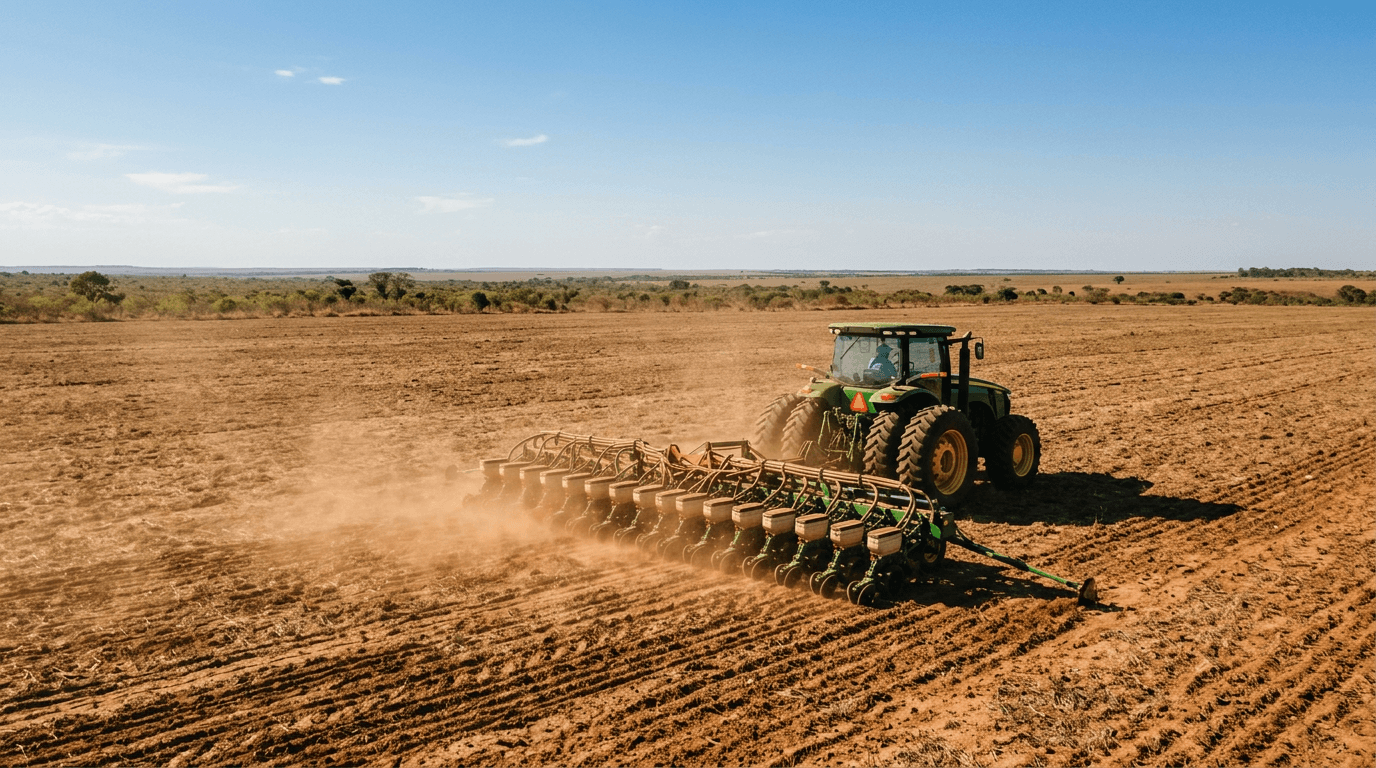
Speculative financial players are maintaining a strongly optimistic outlook on global soybean supplies as South American farmers ramp up their planting machinery for the new season. According to the weekly Commitments of Traders report released by the U.S. Commodity Futures Trading Commission (CFTC), non-commercial traders held a substantial net-long position of 273,896 contracts in Chicago Board of Trade (CBOT) soybeans as of October 6, 2026.
This bullish stance was built on 360,967 long contracts—bets that prices will rise—against 87,071 short contracts, representing bets on a price decline. Total market open interest stood at 1,121,298 contracts during the same observation period. While these weekly regulatory snapshots reflect speculative sentiment rather than a definitive price forecast, they highlight how closely global financial markets are watching the start of the South American agricultural cycle.
For Brazil, the world's largest exporter of soybeans, the stakes of the 2026/27 harvest are immense. Agribusiness is the primary engine of the country’s trade balance, and early sowing progress heavily dictates the economic outlook for rural states. Sowing has begun under highly uneven weather conditions across the country's vast agricultural heartland. While southern states like Paraná have seen frequent, heavy rains, the critical central growing region—including Mato Grosso, the country’s top agricultural producer—has battled intense heat waves with temperatures exceeding 100°F, drying out soils and forcing some farmers to delay planting until soil moisture stabilizes.
A Slow Start in the Fields
According to data from the independent agribusiness consultancy AgRural, Brazilian farmers had planted 7.3% of the expected soybean area as of early October. This represents progress from previous weeks but lags behind the 9.0% planting pace recorded at the same point last year. It is the first time this season that national planting progress has fallen behind the historical average, reflecting the cautious approach of farmers in central Brazil who are waiting for more consistent spring rains.
Despite the sluggish start, early production estimates for Brazil’s total crop remain highly ambitious. Private consultancies and government agencies project a massive harvest, with StoneX estimating the 2026/27 crop at 183.3 million tons and the U.S. Department of Agriculture (USDA) forecasting up to 186.0 million tons. If realized, these figures would represent another record-breaking year for Brazilian agricultural exports, though the final volume depends heavily on whether irregular weather patterns persist through the critical flowering phase in November and December.
What it touches
The ongoing planting progress and speculative positioning directly affect the global supply chain for grain exporters and agricultural conglomerates. Companies with heavy exposure to South American farmland and logistics, such as Adecoagro S.A. (NYSE: AGRO) and Brazilian protein giant JBS S.A. (B3: JBSS3; OTCQX: JBSAY), are highly sensitive to these early crop developments, as soybean prices dictate feed costs and regional logistics margins.