
Speculators Bet Big on Rising Soy Prices in Chicago, Benefiting Brazil’s Agribusiness
Large traders on the Chicago Board of Trade pushed their net-long position in soybean futures to 273,424 contracts by September 8, signaling a bullish outlook for the commodity that is key to Brazil’s economy.
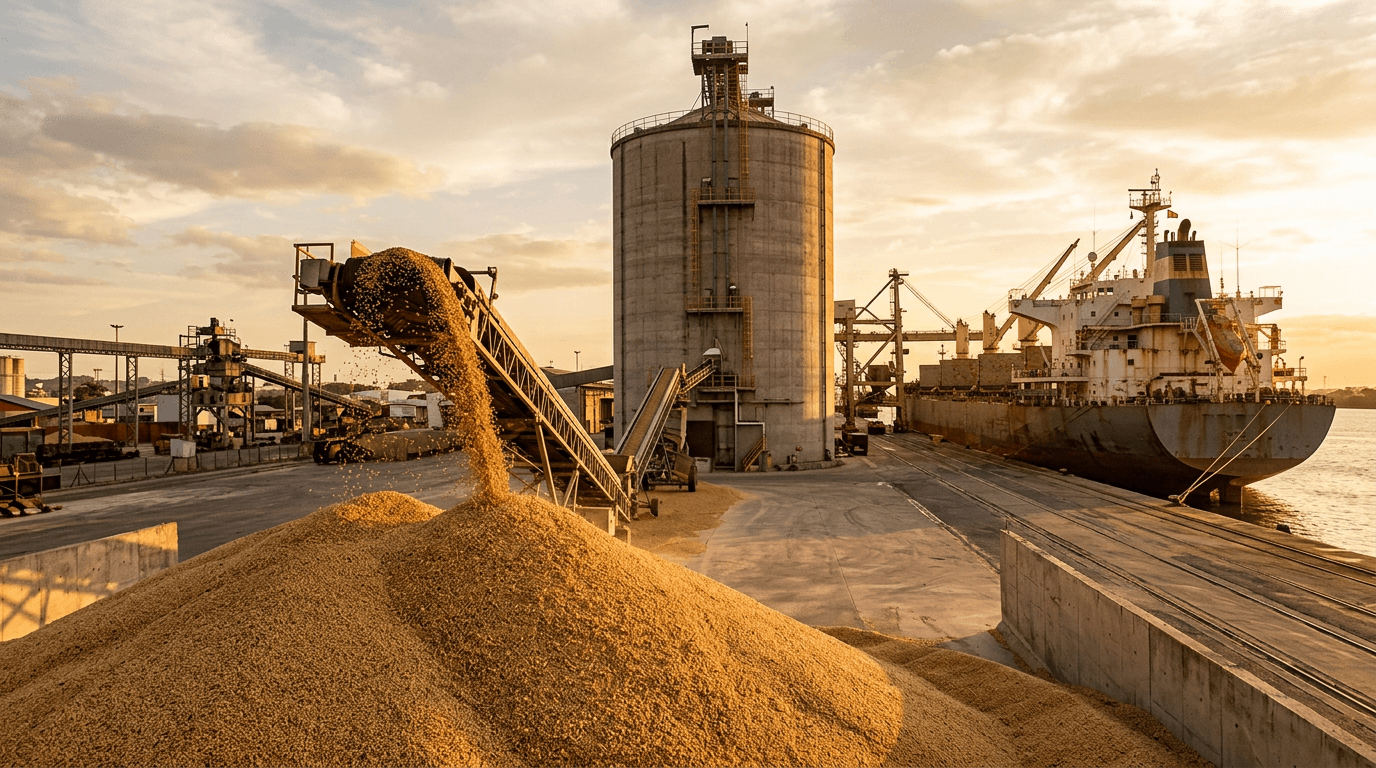
Large speculators and hedge funds on the Chicago Board of Trade (CBOT) significantly increased their bullish bets on soybean futures as of September 8, 2026, an optimism that underpins Brazil’s massive agribusiness export sector. The latest weekly Commitments of Traders (COT) report from the U.S. Commodity Futures Trading Commission (CFTC) showed that non-commercial traders held a net-long position of 273,424 contracts in Chicago soybean futures. This number is the difference between 365,743 long contracts and 92,319 short contracts reported for the week ending on that Tuesday.
The data means that these major financial players are collectively wagering on higher prices for the commodity, a trend that directly influences the health of Brazilian agriculture. Brazil is the world’s leading soybean producer and exporter, with a recently concluded harvest season that yielded a record 182 million metric tons. Although the soybean harvest is complete, the pricing signal from the CBOT, which accounts for more than half of the total open interest in the contracts, remains critical for local producers and export terminals.
The non-commercial category tracked in the CFTC report primarily represents large funds and other financial institutions. Their net position is a sentiment indicator, and this current substantial net-long stance reflects continued concern over supply or expectations of robust global demand, particularly from China, which buys roughly three-quarters of all Brazilian soybean exports. For Brazil, which dominates nearly 60% of the global soybean trade, higher international prices help maintain strong export revenue and buttress the global soybean trade despite the massive supply that has flooded the market from the record harvest.
This dynamic reinforces the strong link between U.S. financial markets and Brazil’s real economy. Even as Brazilian farmers have finished selling the bulk of their crop, the expectation of rising prices—as evidenced by the CFTC report—can influence the valuation of remaining stock, the forward contracts for the next planting season, and the overall value of the agricultural land and assets across states like Mato Grosso and Goiás.
The practical consequence for Brazil is that strong speculative interest in Chicago continues to translate into favorable pricing conditions, which supports continued investment and growth in the farm sector, even in the face of record production. The next major event to watch is the planting of the new crop, which typically begins later in the year, and whether farmers respond to these sustained high-price signals with yet another expansion of planting area.
What it touches
The pricing outlook for soybeans is a material concern for companies in the Brazilian agribusiness and protein sectors with exposure to the commodity’s price. This includes major protein exporters like JBS, which rely on soybeans for feed, and other agricultural investment vehicles like Adecoagro. The sustained high price environment supports strong cash flows within the agricultural economy, which can benefit financial services and logistics companies tied to the movement of Brazil’s largest cash crop.