
Large Speculators Take Significant Net-Long Bet on Soybeans, Impacting Brazil’s Agricultural Outlook
US large speculators held a net-long position of 273,424 soybean futures contracts, a sentiment that translates to higher price expectations for Brazil’s record crop.
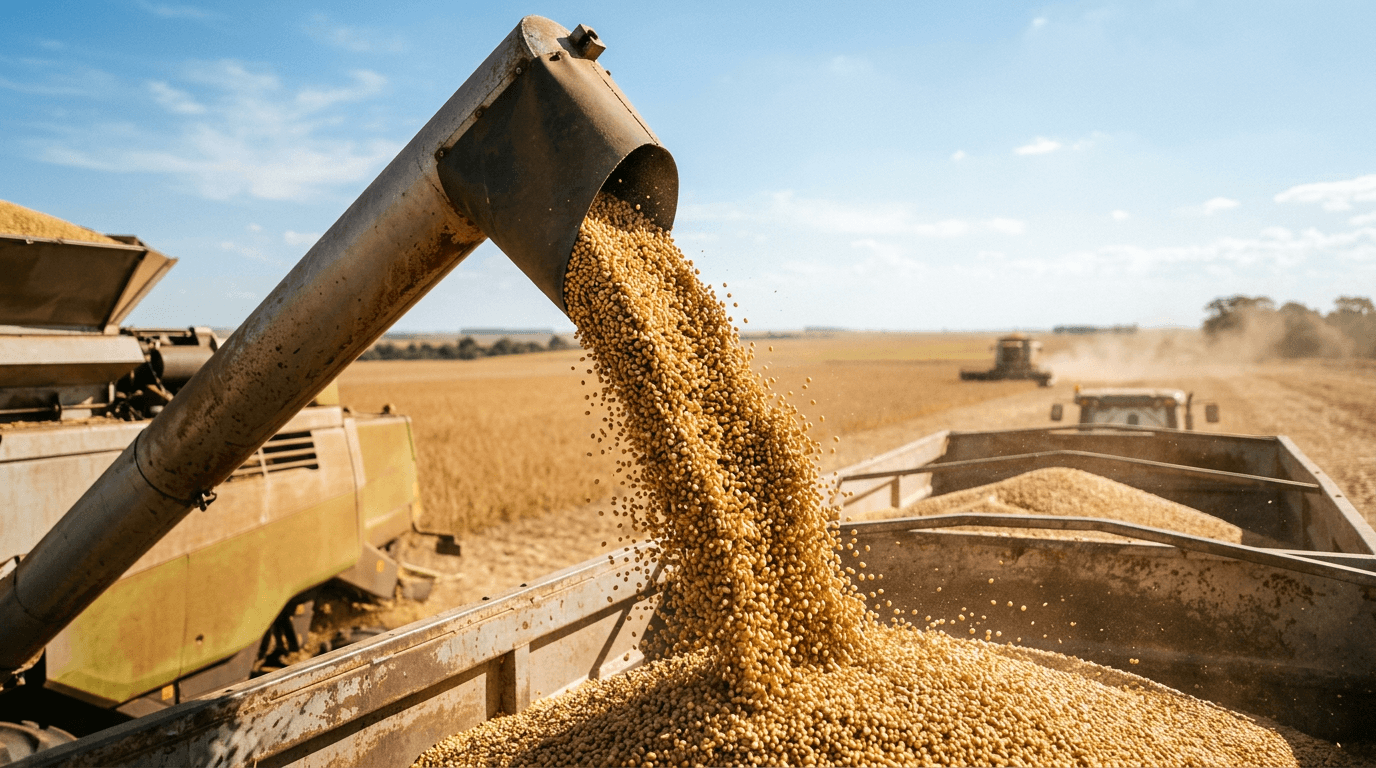
Large speculators in the U.S. futures market maintained a significantly bullish outlook on soybeans as of September 8, 2026, according to the latest Commitments of Traders (COT) report released by the U.S. Commodity Futures Trading Commission (CFTC). The data shows a net-long position of 273,424 contracts, signaling that financial traders are betting heavily on rising global prices for the commodity that fuels a massive portion of Brazil’s export economy.
The weekly report is compiled by the CFTC, the main U.S. regulator for the futures market, to provide transparency on trading positions. The "non-commercial" category represents large speculators, typically hedge funds and other large investors, who are looking to profit from speculation rather than hedging existing physical risk. As of the report date, these traders held 365,743 long contracts—bets on higher prices—compared to just 92,319 short contracts—bets on lower prices—on the Chicago Board of Trade.
This sentiment directly affects Brazilian agriculture because the prices set on the Chicago exchange act as a global benchmark for the commodity. Brazil is the world’s largest producer and exporter of soybeans, and the expectation of higher prices translates into greater revenue potential for its farming sector, which relies on U.S. dollar-denominated export sales.
The bullish speculative positioning comes as Brazil prepares for another massive season. National crop agency Conab projects a 2026/27 soybean harvest of over 181 million metric tons, with exports forecast to reach nearly 118 million tons. While the physical reality on the ground in Brazil is one of ample supply, the strong speculative positioning in the futures market provides critical price support for what is projected to be a record export flow, which could generate over $60 billion for the sector this year.
Going forward, Brazilian producers, who are often in the process of planting their next crop during this period, will be closely watching global price action as they decide on planting strategy and input purchases. The price environment for Brazilian exports is now being set in a complex global market, balanced between massive local supply and strong speculative demand for a higher-priced hedge in Chicago.
What it touches
Brazilian companies with significant exposure to the agricultural value chain, such as meat processor JBS (JBS) and agricultural landowner Adecoagro (AGRO), are indirectly sensitive to the global soybean price outlook, as price strength supports the underlying value of Brazilian agricultural production and export revenue.