Speculative soybean bets surge in Chicago despite record Brazil planting
CFTC data shows speculative traders holding heavy net-long soybean positions as Brazil's CONAB reports record planting progress for the 2026/2027 crop.
The price of groceries and animal feed in the United States remains highly sensitive to global agricultural supply chains, even as domestic harvest activity winds down. For retail investors tracking commodities, the weekly positioning of large institutional players provides a vital pulse check on where big money expects grain prices to go.
According to the weekly Commitments of Traders report released by the U.S. Commodity Futures Trading Commission (CFTC), speculative traders are maintaining a heavily optimistic stance on soybeans. As of the October 27, 2026, observation date, non-commercial traders held 271,296 long contracts compared to 67,177 short contracts in Chicago Board of Trade soybean futures (contract 005602). This resulted in a substantial net-long position of 204,119 contracts, out of a total market open interest of 979,414 contracts.
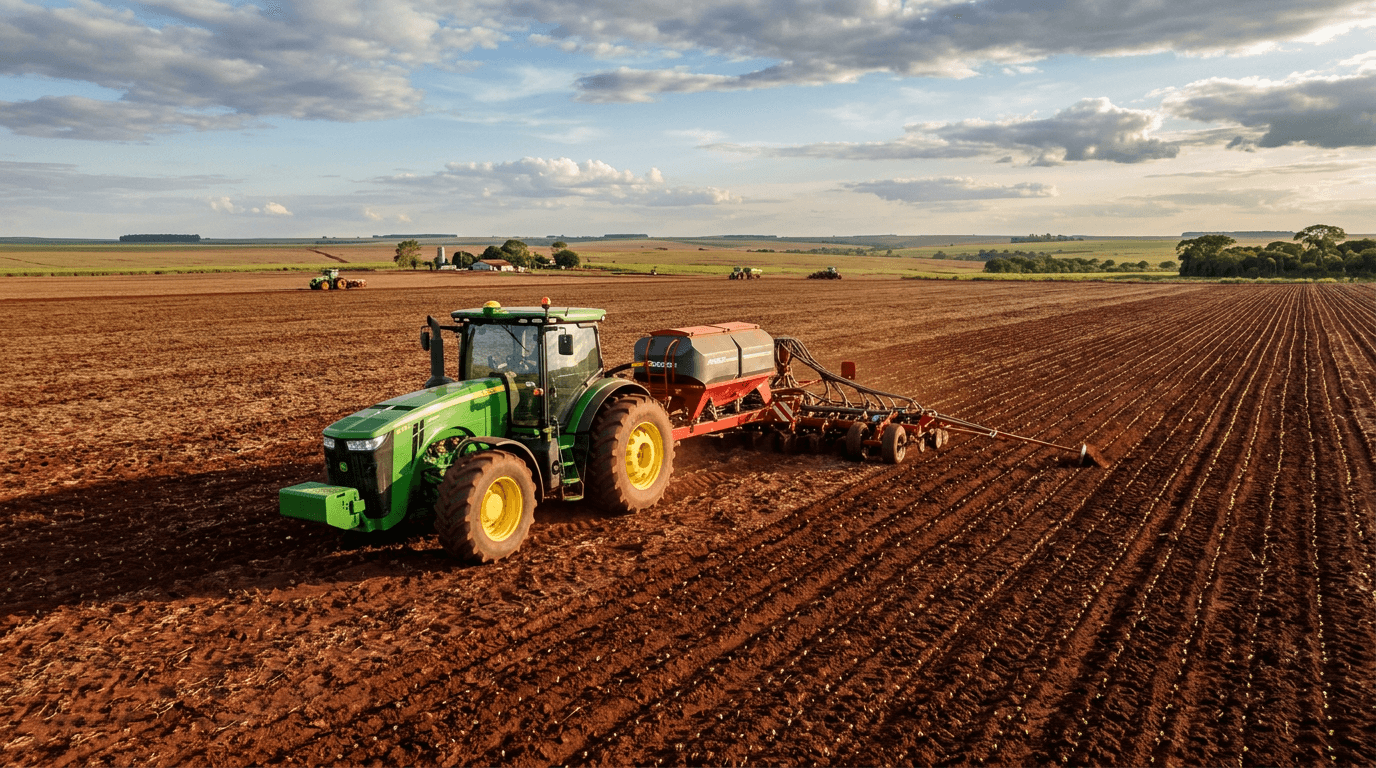
This concentration of bullish bets comes at a critical time for South American agriculture, which heavily dictates global export prices. In Brazil, the world’s largest exporter of soybeans, farmers are planting their next crop at a remarkably fast pace. Brazil's National Supply Company (CONAB), the government agency responsible for agricultural forecasting, reported that nationwide soybean planting had reached 42.8% completion as of October 23, 2026. This represents a significant acceleration from the 30.1% pace recorded just one week prior and comfortably outpaces the 34.8% completion rate observed at the exact same point in 2025.
The South American Supply Wave
The rapid planting progress is primarily driven by favorable early-season rainfall in Mato Grosso, the central-western state that serves as the powerhouse of Brazilian agriculture. In Mato Grosso, planting progress reached 75.8% of the planned area by October 23, 2026, running ahead of the five-year regional average of 70.3%. This smooth start has reinforced expectations of a massive harvest. On October 15, 2026, CONAB projected that Brazil will produce a record 181.6 million metric tons of soybeans for the 2026/2027 crop year, representing a 0.7% increase over the previous season's harvest.
While speculative traders in Chicago are positioned for potential price disruptions, the physical reality of a bumper South American crop could cap upward price momentum. The divergence between paper-market enthusiasm and physical supply expectations highlights the delicate balance in the agricultural sector as the market transitions from the North American harvest to South American planting.
Corporate Exposure to South American Yields
The commercial realities of this South American planting cycle directly affect multinational agribusinesses operating in the region. For instance, Luxembourg-based agro-industrial producer Adecoagro S.A. (listed on the New York Stock Exchange under the ticker AGRO) maintains extensive farming and processing operations across Brazil, Argentina, and Uruguay.
In its second-quarter 2026 financial results, the company highlighted how regional commodity price fluctuations and high Brazilian sugarcane and grain supplies have continued to exert pressure on its primary agricultural and processing divisions. As the 2026/2027 South American planting season progresses toward the early 2027 harvest, global grain prices will remain highly sensitive to whether Brazil's record-breaking planting pace translates into final physical yields.