
Santander Brasil Q2 Profit Drops 17.6% on Provision Surge, Pulling Down Brazil Bank Stocks
Santander Brasil (SANB11) missed Q2 consensus with R$3.01B net income as loan-loss provisions spiked 20.6%, signaling broad credit risk.
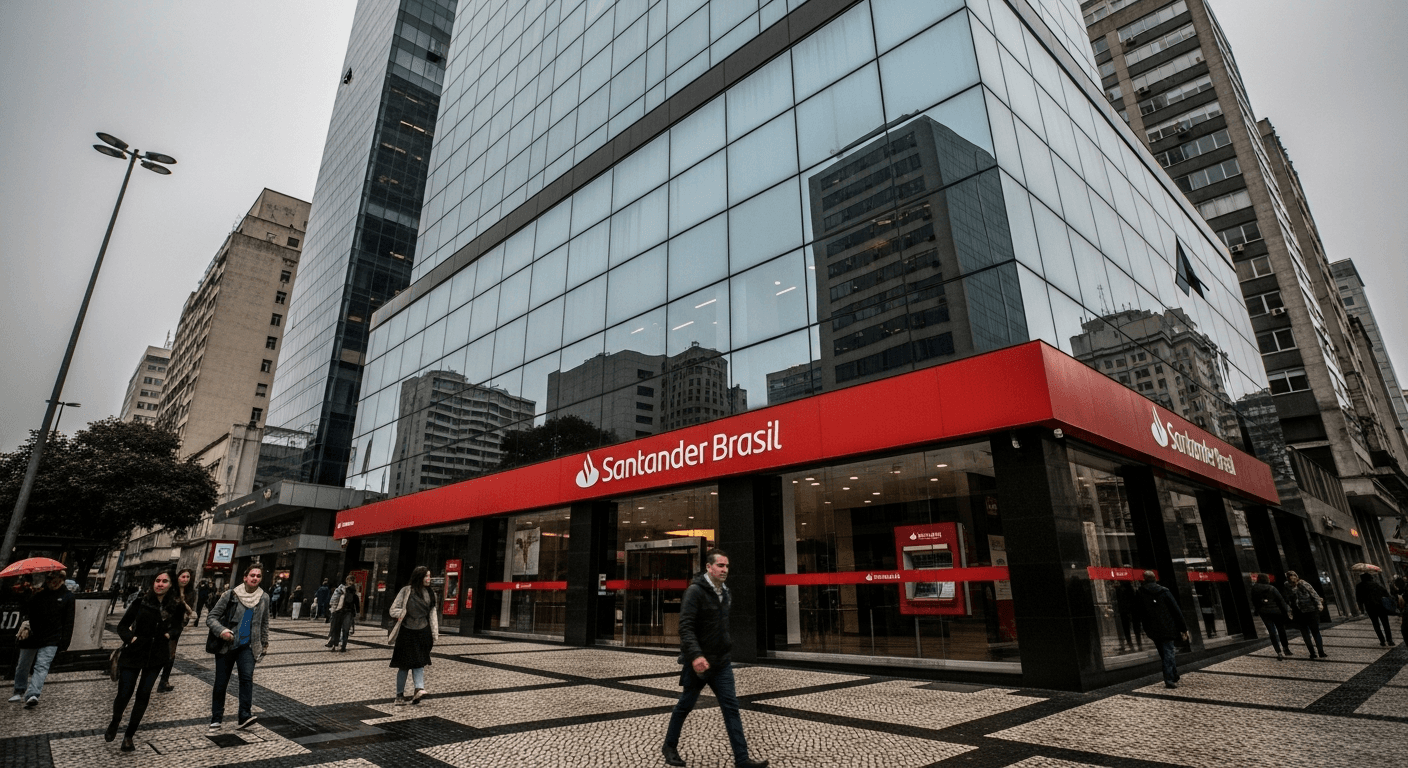
Santander Brasil (SANB11), one of the largest private sector banks in Brazil, posted a significant earnings miss for the second quarter of 2026, reporting recurring net income of R$3.01 billion, which marks a 17.6% drop year-over-year. The core driver behind the decline was an aggressive build-up in loan-loss provisions, reflecting continued pressure on credit quality across the Brazilian economy. The bank's Provisions for Doubtful Debts (PDD) surged 20.6% quarter-over-quarter to R$7.654 billion, a move that immediately pressured its stock and sent a cautionary signal across the broader financial sector.
The mechanism for the sharp profit contraction was directly linked to management's decision to front-load provisions in what it called a 'challenging credit environment,' alongside specific write-offs and one-off items related to wholesale cases. This focus on de-risking the balance sheet came at a cost to profitability: the bank's Return on Equity (ROE) slipped to 12.5%, a level well below the current Selic rate, making the operational return less compelling than a risk-free investment. This marks the second consecutive quarter where the bank has missed consensus expectations, confirming that the strategic shift toward higher-quality, lower-spread assets is weighing heavily on near-term earnings.
The market reaction was swift and negative, with the sell-off extending beyond the Santander Brasil ticker (SANB11). On the B3, shares of Santander Brasil tumbled 6.98% in trading to R$25.74, pushing the stock close to the lower end of its 52-week trading range. The broader contagion effect was visible on rival Brazil bank stocks, with Itaú Unibanco (ITUB4) falling 2.43% to R$41.82 and Bradesco (BBDC4) shedding 2.18%, contributing to the Ibovespa today closing 1.52% lower at 173,885.34 points. The combined pressure from the financial heavyweights, which carry significant weight in the benchmark index and in the Brazil ETF (EWZ), underscored investor concerns that the credit tightening cycle may not yet have peaked for the sector.
Investors watching the fallout from this miss should focus on the upcoming results from Santander's peers, namely Itaú Unibanco and Bradesco, to determine if the provision spikes seen at Santander are an isolated issue or a systemic problem for Brazil bank stocks. Santander's management has already indicated in its guidance that it expects ROE to remain confined to the 12% to 15% range through the end of 2026, suggesting that the full recovery will be a slow, multi-quarter process. Any further increase in the sector's cost of risk or continued spread compression will likely determine whether the Ibovespa index can regain the ground lost today.
Related coverage
Markets · PRO
Brazil Finance Ministry Cuts 2026 GDP Forecast to 2.0% on Drag From High Selic Rate
Published
Markets
Brazil's Election Divide Crystallizes Over Fiscal Rules, Lula Rejects PIX Privatization
Published
Markets · PRO
Petrobras to Drill Three More Equatorial Margin Wells After Securing IBAMA Approval
Published