
Robust Foreign Direct Investment in June Shields Brazilian Real from Current Account Deficit
Brazil’s current account deficit of $2.33 billion in June was more than covered by strong FDI of $9.075 billion, easing pressure on the BRL.
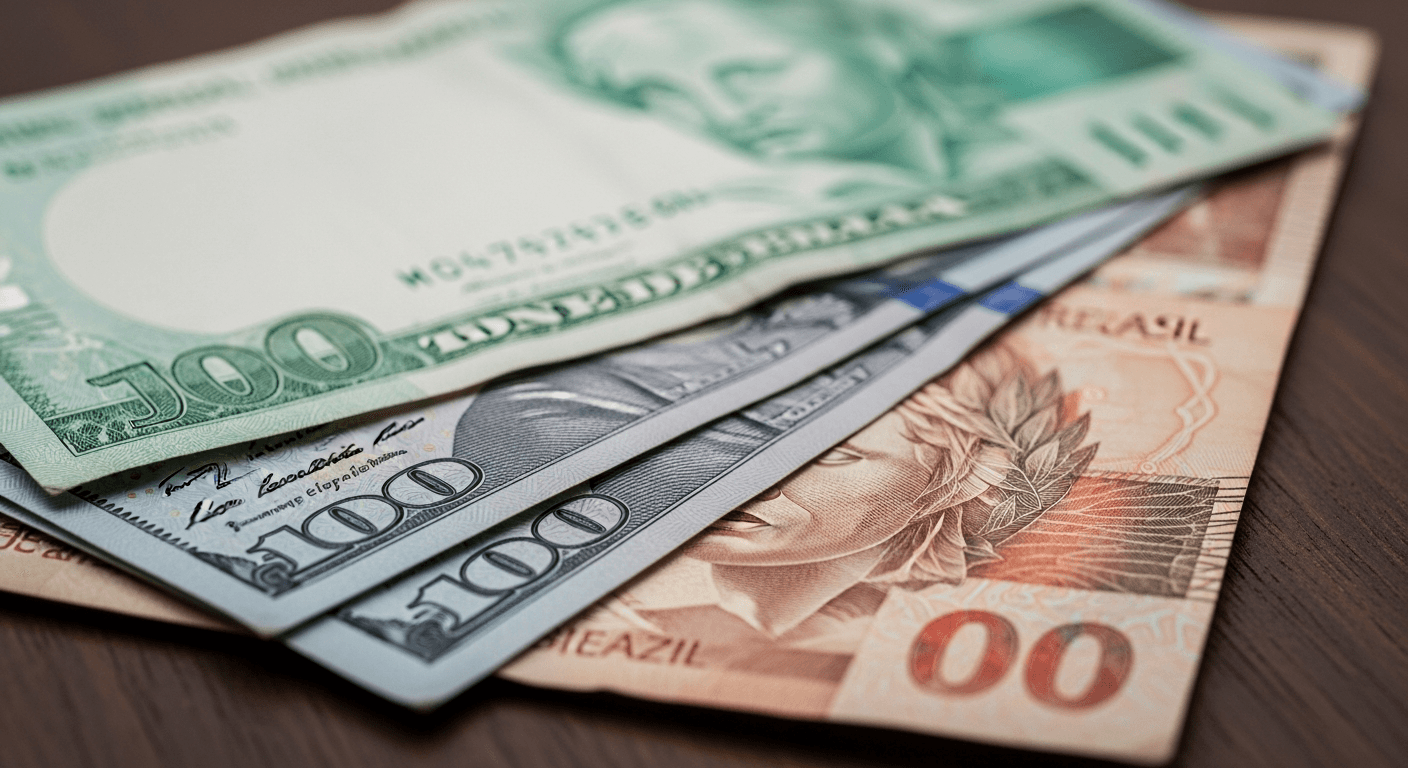
Brazil’s current account deficit narrowed slightly more than expected in June, driven by an influx of Foreign Direct Investment (FDI) that more than quadrupled the monthly shortfall, providing crucial support for the Brazilian real (BRL) and the broader market. The current account, a key measure of trade and transfer payments with the rest of the world, registered a deficit of $2.33 billion for the month, narrowly beating the market consensus forecast of a $2.45 billion shortfall, according to Central Bank of Brazil data released today. However, the critical takeaway for investors was the surging Foreign Direct Investment, which hit $9.075 billion, blowing past the estimated $5.0 billion and easily financing the deficit nearly four times over.
This substantial FDI inflow is the fundamental mechanism that stabilizes Brazil’s external accounts, effectively reducing the need to draw down foreign reserves or put downward pressure on the Brazilian real. A current account deficit must be funded by capital inflows, and when high-quality, long-term FDI—investment in production, services, and infrastructure—exceeds the shortfall, it signals robust investor confidence in the country's long-term economic prospects. The sheer magnitude of the FDI figure underscores Brazil’s continued attractiveness to global capital despite higher domestic interest rates. Over the last 12 months, the accumulated current account deficit has now tightened to 2.46% of Gross Domestic Product (GDP).
The news comes as the benchmark Ibovespa (IBOV) traded flat at 175,334.45 points. While the Ibovespa showed minimal movement, individual equities reflected varied performance, with state-controlled oil giant Petrobras (PETR4) falling 2.84% to R$41.01, and miner Vale (VALE3) posting a small gain of 0.60% to R$75.69. Financial stocks provided a measure of support, with Itaú Unibanco (ITUB4) climbing 1.40% to R$42.69. The ability of Brazil to self-finance its external accounts is a material factor that limits volatility for the BRL, which is often a key variable impacting the earnings and valuation of Brazilian ADRs like those in the main Brazil ETF (EWZ).
For investors tracking Brazil’s external strength, the immediate focus remains on the trend of capital flows, particularly in a high-interest-rate environment. The market will watch the upcoming trade balance figures to gauge whether the robust export performance that has characterized the year can maintain its momentum, further reducing the deficit component. Should the FDI trend hold near or above this level, it will continue to provide a substantial structural offset to the current account shortfall, acting as a crucial buffer for the BRL against any renewed global risk-off sentiment.
Related coverage
Markets · PRO
Brazil Finance Ministry Cuts 2026 GDP Forecast to 2.0% on Drag From High Selic Rate
Published
Markets
Brazil's Election Divide Crystallizes Over Fiscal Rules, Lula Rejects PIX Privatization
Published
Markets · PRO
Petrobras to Drill Three More Equatorial Margin Wells After Securing IBAMA Approval
Published