
GE Vernova locks in 15-year power contract in Brazil's Amazon
US power equipment giant GE Vernova has launched commercial operations at the Azulão I thermal plant in Amazonas, securing a 15-year grid-stabilization services contract.
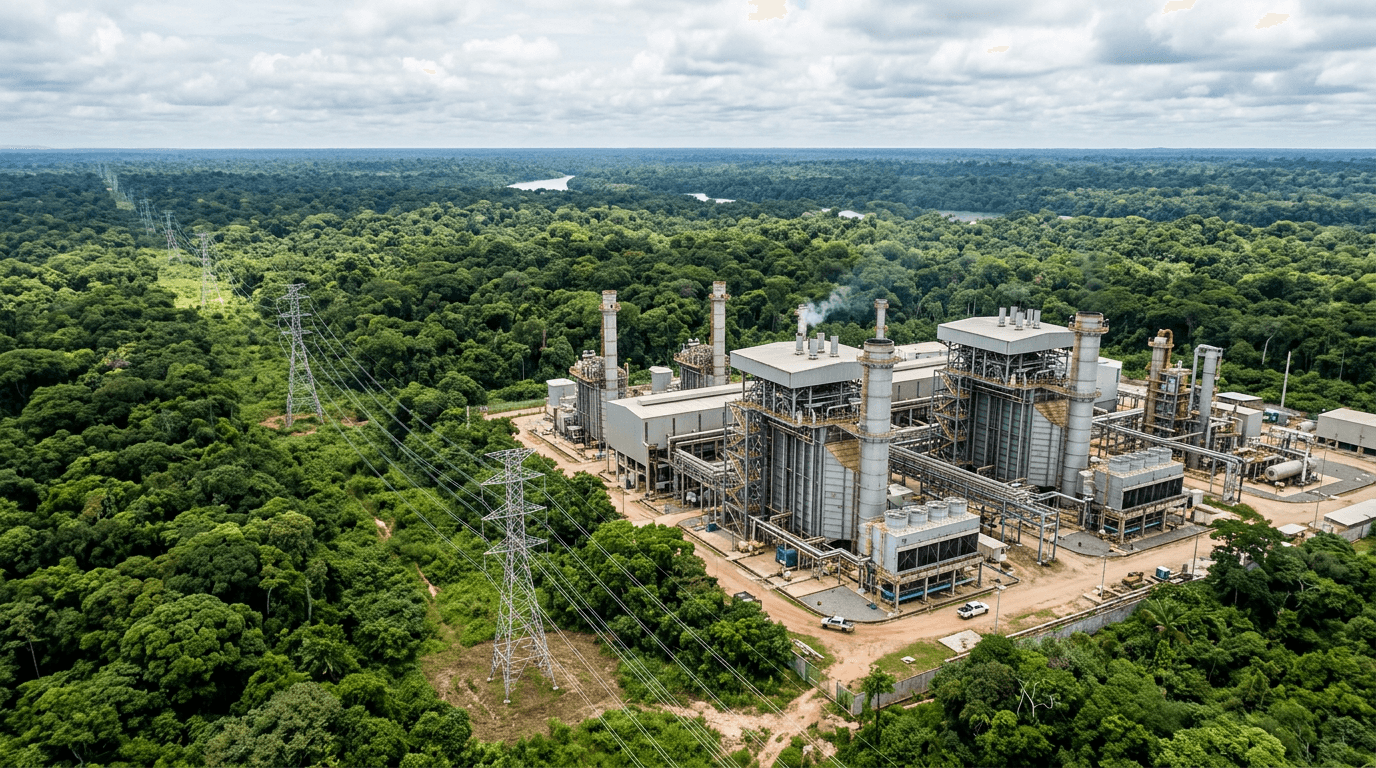
American industrial giant GE Vernova has officially expanded its footprint in South America's largest economy, securing a long-term operational foothold in one of the most challenging geographical regions on earth. The Massachusetts-based energy equipment spin-off has finalized a major commercial launch that anchors its technology at the heart of Brazil's northern power infrastructure, guaranteeing a steady stream of service revenue for the next decade and a half.
On August 19, 2026, GE Vernova and Brazilian energy operator Eneva announced the official start of commercial operations at the Azulão I thermal power plant. Located in Silves, a remote municipality in the state of Amazonas roughly 205 miles from the regional capital of Manaus, the facility is designed to address a critical vulnerability in Brazil's power grid: balancing the rapid growth of intermittent renewable energy with reliable, dispatchable power.
The newly operational plant is contracted to supply 295 megawatts of capacity to Brazil's National Interconnected System under a 15-year contract. Alongside the equipment installation, GE Vernova secured a matching 15-year service agreement to manage ongoing maintenance, parts, and operational support for the plant's advanced turbine systems.
Bridging the Amazon Transmission Gap
Operating a heavy industrial power plant in the middle of the Amazon rainforest presents extreme logistical hurdles. The electricity generated at Azulão I must travel along the Tucuruí-Macapá-Manaus transmission corridor. Stretching approximately 1,150 miles, it is widely considered by electrical engineers to be one of the longest and most technically demanding high-voltage transmission lines in the world.
To prevent electrical interference and stabilize the long-distance flow of energy, GE Vernova equipped the plant with custom-engineered Sub-Synchronous Resonance blocking filters. The plant relies on a high-performance GE 7HA.02 gas turbine, which can ramp electricity production up or down rapidly to compensate for sudden drops in regional wind or solar output.
The Grid-Stabilization Strategy
The project aligns with Brazil's broader energy transition goals. According to the Brazilian government's Ten-Year Energy Expansion Plan, renewable sources are projected to account for more than 85% of the country's electricity generation by 2035. However, the seasonal nature of Brazil's hydroelectric reserves—which historically suffer during droughts—and the expansion of weather-dependent solar and wind farms have forced grid operators to rely on natural gas plants to prevent blackouts.
By partnering with Eneva, the largest private natural gas operator in Brazil, GE Vernova positions its gas power division as an essential stabilizer for the national grid. The Azulão I facility represents the first phase of a broader gas-to-power complex that is expected to eventually deliver up to 950 megawatts of combined capacity to the region.
In your brokerage app
Investors holding shares of GE Vernova Inc., listed in New York, are exposed to the company's expanding long-term service contract backlog in emerging markets. The company's operations in Brazil, where its technology already supports approximately 40% of the country's electricity generation, are also accessible through broad-market industrial and clean energy exchange-traded funds, such as the iShares Global Clean Energy ETF, which holds the stock as part of its global transition portfolio.