
Chicago soybean speculators hold net-long bets amid Brazil supply watch
CFTC data shows speculative traders maintained a net-long position of 271,099 contracts as South American planting shapes the global agricultural outlook.
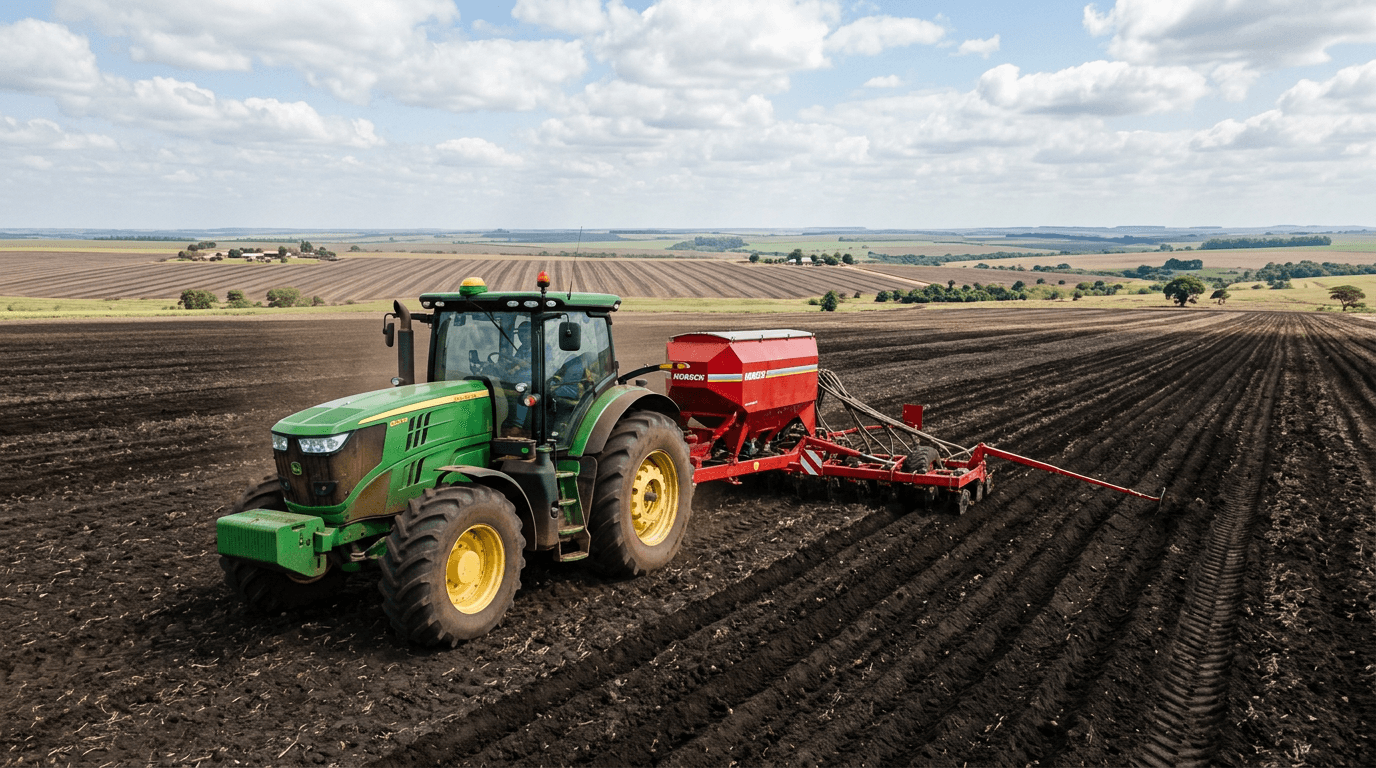
American retail investors tracking agricultural commodities or holding diversified commodity exchange-traded funds are seeing a highly active but cautious derivatives landscape. Weekly trader positioning data provides critical context for the supply-and-demand dynamics of global food crops, rather than a direct price forecast.
According to the U.S. Commodity Futures Trading Commission (CFTC) Commitments of Traders report for the observation date of October 13, 2026, speculative interest in Chicago Board of Trade (CBOT) soybeans remains heavily weighted to the buy side. Non-commercial traders—a category that includes large hedge funds and institutional money managers—held 356,266 long contracts compared to 85,167 short contracts, resulting in a net-long position of 271,099 contracts. Total open interest for the CBOT soybean contract (code 005602) stood at 1,072,235 contracts as of that same October 13, 2026 reporting date.
This positioning reflects a delicate balance in the global agricultural trade, where U.S. production closely interacts with South American export capacity. Brazil, the world's largest exporter of soybeans, plays a dominant role in shaping these Chicago Board of Trade dynamics. When Brazilian planting conditions are favorable, global supply expectations rise, often putting downward pressure on Chicago futures and prompting large funds to adjust their long exposure. Conversely, any logistical bottlenecks in Brazilian ports or weather disruptions in key agricultural states like Mato Grosso can quickly trigger speculative buying in U.S. contracts.
For international investors, this global agricultural cycle is heavily viewed through the lens of political risk and currency fluctuations in South America. On October 15, 2026, Brazil's national supply agency, Conab, released its first official survey for the 2026/27 cycle, projecting a record-breaking soybean harvest of 181.6 million metric tons. This represents a 0.7% increase from the previous season, driven by a 1.4% expansion in planted area to 49.3 million hectares. Sowing in key Brazilian states like Mato Grosso and Paraná was already 25% and 36% complete, respectively, by mid-October 2026.
The currency market adds another layer of complexity to the brazil stock market news. A stronger Brazilian real raises the cost of South American exports for global buyers, which historically shifts some purchasing demand back to U.S. farmers. Conversely, a weaker real makes Brazilian soybeans cheaper on the international market, intensifying competition for U.S. exporters. Speculative traders closely monitor these macroeconomic indicators alongside weekly crop progress reports to calibrate their exposure.
In your brokerage app
For retail investors looking to gain exposure to global agricultural trends, Adecoagro S.A. is listed in New York and operates extensive farming and grain production operations across South America.