
Brazil’s Steel Giant Gerdau Pivots to Data Centers, Renewables to Rebalance Local Business
Gerdau is undertaking a decade-long strategy to reposition its Brazil operations in high-growth infrastructure, offsetting the challenge of cheap steel imports.
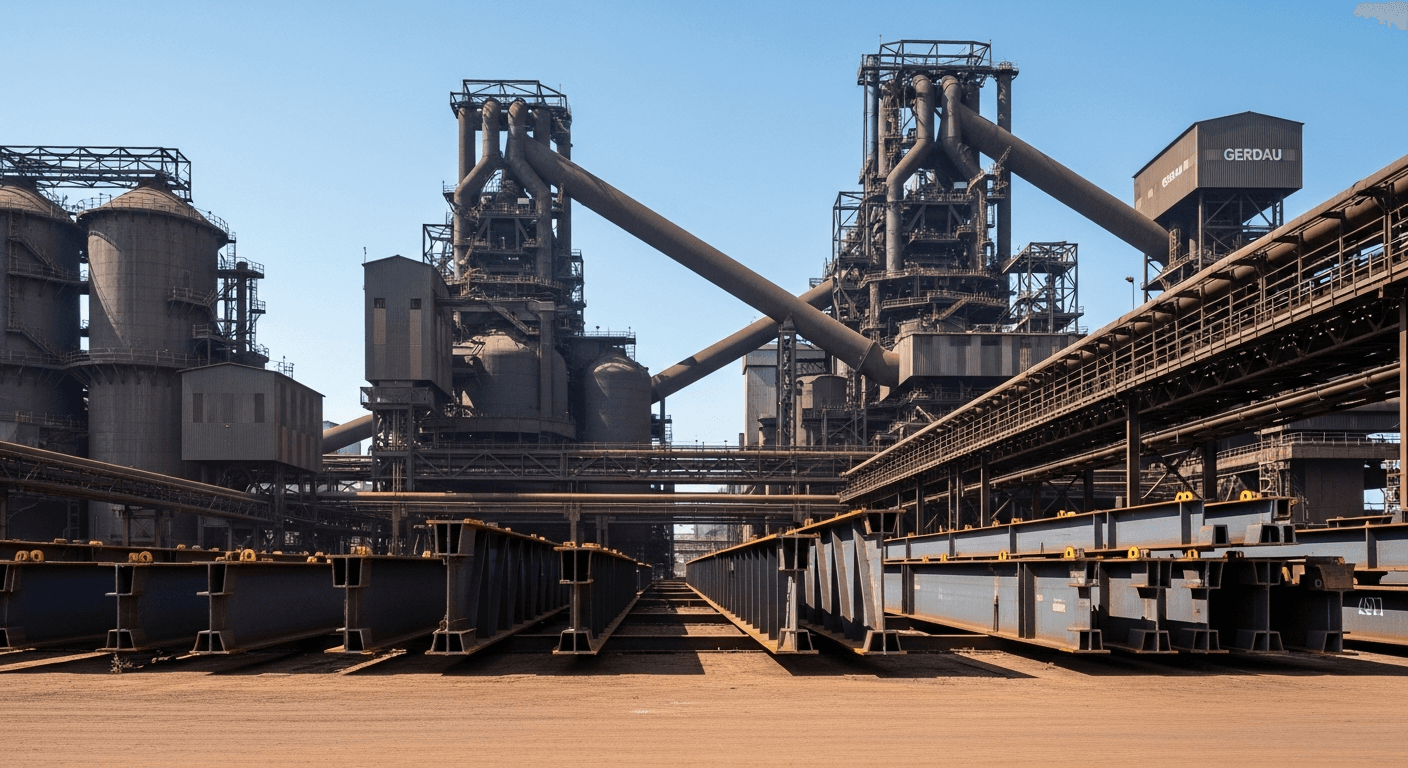
Brazil’s largest steel producer, Gerdau, is launching a major, long-term strategic pivot aimed at insulating its domestic business from relentless import pressure and the high operational costs known as the “Custo-Brasil.” The plan involves shifting investments and focus in the country toward supplying high-growth, technology-driven sectors like data centers and renewable energy infrastructure, mirroring the successful strategy it has already deployed in the United States.
The push, often referred to internally as the 'New Gerdau' strategy, is a defensive realignment to rebalance a heavily skewed financial profile. In the first quarter of 2026, the company’s Brazilian operations accounted for only about 25% of its consolidated adjusted EBITDA, while the North American segment contributed a dominant 75% of the total, largely driven by resilient demand in its key US markets for construction related to green energy and technology. Gerdau’s Chief Executive Officer, Gustavo Werneck, has been vocal about the challenge, describing the Brazilian market as continually "affected by the inflow of unfair imports," particularly citing subsidized Chinese steel being sold below the cost of local raw materials.
This structural problem, which management now views as a permanent feature rather than a cyclical issue, has forced the steelmaker to reduce capacity in older, less-profitable units, such as the recent adjustment at its Recife mill. To shore up the domestic operation’s competitiveness, Gerdau is focusing investments on productivity and integration. Key projects include the expansion of its mining operations at Miguel Burnier, which is nearing completion and is projected to add over R$1 billion in annual earnings before interest, taxes, depreciation, and amortization (EBITDA) once fully operational. The company is also increasing its self-generation of clean energy, including a new solar park in Goiás, further integrating the domestic operation with the fast-growing renewables sector.
For an intelligent foreign investor, this strategic move signals a fundamental change in how a major Brazilian industrial player is adapting to domestic policy shortfalls and global trade dynamics. Instead of relying on trade protections, the company is choosing to compete by shifting its product mix to complex, high-margin structural steel required for the boom in utility-scale solar and wind projects, and the rapidly growing needs of hyperscale data centers across Brazil. This focus ensures Gerdau captures demand from the country’s modern infrastructure buildout while strengthening its cost base against persistent cheap imports.
What it touches: The pivot is material to Gerdau S.A. (GGBR4) and its holding company, Metalúrgica Gerdau S.A. (GOAU4). It also affects the broader Brazilian industrial sector (VALE3 fell 2.02% today to 74.4) and infrastructure spending, as the success of the strategy directly impacts the supply chain for data center development and renewable energy projects in Brazil.
Related coverage
Markets · PRO
Brazil Finance Ministry Cuts 2026 GDP Forecast to 2.0% on Drag From High Selic Rate
Published
Markets
Brazil's Election Divide Crystallizes Over Fiscal Rules, Lula Rejects PIX Privatization
Published
Markets · PRO
Petrobras to Drill Three More Equatorial Margin Wells After Securing IBAMA Approval
Published