
Brazil’s First Battery Auctions Face R$20 Billion Risk Over Who Pays the Bill
Brazil will hold its first battery storage auctions in December, expected to draw R$20 billion, but a regulatory fight over costs could threaten project viability.
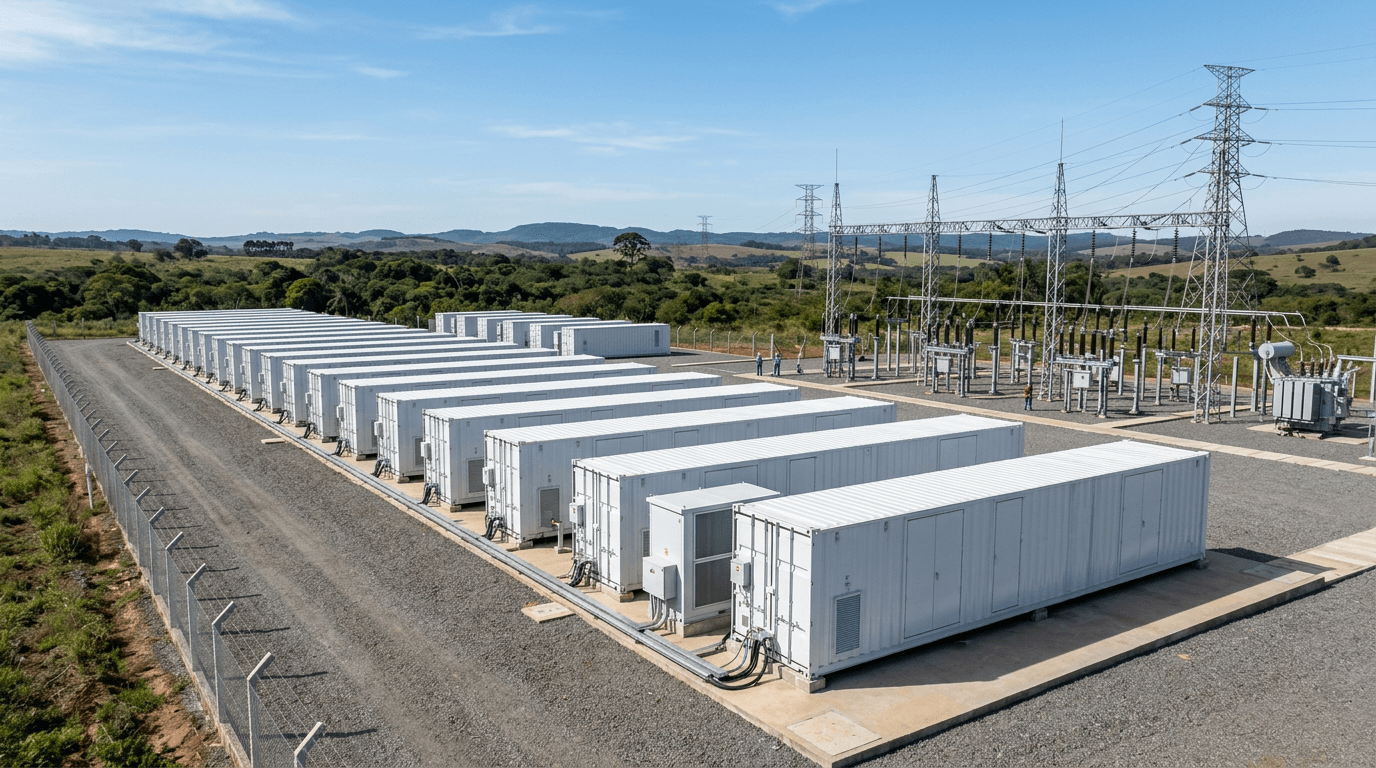
The Brazilian government is set to launch its first-ever large-scale auctions for Battery Energy Storage Systems (BESS) in December 2026, creating a major new market expected to mobilize up to R$20 billion ($3.9 billion) in private investment, but the plan is immediately clouded by a regulatory dispute over who will ultimately pay the cost of the new infrastructure. The National Electric Energy Agency (ANEEL), Brazil’s federal electricity regulator, is finalizing the rules for the tenders, which are designed to integrate the country’s booming solar and wind power generation and inject reliability into the national grid.
The auctions, scheduled for December 2 and 4, will be split into two separate events: one that requires winning projects to meet a minimum level of domestically-manufactured equipment, and a second one open to global suppliers. The move is crucial for a power system increasingly strained by renewable energy variability, where forced cuts of generation—known as “curtailment”—have reached as high as 24% in some regions, according to industry reports. By contracting batteries, the government is looking to absorb excess solar and wind power when it is generated and discharge it during peak demand hours, stabilizing the flow of electricity to consumers.
The viability of these projects, which will receive 15-year contracts, is threatened by an impasse over the 'Capacity Reserve Charge.' A federal law passed in 2025 mandated that the costs of contracting the new battery capacity must be borne exclusively by power generators, rather than being spread across the entire energy sector or passed to the final consumer. Industry agents, including electric utilities and generator associations, argue that the benefit of a more reliable grid is systemic and should not be concentrated solely on their balance sheets. They maintain that a better approach would be to divide the cost among generators, distributors, and transmission companies, or even consumers in general, before the contracts begin supply in August 2028.
ANEEL has proceeded with setting the technical and financial requirements for the auctions, including steep performance bonds meant to reduce speculation. However, the regulator’s decision on the precise methodology for allocating the charge among generators—the central point of contention—remains undefined. The industry is simultaneously lobbying for an amendment to the law in the National Congress, suggesting that the regulatory fight over cost-sharing could continue well after the December tenders are held. The success of this inaugural market, and the projected R$20 billion in capital it is set to attract, now depends heavily on ANEEL’s ability to resolve this material uncertainty and deliver a legally secure framework before the final bids are due.
What it touches
The auctions are directly relevant to major electric utilities and energy companies operating in Brazil, particularly those with significant generation assets that will be required to bear the capacity reserve costs. Global suppliers of battery storage systems and associated power conversion technology—many of them Chinese or American—will be competing for the project awards, which will run on Brazil’s B3 stock exchange.