
Brazilian Real Powers To Top Currency Spot In 2026 As 14.25% Selic Rate Fuels Carry Trade
The Brazilian Real (BRL) is one of the world's best-performing currencies in 2026, driven by a high 14.25% Selic rate.
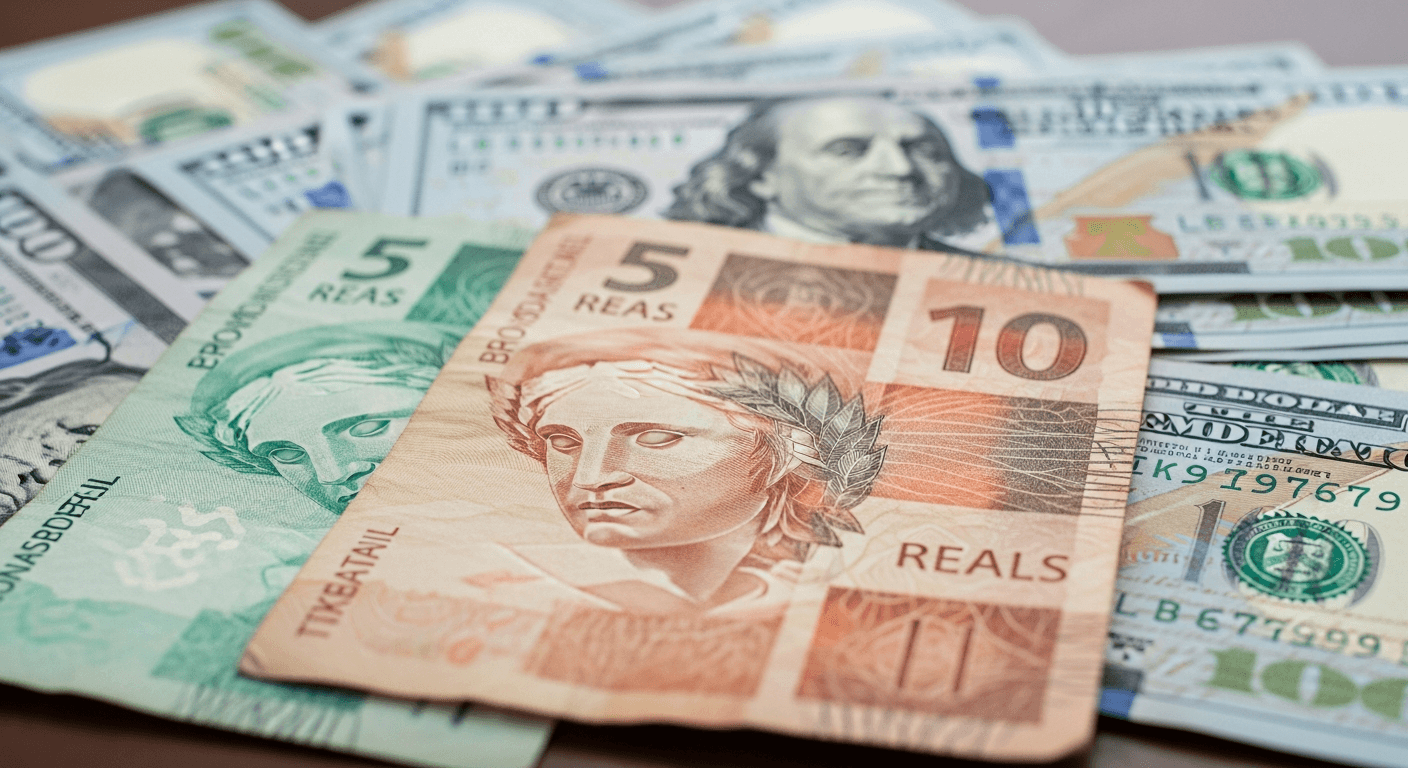
The Brazilian Real (BRL) has solidified its position as one of the world's top-performing currencies in 2026, with the high benchmark Selic interest rate attracting a wave of foreign capital seeking high-yield BRL-denominated fixed income. The US Dollar-Real pair (USD/BRL) is down approximately 6.43% year-to-date, trading near 5.1179 as of Thursday’s close, following a period of strong appreciation that analysts attribute primarily to Brazil’s restrictive monetary policy. That strength is underpinned by the Central Bank of Brazil’s (BCB) benchmark Selic rate, currently at 14.25%, which provides an outsized risk-adjusted return for global investors.
The primary mechanism driving the BRL’s strength is the lucrative global carry trade, where investors borrow in a low-interest-rate currency (like the US Dollar) to buy assets in a high-interest-rate currency (like the Real). With the Selic rate held at or near its current level—among the highest real interest rates globally—Brazil has become a magnet for this type of flow. This capital inflow is visible in the nation's bond market, where non-resident investors held an estimated R$879 billion in Brazilian government bonds as of April 2026, with a large concentration in fixed-rate instruments that benefit directly from the elevated interest rates. This continued demand for BRL-denominated assets has placed upward pressure on the currency, offsetting other domestic fiscal and political risks.
The strength of the currency and the fixed income market has created a noticeable divergence from Brazilian equity markets, with some prominent fund managers citing the Real as the "best asset in Brazil" while remaining cautious on local stocks. Today's broader market move reflects this divergence, with the benchmark Ibovespa (IBOV) falling 1.52% to 173,885.34. While state-controlled oil giant Petrobras (PETR4) finished up 1.92% on internal news, key financial and mining stocks declined, with Itaú Unibanco (ITUB4) down 2.43% and miner Vale (VALE3) dropping 0.85%, confirming the market’s mixed mood and risk aversion outside of high-yield carry assets.
The sustainability of the Real’s carry-trade appeal hinges entirely on the path of the Selic rate. The BCB’s Monetary Policy Committee (COPOM) cut the rate by 25 basis points in June to the current 14.25% level, marking the third consecutive quarter-point reduction. Attention now turns to the next COPOM meeting, widely expected in early August, where market consensus forecasts a further 25 basis point reduction to 14.00%. Any decision to accelerate the pace of cuts—or a significant moderation of inflation and external risk that necessitates a faster unwinding of the restrictive policy—would erode the real yield advantage and trigger an immediate outflow, putting the BRL's year-long winning streak under serious pressure.
Related coverage
Markets · PRO
Brazil Finance Ministry Cuts 2026 GDP Forecast to 2.0% on Drag From High Selic Rate
Published
Markets
Brazil's Election Divide Crystallizes Over Fiscal Rules, Lula Rejects PIX Privatization
Published
Markets · PRO
Petrobras to Drill Three More Equatorial Margin Wells After Securing IBAMA Approval
Published