
Brazil Shorter Workweek Law Could Slash Agribusiness Profits 15%
Brazil's newly promulgated Constitutional Amendment 141 ends the 6x1 workweek, forcing major food processors held by global investors to face soaring labor costs.
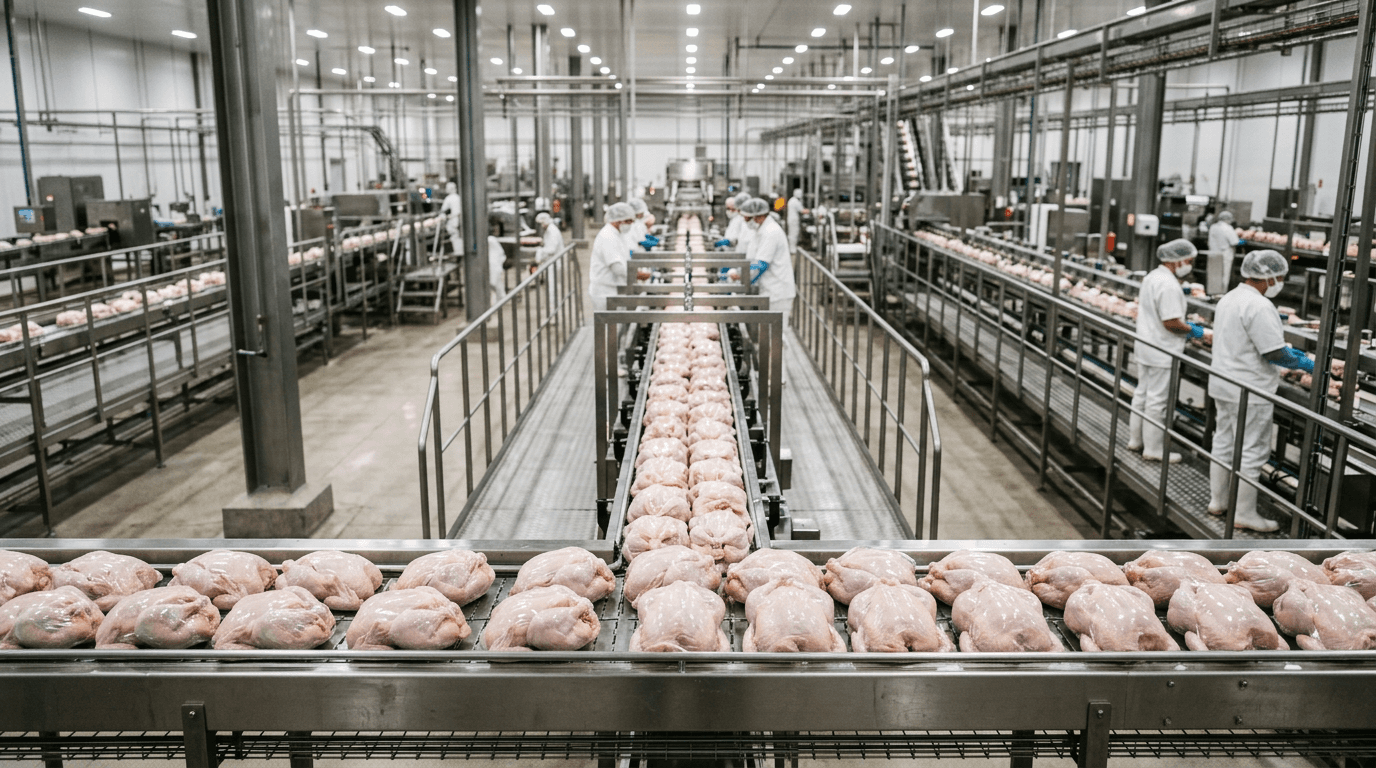
American retail investors holding shares of global food giants may soon see corporate margins squeezed by a major labor overhaul in South America. On October 16, 2026, Brazil's National Congress officially promulgated Constitutional Amendment 141, a landmark reform that abolishes the country's traditional 6x1 workweek—six days of work followed by one day of rest. The new law mandates a transition to a 5x2 shift schedule, guaranteeing workers two paid weekly rest days and reducing the maximum workweek from 44 to 40 hours with no reduction in pay.
This sweeping legislative change is set to drive up operational costs for major Brazilian food and meat processors that supply global markets. According to a study titled "The Price of a Shorter Week" published on October 16, 2026, by Brazilian investment bank BTG Pactual, the transition will force companies to hire additional staff or pay overtime to maintain continuous operations. Food manufacturer M. Dias Branco is projected to be among the hardest hit, with BTG Pactual estimating that the new labor rules could slash the company's projected 2027 net income by up to 15%.
The financial toll on Brazil's massive meatpacking sector is also substantial. BTG Pactual estimates that the shorter workweek will cost JBS, the world's largest meat processing company, approximately R$ 1 billion ($175 million) annually. Meanwhile, poultry and pork processor BRF is projected to face an annual cost increase of R$ 824 million ($144 million), which represents about 6.8% of its projected 2027 earnings before interest, taxes, depreciation, and amortization (EBITDA).
The political backdrop of the reform has added to the anxiety of foreign investors monitoring the brazil stock market. The amendment was fast-tracked through Congress and promulgated by President Luiz Inácio Lula da Silva just nine days before the high-stakes October 25, 2026, presidential runoff election. While Lula celebrated the measure as a historic victory for the working class, business associations have warned of severe inflationary pressures. To cushion the blow, Brazil's Finance Ministry announced on October 16, 2026, that the government is studying special credit lines to help affected businesses adapt to the new labor costs.
The transition to the new schedule will occur in two stages. Starting December 15, 2026—60 days after the amendment's publication—the maximum workweek drops from 44 to 42 hours, and the two-day weekly rest requirement takes effect. Exactly one year later, in December 2027, the weekly limit will fall to its permanent ceiling of 40 hours. How successfully these multinational corporations can renegotiate collective bargaining agreements or pass these rising labor costs onto global consumers will determine the ultimate impact on shareholder portfolios.
In your brokerage app
For investors tracking international food holdings, JBS is listed in New York as JBS N.V., and its Brazilian parent company shares trade on the local exchange. Its competitor BRF, also heavily exposed to the new labor costs, is widely held within broad emerging market funds. Retail investors can gain diversified exposure to these and other major Brazilian equities through the iShares MSCI Brazil ETF, the benchmark exchange-traded fund tracking the country's largest publicly traded corporations.