
Brazil Finance Minister Blames STF Instability and 'Fiscal Prejudice' for Economic Headwinds
Finance Minister Dario Durigan said institutional instability in the Supreme Court is hurting the economy and credibility of foreign investors.
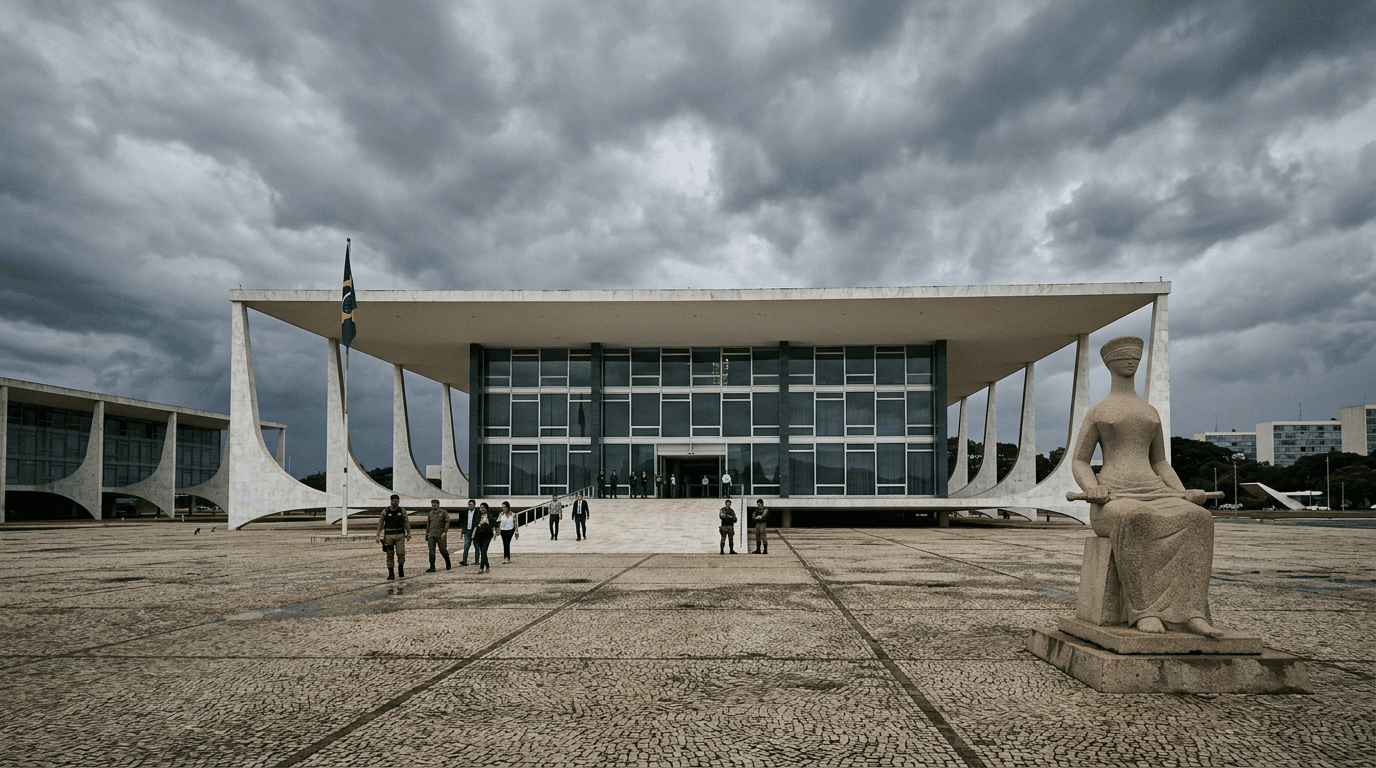
Brazil’s Finance Minister Dario Durigan publicly laid blame for the nation’s economic headwinds on both the judiciary and financial market skepticism, stating that the current institutional crisis in the Supreme Federal Court (STF) is damaging the country’s credibility with foreign investors.
In an interview published on Monday, Durigan—a key economic voice for President Luiz Inácio Lula da Silva’s administration—acknowledged that instability at the highest level of the judiciary "hurts the economy" and "the credibility of foreign investors," creating a sense of "unpredictability" and legal uncertainty that causes companies to delay investments. The Finance Minister's comments represent a significant departure from the government's usual reluctance to publicly criticize the influential court.
The remarks come amid a severe crisis for the STF, Brazil's highest constitutional court, following the disclosure of leaked messages between prominent Justice Alexandre de Moraes and Daniel Vorcaro, the former banker of the now-liquidated Banco Master. Vorcaro, who was arrested late last year in connection with a multibillion-dollar fraud scheme, allegedly sought advice from the Justice on the eve of his arrest, creating a major reputational and institutional crisis for the court.
Beyond the judicial crisis, Durigan also took aim at domestic financial analysts and investors, accusing the market of harboring a "fiscal prejudice" against President Lula's government. The comment is an important rhetorical point ahead of President Lula’s potential re-election bid, framing market skepticism about the government’s spending plans not as a rational response to rising public debt, but as an unfair bias.
Durigan’s argument suggests the financial market is overlooking the government's efforts to increase revenue through the expansion of tax-benefit reviews and social programs, which he confirmed would be amplified in an eventual fourth Lula mandate. The minister’s two-pronged critique—targeting the judiciary for instability and the market for unfair judgment—underscores the political complexity of managing Brazil's economy, where institutional disputes frequently spill over into market confidence.
What it touches
The combination of high-profile judicial instability and sharp fiscal rhetoric from a senior government official increases the perceived political risk premium on Brazilian assets. While the broader Ibovespa index reflects varied local factors, the heightened political noise disproportionately affects Brazilian companies listed on US exchanges as political and legal uncertainty is a primary concern for international investors. Shares of companies with a direct listing in the US, such as PagSeguro Digital (-1.88% at $9.93) and Inter & Co. (-2.28% at $5.58) were down in Monday trading, reflecting the pervasive caution.
Related coverage
Markets · PRO
Speculators Hold Extreme Net-Long Bet on Soybean Meal, Signaling High Conviction and Price Risk
Published
Markets · PRO
BlackRock Confirms Plan to Launch Local Fixed-Income ETFs in Brazil
Published
Markets
Brazil’s Election Dead-Heat Coincides With Deepening Judicial Crisis and Agro-Energy Shocks
Published