
Brazil’s Election Dead-Heat Coincides With Deepening Judicial Crisis and Agro-Energy Shocks
Brazil's political and economic stability is tested by a dead-heat election, a Supreme Court crisis, and major agricultural threats from El Niño.
Brazil’s already tense political and economic landscape has been jolted by a confluence of judicial crises, aggressive pre-election spending, and looming environmental threats that are increasing the risk premium on Latin America's largest economy. At the center of the political storm is a statistical dead-heat between President Luiz Inácio Lula da Silva and right-wing Senator Flávio Bolsonaro in opinion polls released this week, ahead of the October election.
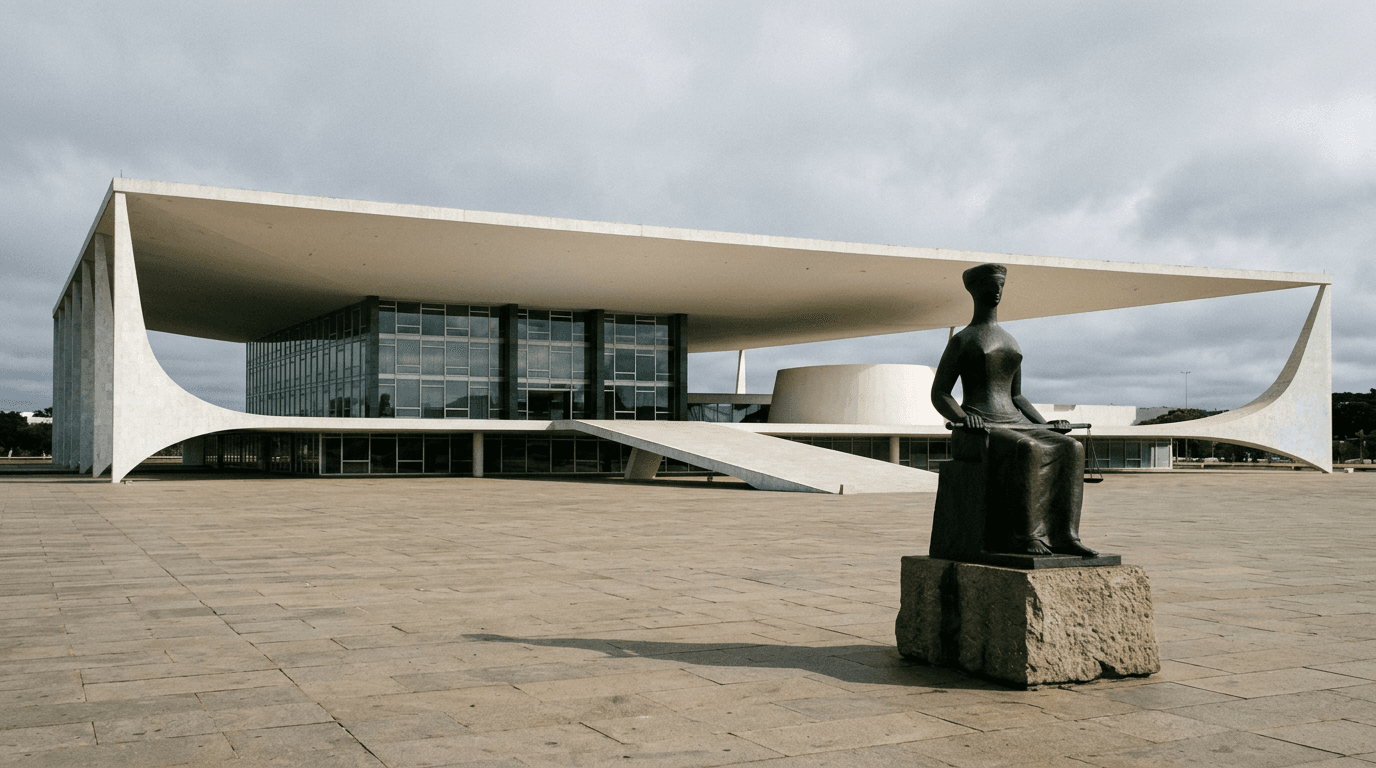
This political uncertainty is compounded by an escalating internal conflict within the Supreme Federal Court (STF), Brazil’s highest court. The dispute centers on an internal probe into Justice Alexandre de Moraes, who is facing pressure to step down following the unsealing of police documents that allege links to a disgraced banker. The issue has become intensely politicized, with Chief Justice Edson Fachin attempting to manage a power struggle between Justice de Moraes and Justice André Mendonça, who are seen as holding opposing political affiliations. The fight is raising significant questions about the regulatory environment and the impartiality of the judiciary just weeks before the presidential vote.
Against this backdrop of political turbulence, the Lula administration has stepped up economic interventions. President Lula recently sanctioned a R$30 billion credit line intended for taxi and app drivers to finance the purchase of new, lower-emission vehicles, which also serves to boost slumping auto sales ahead of the election. Meanwhile, the government is facing external pressure from stalled trade negotiations with the United States. Talks aimed at resolving U.S. tariffs of up to 37.5% on certain Brazilian exports, imposed over alleged unfair trade practices and forced labor concerns, have so far failed to produce any substantive progress, leaving key export sectors like timber and stone products in limbo.
In the agricultural heartland, the dominant story is the growing threat of a very strong El Niño weather pattern. A dry start in key soybean hubs is already stoking fears of planting delays, which could narrow the window for the all-important second-crop corn harvest. This climate uncertainty is elevating supply risk for key Brazilian crops and, along with rain delays for sugar production, is contributing to global price volatility. Separately, a booming corn ethanol sector, with over R$23 billion in new plants, is creating a new set of risks. While ethanol production surges in Mato Grosso, the expansion is increasing corn prices and creating an environmental challenge, with R$7.6 billion in forest investment challenges tied to land-use change in the ecologically sensitive Cerrado and Amazon biomes.
The key event to watch remains the October presidential election, the outcome of which will determine the government's approach to everything from judicial stability to trade and environmental policy.
What it touches
The combination of judicial and regulatory uncertainty continues to expose companies with single-asset concentration in Brazil to elevated risk. The most recent example is Sigma Lithium, whose stock dropped sharply after a Brazilian court ordered the suspension of environmental permits for its Grota do Cirilo mine over a licensing dispute with a local traditional community. The agribusiness sector is exposed to price risk, as speculators hold a near-record long bet on soybeans, making local farmers vulnerable to weather-induced production shortfalls.
Related coverage
Markets · PRO
Speculators Hold Extreme Net-Long Bet on Soybean Meal, Signaling High Conviction and Price Risk
Published
Markets · PRO
BlackRock Confirms Plan to Launch Local Fixed-Income ETFs in Brazil
Published
Markets · PRO
Speculators Hold Near-Record Long Bet on Soybeans, Creating Price Risk for Brazilian Farmers
Published