
Brazil election: US consular halt and bank scandal rock final days
Two days before Brazil's presidential election, the US suspended consular services over security fears while the Banco Master scandal upends the race.
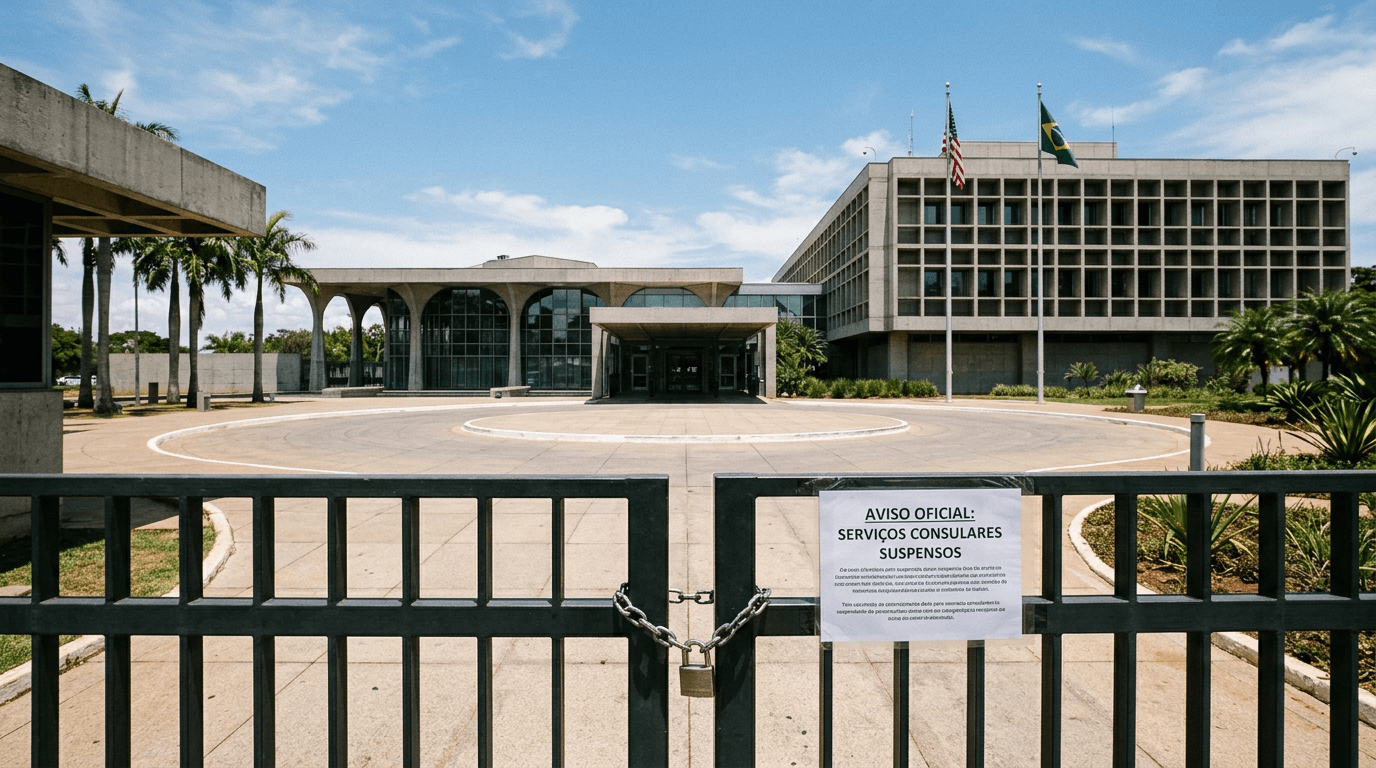
In a dramatic sequence of events just forty-eight hours before Brazil’s high-stakes presidential election, the United States government on Friday, October 2, 2026, abruptly suspended all consular services at its embassy and consulates across Brazil. Citing unspecified "security concerns," the U.S. State Department warned American citizens to avoid diplomatic facilities. The unexpected move was immediately followed by Australia, which closed its embassy in the capital city of Brasília. The closures have injected a sudden wave of geopolitical anxiety into an already highly polarized atmosphere as Latin America’s largest nation prepares to vote on Sunday, October 4.
The diplomatic disruptions coincide with a razor-thin presidential race between the 80-year-old center-left incumbent, President Luiz Inácio Lula da Silva, and his chief challenger, 45-year-old conservative Senator Flávio Bolsonaro. Senator Bolsonaro is the eldest son of former President Jair Bolsonaro, who is currently serving a prison sentence. While Lula holds a narrow lead in first-round polling, recent surveys by Datafolha and Atlas Intel show the two candidates locked in a dead heat for the projected October 25 runoff. Lula’s early campaign momentum has evaporated under the weight of a rising cost of living, high consumer debt, and a massive financial crisis.
The Banco Master Crisis
At the heart of the domestic political turmoil is the Banco Master scandal, which has been described as the largest banking fraud in modern Brazilian history. The mid-sized lender, which grew rapidly by offering unsustainably high-yield deposit certificates, was liquidated by the Central Bank in late 2025 after a massive funding collapse. Its owner, Daniel Vorcaro, was arrested by federal agents as he attempted to flee the country. The fallout triggered a historic $7.7 billion payout from Brazil’s Credit Guarantee Fund and sparked a sprawling federal investigation into money laundering and systemic corruption.
The scandal has severely damaged both political camps and triggered an unprecedented crisis within Brazil's judiciary. Supreme Court Chief Justice Edson Fachin has had to intervene to manage bitter public infighting among justices. The court unsealed documents revealing that Senator Flávio Bolsonaro is under active investigation for alleged money laundering and corruption related to Vorcaro, while key figures associated with Lula’s administration and several prominent judges have also been implicated. The widespread corruption allegations have driven voter rejection rates above 50% for both frontrunners, leaving the electorate deeply disillusioned on the eve of the vote.
Sudden Policy Shifts
The political pressure has forced Lula’s government into rapid, defensive policy maneuvers. In late September, Lula signed an executive order banning all online sports betting and gaming operations in the country, reversing a regulated market established less than two years ago. The administration justified the sudden ban as a necessary measure to protect low-income families from mounting household debt. However, the decision has thrown the domestic sports industry into chaos, with major football clubs warning of impending insolvency as lucrative betting sponsorships are abruptly cut off.
The ban is currently facing legal challenges in the Supreme Court from gaming industry groups, and it must still receive congressional approval within 120 days to remain permanent. In the meantime, the abrupt regulatory U-turn has highlighted the elevated regulatory and political risks confronting companies operating in Brazil.
What it touches
The combination of electoral uncertainty, the sudden online betting ban, and the Banco Master scandal directly exposes foreign-listed assets. International gaming firms like Flutter Entertainment (NYSE: FLUT) and Inspired Entertainment (NASDAQ: INSE) face immediate revenue hits from the sudden closure of their Brazilian digital operations. Meanwhile, Brazilian corporate heavyweights like aircraft manufacturer Embraer (NYSE: EMBJ), which just posted record third-quarter deliveries, face broader market volatility as foreign investors digest the heightened political and institutional risks ahead of Sunday's vote.