
Brazilian Real Depreciation Weighs on Emerging Market ETFs
Brazil's central bank Focus survey shows economists revising the year-end exchange rate to R$ 5.34 per dollar following fiscal and political shifts.
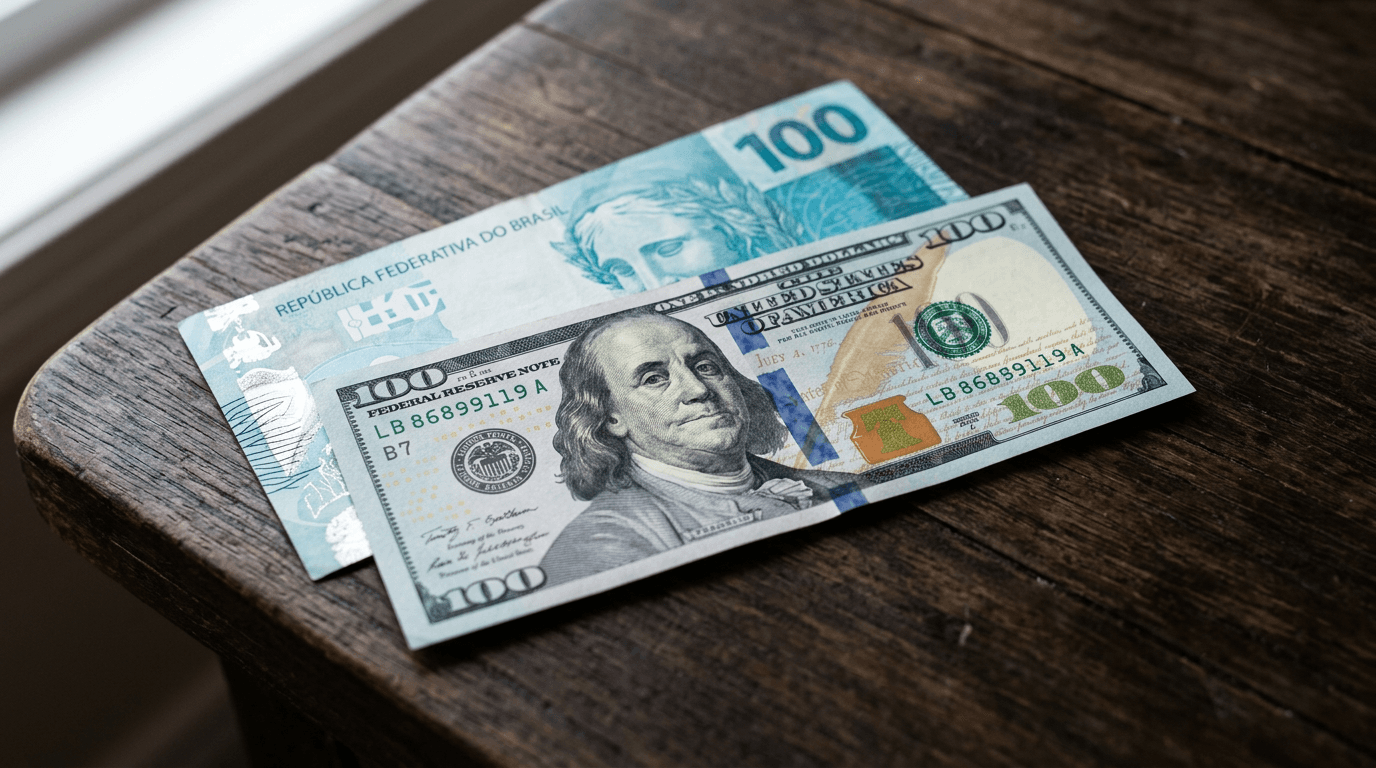
For global investors holding broad emerging market funds or international equities in their brokerage accounts, foreign exchange movements can quietly affect underlying portfolio returns. When a foreign currency depreciates against the greenback, the dollar-denominated value of those overseas assets decreases, creating a headwind for international holdings relative to domestic benchmarks.
This currency dynamic is currently playing out in Latin America's largest economy. On November 3, 2026, the Banco Central do Brasil released its weekly Focus bulletin, a survey compiling macroeconomic forecasts from over 100 private-sector financial institutions. The consensus showed that economists have revised their year-end exchange rate projection, now expecting the Brazilian real to weaken to R$ 5.34 per US dollar by the end of 2026. Just one week prior, the same survey had projected a stronger exchange rate of R$ 5.05 per USD.
This shift in the currency outlook follows the October 25, 2026, presidential runoff election, in which President Luiz Inácio Lula da Silva secured a historic fourth term. Financial analysts are closely monitoring whether the returning administration can balance its social spending commitments with fiscal discipline. If public spending pushes government debt higher, inflation risks rise, placing downward pressure on the local currency and complicating the central bank's efforts to manage borrowing costs.
High interest rates fail to anchor the currency
To combat persistent inflationary pressures, the central bank's monetary policy committee, known as Copom, is expected to adjust its benchmark interest rate, the Selic. The November 3, 2026, Focus survey showed that economists raised their expectation for the year-end benchmark interest rate to 13.50%, up from the previous week's estimate of 13.25%.
While double-digit interest rates typically attract foreign carry-trade capital to support a local currency, fiscal uncertainty has overshadowed these high yields. For global portfolios, the benefit of high interest rates is being offset by the risk of holding assets denominated in a depreciating currency.
As the central bank begins its two-day rate-setting meeting, international investors are waiting to see if policymakers will address the currency's slide. A weaker real directly reduces the corporate earnings of Brazilian companies when translated back into US dollars, affecting the performance of foreign stock holdings.
In your brokerage app
Investors holding diversified funds such as the iShares MSCI Brazil ETF, a popular exchange-traded fund listed in New York that tracks large and mid-sized Brazilian equities, are exposed to these currency fluctuations. Because the fund's underlying stocks are priced in Brazilian reals, a weaker real means each share of the fund represents fewer US dollars, regardless of how the local stock market performs in local currency terms.
