
Tech Giants Face a $3.5 Trillion AI Write-Down Risk, Gartner Warns
Gartner warns that over $3.5 trillion in AI infrastructure spending could face impairment by 2030, threatening global tech portfolios and Brazil's data center push.
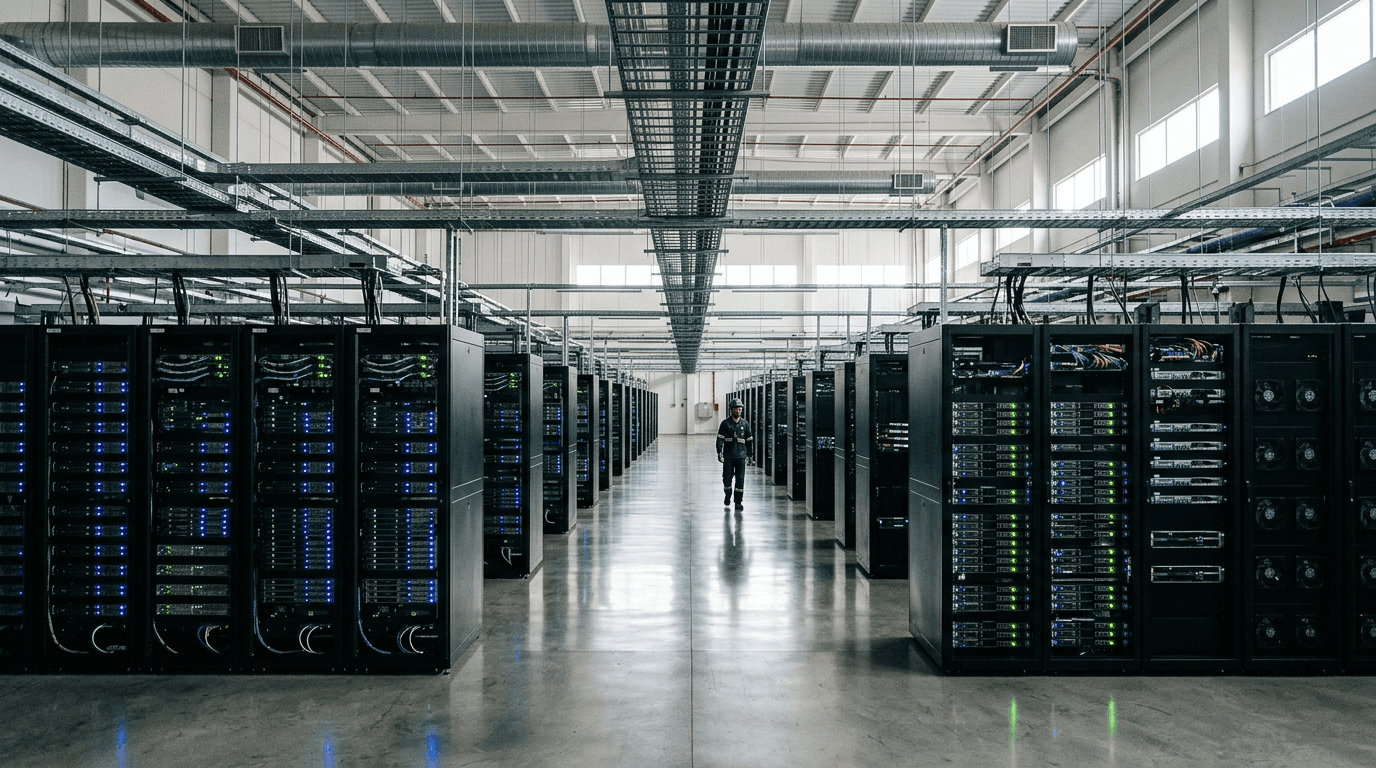
A massive warning on artificial intelligence infrastructure overspending is threatening the valuations of big tech and semiconductor holdings in global retail portfolios. On October 14, 2026, research firm Gartner published a stark forecast estimating that more than $3.5 trillion in AI infrastructure spending could face impairment by 2030 if building continues at its current pace. Impairment means companies would be forced to write down the recorded value of these physical assets because they cannot generate the financial returns to justify their cost.
This multi-trillion-dollar warning lands just as Brazil accelerates its own bid to become the premier data center and AI processing hub for Latin America. On September 15, 2026, Brazilian President Luiz Inácio Lula da Silva signed Bill 278/2026 into law, establishing the Special Taxation Regime for Data Center Services, known as ReData. The law slashes federal import and industrial product taxes on IT equipment for five years to attract massive computing facilities. Government estimates from the Ministry of Finance project the tax waiver will total approximately 5.2 billion reais ($1 billion) in 2026 alone.
The Trillion-Dollar Revenue Gap
The math behind the global warning is a simple mismatch between capital outlay and actual consumer demand. Gartner calculates that AI data center operators would need to generate a cumulative $8.5 trillion in revenue through 2030 to cover announced capital expenditures, financing costs, and a standard 12% return on invested capital. However, enterprise and consumer AI revenue attributable to those data centers is projected to reach no more than $3.6 trillion over the same period, leaving a massive $4.9 trillion revenue gap.
Because of this severe revenue shortfall, Gartner predicts that more than 80% of "neocloud" providers—the smaller, specialized cloud operators that rent out AI-optimized computing power—will cease independent operations by 2030 through acquisitions, partnerships, or outright failure.
Political Alignment Meets Market Reality
In Brazil, the political stakes surrounding these digital megaprojects are incredibly high. Unlike in the United States, where data centers face growing voter backlash over water and energy grid consumption, digital infrastructure has become a rare point of absolute consensus in Brazilian politics. Both the leftist Lula administration and right-wing opposition leaders have championed tax breaks for foreign tech companies to build out local infrastructure, viewing it as a path to "data sovereignty" and high-tech job creation.
However, the international market correction warned of by Gartner could severely disrupt these domestic political ambitions. If global hyperscalers face an investment cliff, the tens of billions of dollars in projected private investments for megaprojects like the planned $65 billion Rio AI City could slow down dramatically. Under the ReData law, participating tech companies are required to use clean, low-emission energy and guarantee that at least 10% of their processing capacity remains dedicated to the local Brazilian market. If the global parent companies are forced into massive write-downs, their appetite for expanding into emerging markets under these strict regulatory conditions will face a major test.
In your brokerage app
For retail investors holding broad-market funds, the risk is concentrated in the massive capital expenditures of US tech giants. The five major hyperscalers driving this infrastructure buildout—Alphabet, Amazon, Microsoft, Meta, and Oracle—are heavily represented in the SPDR S&P 500 ETF Trust, which tracks the broader US market. Meanwhile, the semiconductor manufacturers supplying the microchips for these data centers are held in specialized funds like the VanEck Semiconductor ETF. Any future balance-sheet write-downs by these tech giants would directly impact the net asset values of these widely held retail funds.