
How Brazil's former tech darling is returning to traditional retail
Magazine Luiza's market value collapsed from R$ 170 billion to R$ 6.6 billion, forcing a strategic shift back to physical stores.
Global e-commerce plays have faced a harsh reality check as rising interest rates and cooling consumer demand squeeze digital margins. For retail investors tracking international tech-driven retail, the dramatic rise and fall of Brazil's premier digital pioneer offers a stark lesson in market volatility.
The company at the center of this shift is Magazine Luiza, known locally as Magalu, which was once heralded as the "Alibaba of Brazil." After seeing its market capitalization swell to a peak of R$ 170 billion in November 2020, according to InvestNews, the company's valuation plummeted to R$ 6.6 billion by May 2026. This collapse followed a decade of extreme volatility, marked by two years of gains exceeding 500% followed by four consecutive years of losses, as the company struggled under the weight of high domestic interest rates and intense digital competition.
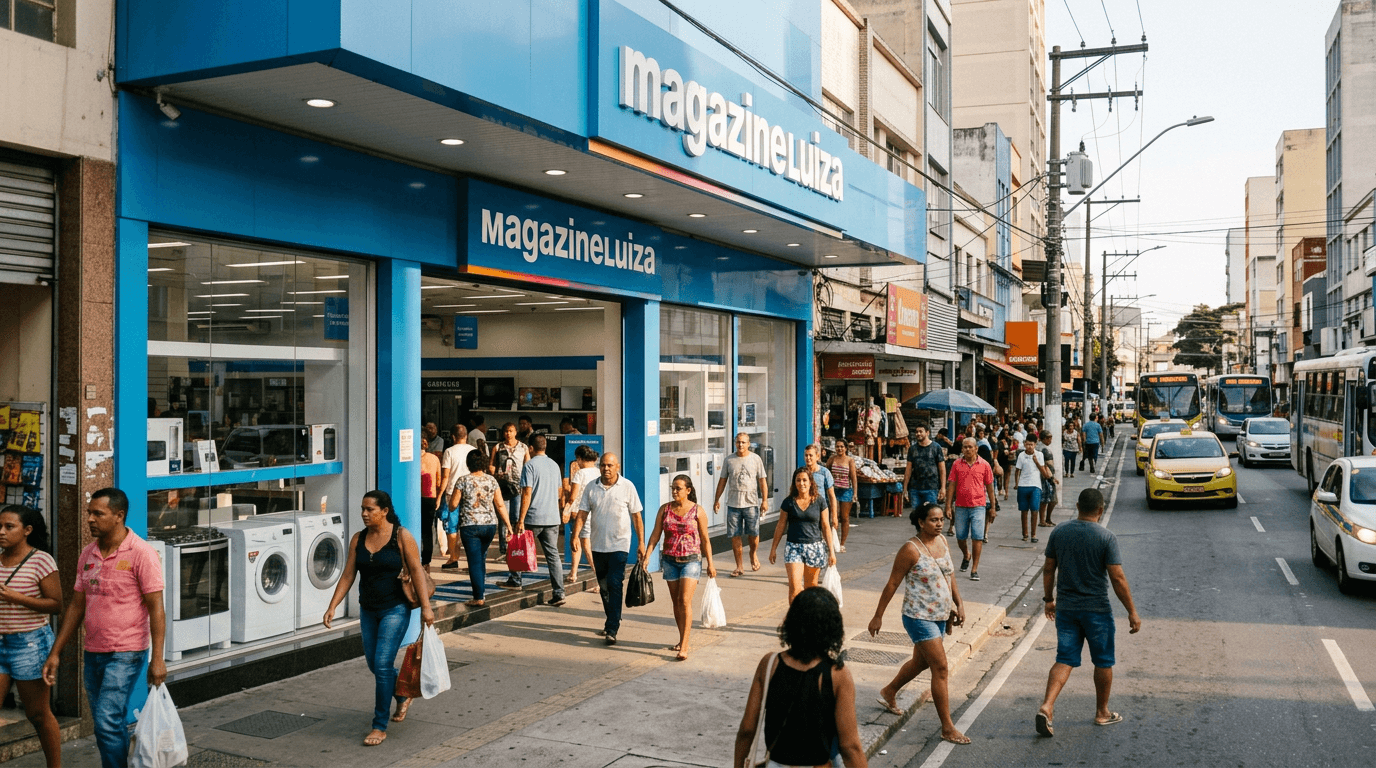
To navigate this downturn, the Brazilian retail giant is pivoting back to its roots in brick-and-mortar commerce. In its Q2 2026 financial results released on August 7, 2026, the company reported that sales in its physical stores grew by 9.7% on a same-store basis. Meanwhile, e-commerce sales fell by 11.9% as the company deliberately scaled back aggressive online promotions to protect its operating margins.
The Cost of the Digital Race
The transition marks a significant strategic reversal for CEO Frederico Trajano, the son of long-time chairperson and Brazilian business icon Luiza Helena Trajano. During the pandemic-era e-commerce boom, Magazine Luiza went on an aggressive acquisition spree, buying up more than 20 startups in 18 months to build out its digital ecosystem.
However, when Brazil's central bank, the Banco Central do Brasil, aggressively raised its benchmark Selic interest rate from 2% in early 2021 to combat inflation, the macroeconomic landscape shifted. High interest rates made consumer credit expensive, directly impacting the installment-plan purchases of high-ticket electronics and appliances that drive the company's sales. At the same time, global giants like Amazon and regional leaders like Mercado Libre intensified the online price war, eroding Magalu's digital market share.
In response to these pressures, the company's current strategic cycle focuses on profitability over raw digital volume. While Magazine Luiza posted an adjusted net loss of R$ 50.4 million for Q2 2026, its gross margin improved to 30.6%, supported by tighter inventory management and a new commercial partnership that allows Magalu to sell products directly through Amazon's platform.
In your brokerage app
For retail investors looking to track the company's turnaround efforts, Magazine Luiza S.A. trades in the United States as an over-the-counter asset under the ticker MGLUY, representing its New York-listed receipts. The company's primary liquid shares trade on the B3 exchange in São Paulo under the ticker MGLU3. Broad exposure to the Brazilian consumer discretionary sector is also available through the iShares MSCI Brazil ETF (EWZ), which holds a basket of the country's largest publicly traded enterprises.