Why Vale's 53% Profit Drop Matters to US Commodity Portfolios
Brazilian mining giant Vale reported a 53% drop in third-quarter net income to $1.26 billion, missing analyst estimates due to lower iron ore prices and rising freight costs.
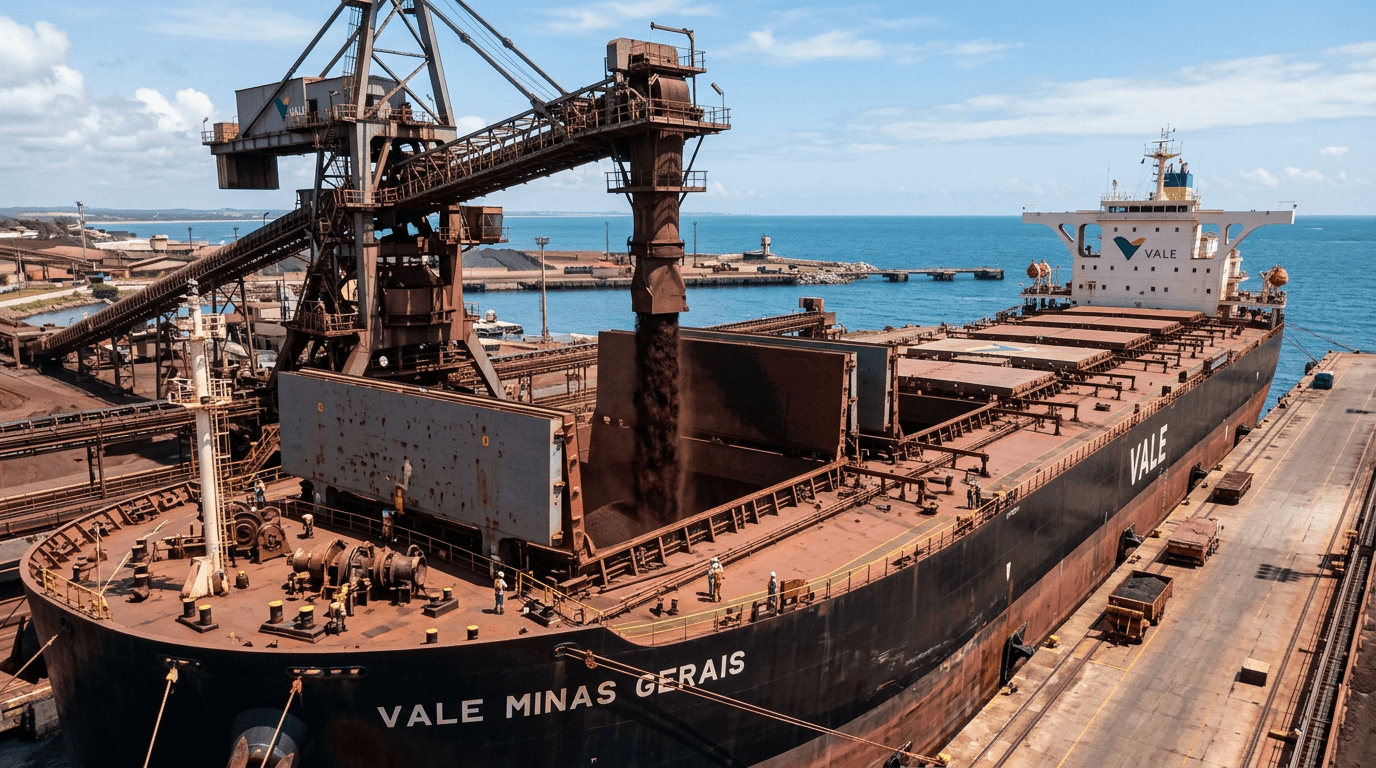
Global commodity markets are feeling the squeeze of cooling industrial demand and rising shipping costs, directly impacting the bottom lines of major raw material suppliers. The cost of moving heavy materials across the ocean has climbed, while the market price for those same materials has slid, compressing corporate profit margins.
The reality of this double squeeze became clear on October 29, 2026, when Brazilian mining giant Vale S.A. submitted its Form 6-K filing to the U.S. Securities and Exchange Commission. The company reported a third-quarter 2026 net income attributable to shareholders of $1.26 billion ($0.29 per share), representing a 53% decline from the $2.69 billion ($0.63 per share) recorded in the third quarter of 2025. This profit drop fell short of the $1.70 billion average analyst estimate compiled by Visible Alpha, even as net operating revenue rose slightly by 1.7% year-over-year to $10.599 billion.
The primary driver behind the profit decline is a sharp drop in the global price of steelmaking ingredients combined with rising operational expenses. Vale’s realized iron ore price fell 10% year-over-year to $85.1 per tonne in the third quarter of 2026, down from $94.4 per tonne in the same period of 2025. Meanwhile, the miner's all-in costs jumped 21% to $60.4 per tonne, driven by higher fuel prices and a 26% increase in the company's freight costs. Global shipping rates have faced severe upward pressure, with spot freight rates for the critical Brazil-to-China route surging 48% between the first and third quarters of 2026.
Navigating the Commodity Cycle
To defend its margins against these rising logistics costs, Vale has relied heavily on its proprietary fleet of massive "Valemax" vessels and long-term shipping contracts. According to the company's third-quarter performance report, this affreightment strategy gave Vale a $14-per-tonne cost advantage over volatile spot-market shipping rates during the quarter. However, operational challenges in northern Brazil also dragged down overall output. Iron ore production fell 6% year-over-year to 88.4 million metric tons, primarily due to reduced output at the Serra Norte mining complex.
Despite these headwinds, Vale's newly appointed CEO, Gustavo Pimenta, emphasized that the company's broader portfolio remains resilient. While iron ore struggled, the company’s base metals division gained momentum. Copper and nickel production are both on track to hit the upper half of their full-year guidance ranges, supported by strong performance at the Salobo copper mine in northern Brazil. Additionally, Vale's Fabrica mine, which had been halted earlier in the year due to environmental licensing issues, successfully resumed operations in September 2026.
Looking ahead to the end of the year, Vale management reaffirmed its full-year 2026 iron ore production guidance of 335 million to 345 million metric tons. However, achieving even the lower end of this target will require a significant production push in the fourth quarter. For global markets, the main focus remains on how these compressed margins will impact year-end capital allocation, as heavy legacy expenditures—including ongoing reparation payouts for historical dam failures in Brazil—continue to compete with direct shareholder dividend distributions.
In your brokerage app
For retail investors tracking global commodity exposure, Vale S.A. is listed in New York as an American Depositary Receipt. The company’s performance heavily influences broad-market commodity funds, such as the iShares MSCI Brazil ETF, which holds a significant concentration of the mining giant's US-listed equity.