
Brazil’s Soy Boom Forces Investment Wave in Rural Infrastructure Finance
Record agribusiness growth, led by soybean exports, is driving significant new investment into Brazil’s strained logistics and storage systems through specialized funds.
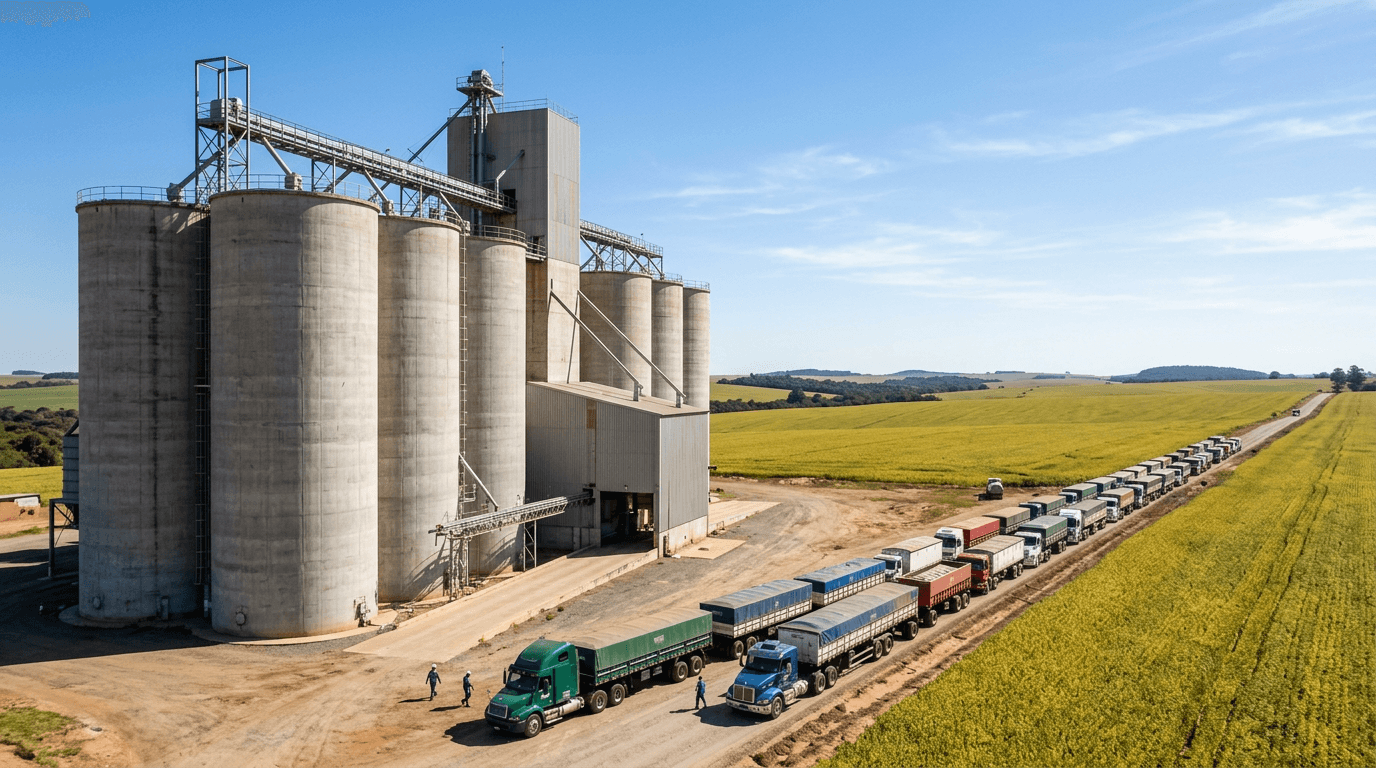
Brazil’s status as a global agricultural powerhouse is forcing a historic shift in how it finances its rural economy, as record export volumes overwhelm current logistics and infrastructure. Fueled primarily by its massive soybean output, Brazilian agribusiness grew 6.8% in the second quarter of 2026, leading all other economic sectors in the country. This unprecedented production has created a compelling need for new capital to fund improvements in storage, transport, and irrigation.
The scale of the production is driving the demand. Agribusiness exports hit a record $16.3 billion in July 2026, with the soy complex—including grain, oil, and meal—accounting for $7.15 billion of that total, a 22.4% increase from the prior year. This sheer volume of product moving from the nation’s interior to its ports is exposing the deep structural deficiencies in Brazil’s logistics. Exporters face high freight costs and bottlenecks, underscoring the urgent need for investment in rail, road, and port capacity to move the massive harvest efficiently. The investment is also focused on mitigating production risks, such as building specialized irrigation systems to protect high-value crops from weather volatility and climate events like the recurring El Niño pattern.
To channel private money into this critical gap, a specialized investment vehicle called Fiagro—Fundo de Investimento nas Cadeias Produtivas Agroindustriais, or Agribusiness Investment Fund—is playing an increasingly pivotal role. Fiagros are collective investment schemes, similar to real estate investment trusts or private equity funds, that pool capital from both domestic and international sources. They are designed to finance the entire agricultural value chain, from receivables to rural land acquisition and new infrastructure projects, providing a solution that relieves the pressure on the government's historically subsidized rural credit system. By attracting private capital toward projects like new storage silos or improved transportation networks, these funds are formalizing and expanding finance deep into Brazil’s agricultural interior.
The flow of capital through these investment vehicles signals that the market is pivoting from simply focusing on annual production to investing in the long-term structural capacity of the Brazilian supply chain. The continued success of these Fiagros and their ability to mitigate the persistent issues of climate risk, high input prices, and logistics bottlenecks will be the primary factor determining whether Brazil’s current agricultural boom can transition into sustained structural growth that benefits the entire national economy.
What it touches The sustained health of the country's agribusiness sector directly impacts companies involved in the production, processing, and transportation of agricultural products. This includes integrated farmland and logistics firms like Adecoagro S.A. (AGRO, $11.60), which operates in Brazil and neighboring countries, and major protein exporters such as JBS (JBS, $13.14). The growth in structured finance also benefits major institutional investors like Pátria Investments (PAX, $11.31), which has real asset and infrastructure funds that may target the logistics sector.