
Brazil Beef Exports Face China Tariff Squeeze as Poultry Surges
Brazil's meat export revenue fell 15% in September 2026 as over-quota tariffs choked beef shipments to China, while chicken exports continued to rise.
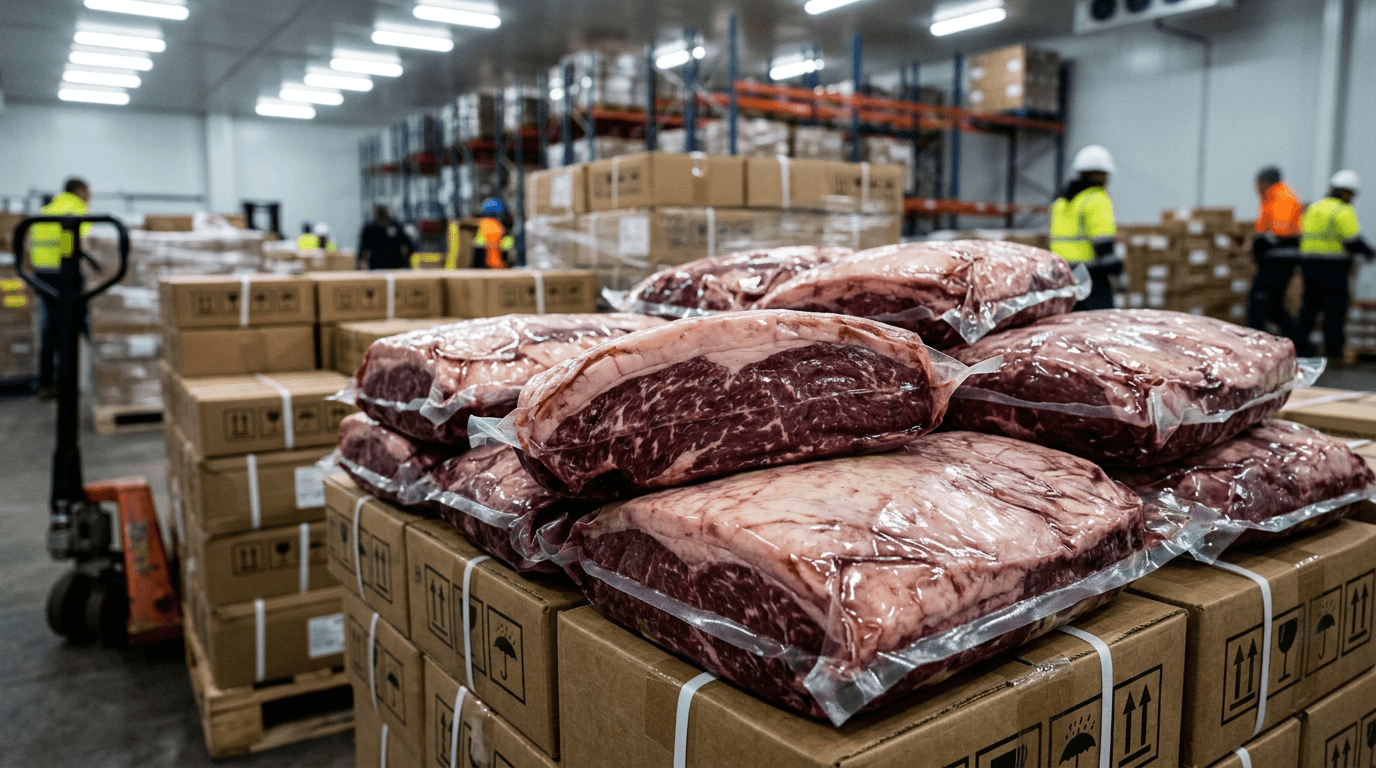
Global trade barriers and tariff quotas are shifting the dynamics of Brazil's massive protein export sector. According to data released by the Brazilian Beef Exporters Association (Abiec) and the Brazilian Association of Animal Protein (ABPA), the country's total meat export revenue fell 15% year-on-year in September 2026 to $2.65 billion. This drop was driven primarily by a sharp decline in beef export revenues, which fell 27.6% to $1.38 billion, as shipments to China dried up under the weight of newly triggered trade restrictions.
The primary catalyst for the beef export slump is China's strict tariff-rate quota system. Beijing implemented a 1.106 million-ton annual duty-free limit for Brazilian beef, above which shipments face a steep 55% safeguard surcharge on top of the standard 12% import duty. Brazil officially exhausted this quota by late September, meaning any subsequent shipments face a blistering 67% total tariff until the quota resets on January 1, 2027. Consequently, Brazilian beef exports to China plummeted by 93.2% in volume in September compared to the same month last year, forcing exporters to aggressively seek alternative buyers in the United States and the Middle East.
In contrast, Brazil's poultry sector is experiencing a significant surge. Chicken meat exports rose 14.7% in revenue to $984.2 million in September, with total monthly shipments reaching 500,300 metric tons. This growth was heavily supported by robust demand from the United Arab Emirates, which imported 45,900 metric tons, alongside steady shipments to Saudi Arabia and Japan. The poultry sector has successfully rebounded from the temporary trade restrictions linked to avian influenza cases that depressed export figures during the same period last year.
However, both sectors are navigating a highly volatile international regulatory environment. While chicken exports remain strong, the poultry industry is bracing for the impact of a European Union import suspension on Brazilian animal products over antimicrobial traceability compliance, which went into effect on September 3, 2026. This restriction, paired with China's over-quota beef tariffs, is forcing Brazil's agribusiness giants to rapidly adjust their global supply chains, shift transit routes, and renegotiate pricing to protect their margins.
What it touches
These diverging export dynamics directly impact major publicly traded Brazilian meatpacking giants. Minerva (BEEF3), which is heavily exposed to South American beef exports, faces immediate margin pressure as it redirects over-quota Chinese volumes to lower-margin markets. Conversely, more diversified global food processors like JBS (JBSS3) and poultry-heavy BRF (BRFS3) are better positioned to cushion the beef slowdown by capitalizing on the ongoing surge in global chicken demand and their established production hubs in the Middle East.