
How the Surging Brazil Real Impacts US Portfolios
A widening interest rate gap has fueled a rally in the Brazilian real, demonstrating how currency swings quietly reshape foreign returns for retail investors.
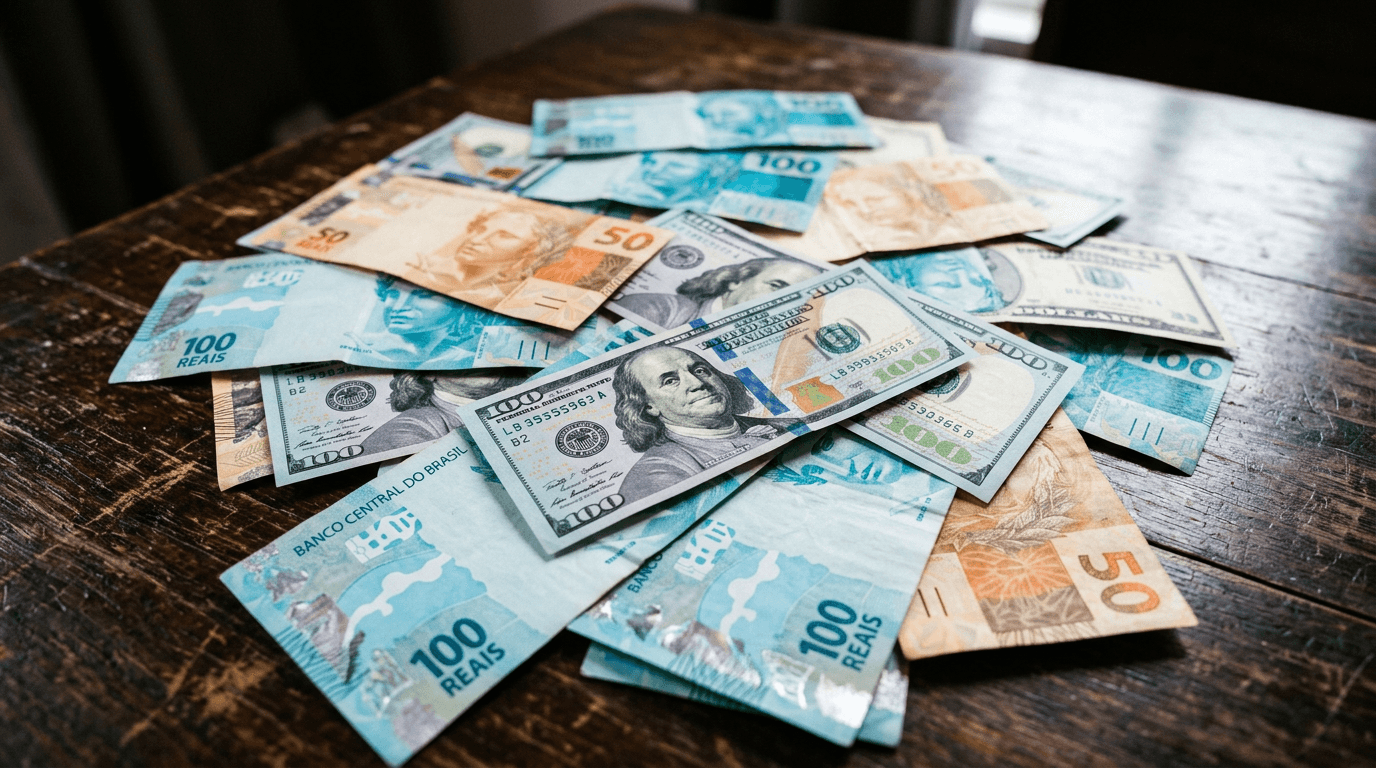
When American retail investors check their brokerage balances, the performance of international holdings often hinges on forces far beyond corporate earnings. For those holding foreign assets, the shifting policy of global central banks can quietly erode or amplify returns. Right now, a widening interest rate gap is working in favor of dollar-denominated portfolios exposed to South America, as high borrowing costs abroad draw global capital and push local currencies upward.
In Brazil, this dynamic has triggered a sharp currency rally. The exchange rate for the US dollar to the Brazilian real fell to 4.9742 on October 23, 2026, down from its recent peak of 5.2266 on October 1, 2026. This rapid shift means the brazil real has appreciated by 4.20% over the past month and is up 7.73% over the last 12 months as of late October 2026, making it one of the top-performing emerging market currencies.
The primary engine behind this currency surge is the Central Bank of Brazil (BCB). While central banks in developed economies have begun easing monetary policy, Brazil's Monetary Policy Committee, known locally as Copom, has kept local yields exceptionally high. Even after Copom lowered its benchmark Selic rate by 25 basis points to 13.75% on September 16, 2026, the country continues to maintain one of the highest real interest rates in the world. This double-digit yield has lured yield-seeking global investors into "carry trades"—borrowing in low-interest currencies to invest in high-yielding Brazilian debt—which directly fuels demand for the real.
For global investors, a stronger brazil real vs usd exchange rate acts as a double-edged sword. On one hand, it acts as a powerful tailwind for US-listed Brazilian equities and exchange-traded funds, as local corporate earnings and asset values translate into more US dollars. On the other hand, a permanently stronger currency can make Brazil's massive agricultural and commodity exports less competitive on the global stage, potentially squeezing the profit margins of local exporters over the longer term.
In your brokerage app
The foreign exchange market's influence is highly visible in broad-market funds like the iShares MSCI Brazil ETF, which is listed in New York. Because this exchange-traded fund holds assets denominated in Brazilian reais, its net asset value in US dollars is directly exposed to currency fluctuations. When the real strengthens against the US dollar, it provides an upward translation effect on the fund's dollar value, illustrating how currency momentum can impact a retail investor's portfolio independent of the underlying stock performance on the São Paulo exchange.