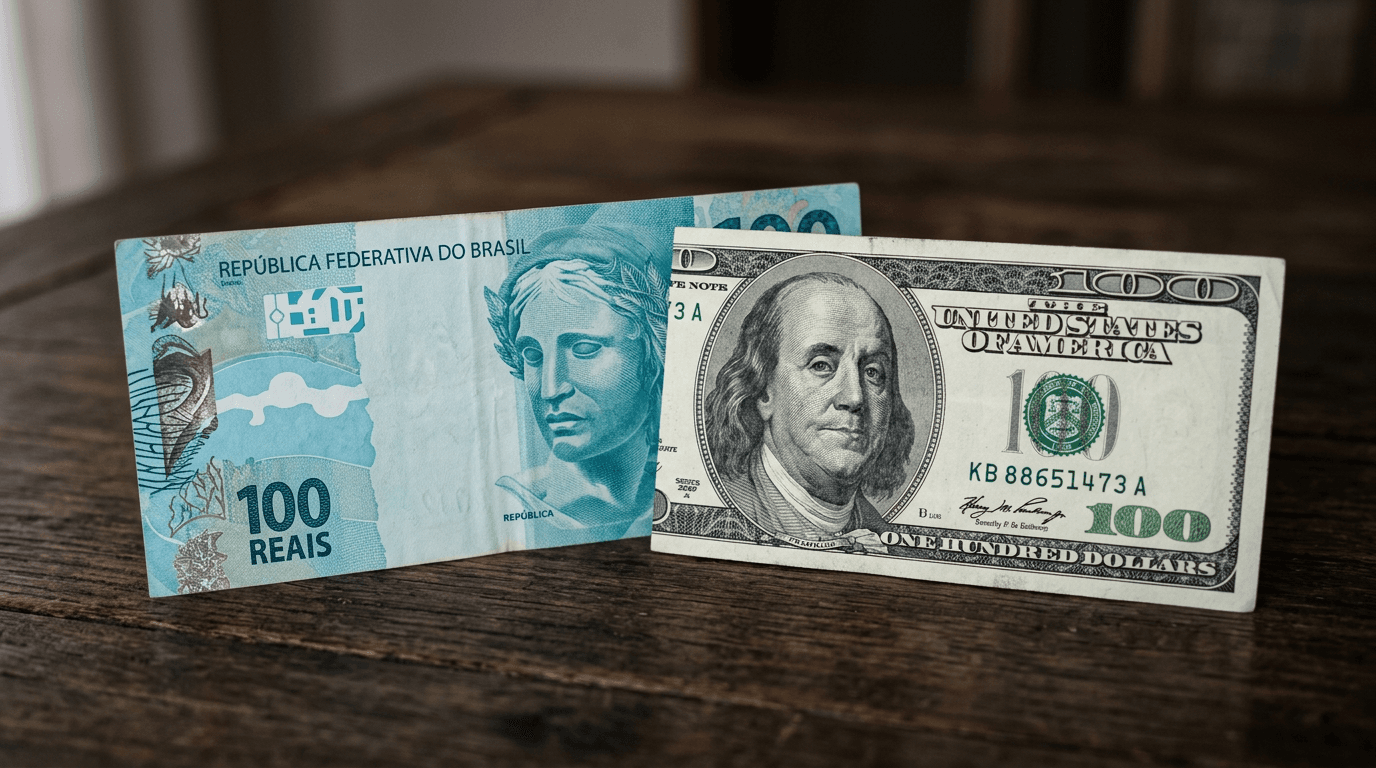
Why the Fed's 4.0% rate and Brazil's 13.75% gap matters to your portfolio
A massive 9.75-percentage-point interest rate gap between the Federal Reserve and Brazil's central bank is shaking up the brazil real and international funds.
The interest rate on your cash deposits or short-term Treasury bills is likely hovering just under the Federal Reserve’s upper target limit of 4.0%. While that return is a welcome relief compared to the zero-rate era of the past decade, it is being dwarfed by the yields available in emerging markets. This massive yield disparity is quietly reshaping the value of international assets that many retail investors hold in their portfolios without even realizing it.
In Brazil, the central bank’s Monetary Policy Committee, known locally as Copom, unanimously decided on November 4, 2026, to keep its benchmark Selic rate unchanged at 13.75%. This creates a staggering 9.75-percentage-point interest rate gap between the U.S. and Latin America's largest economy. For global investors, this gap represents the "carry"—the premium earned simply for holding Brazilian debt instead of U.S. Treasuries—and it acts as a primary gravitational force pulling global capital toward or away from the South American nation.
This yield gap has held steady over the past 30 days, but the underlying economic forces are shifting. Brazil’s central bank paused its rate-cutting cycle, which had previously trimmed the Selic from a high of 15% in March 2026 down to the current 13.75%. Copom halted the cuts following the October 25, 2026, re-election of President Luiz Inácio Lula da Silva, citing rising fiscal uncertainties and domestic inflation expectations that have crept up to 5.22%, well above the government’s 4.5% ceiling.
For a U.S. retail investor, this dynamic directly impacts the exchange rate of the brazil real to usd. When Brazil keeps its interest rates high, it attracts foreign capital seeking yield, which theoretically strengthens the currency. However, if political risk or worries over public spending rise, investors demand an even higher premium to hold Brazilian assets. If the Brazilian government fails to address these fiscal concerns, the high interest rates may not be enough to prevent capital flight, causing the brazil real to depreciate against the U.S. dollar.
In your brokerage app
If you hold the iShares MSCI Brazil ETF, a prominent exchange-traded fund listed in New York that tracks Brazilian equities, this interest rate gap is a double-edged sword. While the high Selic rate makes fixed-income assets incredibly attractive—with some Brazilian government bonds paying yields above 15%—it also increases borrowing costs for local corporations, potentially squeezing their profit margins. You can monitor how these shifting macroeconomic forces influence your portfolio by tracking the brazil real vs usd exchange rate alongside your international fund holdings.