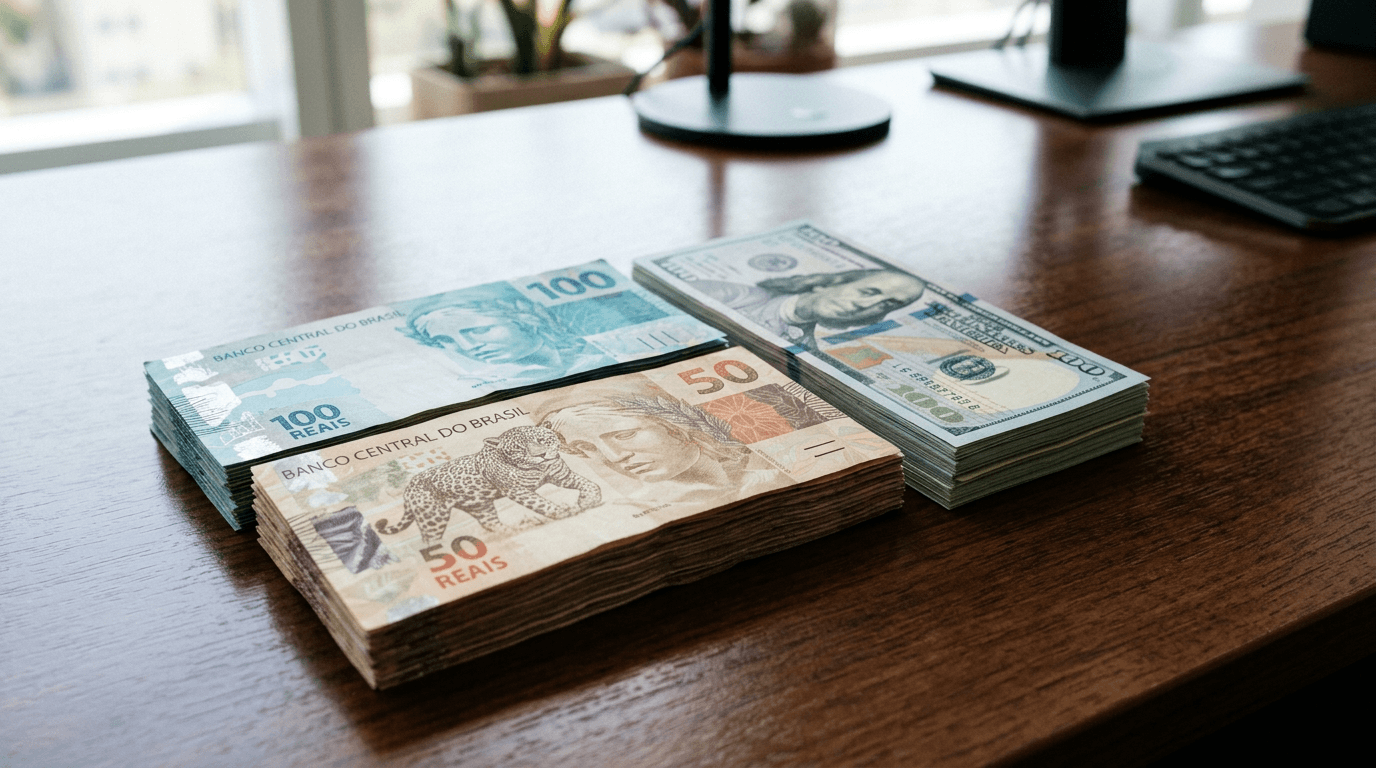
Fed holds rates at 3.75%-4.00% as Brazil's Selic sits at 13.75%
The Federal Reserve maintained its target range at 3.75% to 4.00% on October 28, 2026, preserving a wide 9.75-percentage-point yield gap with Brazil's benchmark Selic rate.
When the Federal Reserve holds its benchmark interest rate steady, the decision ripples far beyond American bank accounts and mortgage rates. For global markets, every move by the U.S. central bank alters the relative value of holding assets in other currencies. On October 28, 2026, the Federal Open Market Committee (FOMC) voted 10-2 to maintain the target range for the federal funds rate at 3.75% to 4.00%, according to the Federal Reserve's official implementation statement. For dollar-denominated cash, this target range represents the baseline return on low-risk U.S. government debt.
Across the equator, Brazil's central bank offers a starkly different interest rate environment. The Banco Central do Brasil (BCB) has kept its benchmark Selic target rate at 13.75% since its last adjustment on September 17, 2026, as documented in the BCB's monetary policy records. This leaves the nominal yield gap between the two nations' benchmark rates at exactly 9.75 percentage points.
This substantial yield differential is a primary driver of capital flows between the U.S. dollar and the Brazilian real. In global foreign exchange markets, a wide interest rate gap historically fuels the "carry trade." In these transactions, institutional investors borrow funds in lower-yielding currencies like the dollar to purchase higher-yielding, local-currency assets in emerging economies like Brazil. When the yield gap is wide, institutional demand for Brazilian fixed-income instruments tends to support the value of the real. Conversely, if the Fed raises rates or Brazil cuts them, the gap narrows, which can prompt capital to flow back toward the U.S. financial system.
From a macroeconomic perspective, this wide rate spread presents a classic trade-off between yield and risk. While a 13.75% benchmark rate in Brazil offers a significant nominal premium over the U.S. target range of 3.75% to 4.00%, international investors face persistent currency risk. Because carry-trade returns are highly uncertain, any sudden depreciation of the Brazilian real against the dollar can rapidly erode or entirely offset the interest rate advantage when returns are converted back into greenbacks.
Political and fiscal developments in South America's largest economy also heavily influence these dynamics. Foreign institutional investors closely monitor Brazil's fiscal policy and public debt levels. If expansionary fiscal decisions fuel domestic inflation, the BCB's Monetary Policy Committee (Copom) may be forced to keep the Selic rate elevated to anchor inflation expectations, even if high borrowing costs weigh on domestic economic growth.
The relative stability of this 9.75-percentage-point gap has temporarily anchored the exchange rate between the real and the dollar. However, currency risk remains material at all times. Unexpected shifts in inflation data from Washington or fiscal policy announcements from Brasília can quickly disrupt this equilibrium, shifting the risk profile of diversified emerging market portfolios.