
Fiscal Risk and Election Uncertainty Push Brazilian Real, Analysts Warn of R$6.00 USD/BRL Scenario
Brazil's currency is weakening as financial institutions warn a lack of post-election fiscal reform could send the USD/BRL to R$6.00.
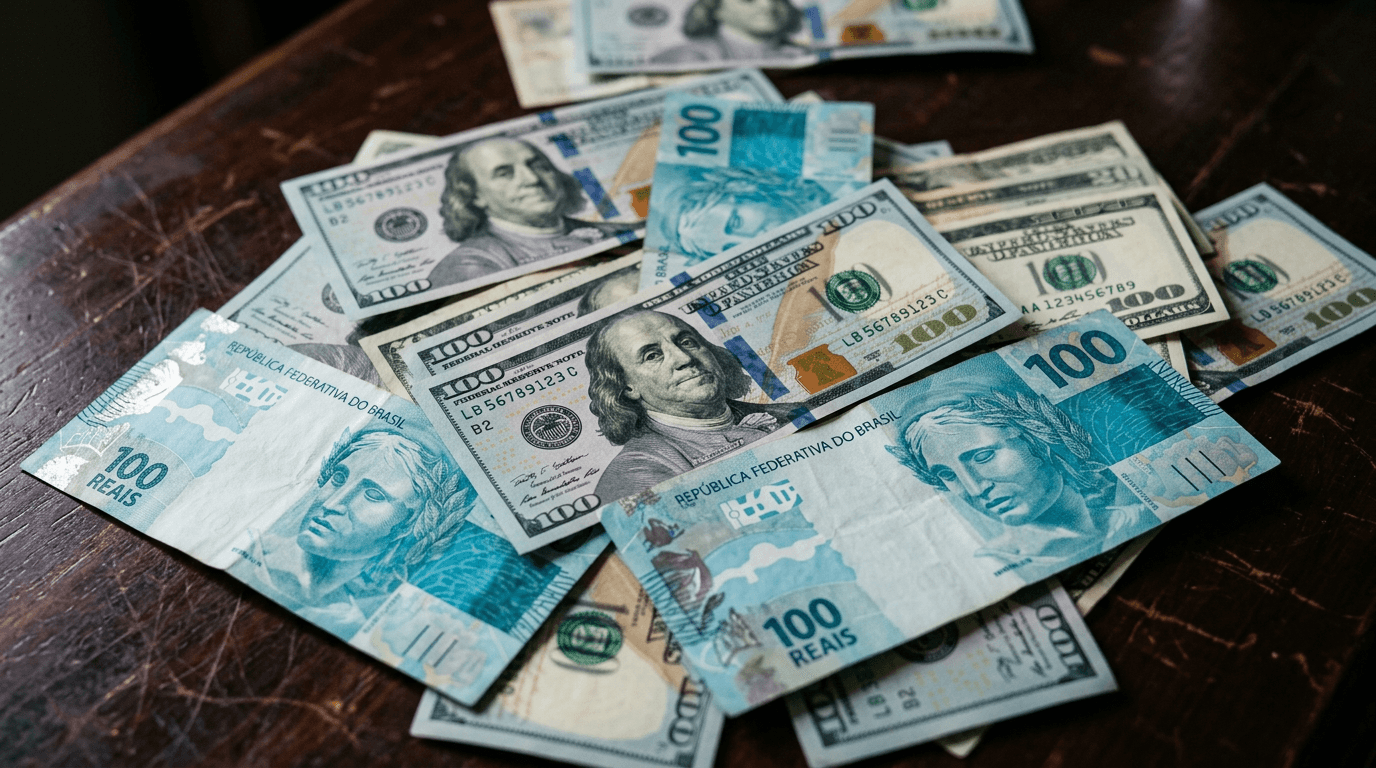
The Brazilian Real is under renewed pressure as financial institutions increasingly price in political uncertainty and the growing risk of unchecked spending, with the currency trading at R$5.1247 against the US Dollar today, a 0.50% depreciation. This weakness has prompted sharp warnings from major analysts, including Morgan Stanley, who project a pessimistic scenario where the USD/BRL could soar to R$6.00 if the next government fails to implement a credible brazil fiscal policy following the upcoming election.
The currency's slide is fundamentally driven by a deterioration in Brazil’s public finances, highlighted by official figures released last month. Brazil’s Gross General Government Debt (DBGG), the main measure of the country’s public debt burden, reached R$10.9 trillion, or 82.5% of the Gross Domestic Product (GDP) in July 2026, the highest level since April 2021. This rising trajectory is primarily fueled by high nominal interest payments, which reached R$1.15 trillion over the past 12 months, and is attributed by economists like Goldman Sachs' Alberto Ramos to the current administration’s “expansionary fiscal stance.”
The key problem generating the severe fiscal risk is the composition of that debt. An increasing share of Brazil’s public debt is indexed to the country's floating benchmark interest rate, the Selic rate, making the debt burden highly sensitive to fiscal deterioration. Should the next administration fail to stabilize the brazil fiscal balance, Morgan Stanley’s pessimistic outlook suggests the central bank may be forced to hike the Selic rate to 15.5% in 2027 to contain the inflationary pressure caused by a collapsing currency, further worsening the debt service cost and creating a self-reinforcing downward spiral. This lack of spending control has severely undermined the credibility of fiscal targets and elevated risk premiums, causing the Real to underperform peer emerging-market currencies.
As the Brazil election approaches, the market’s focus has narrowed to the credibility of the candidates’ plans for fiscal consolidation. The current government has already weakened its fiscal framework by replacing a spending cap with more flexible primary surplus targets, a move that analysts say has contributed directly to the sustained brazil fiscal deficit and policy uncertainty. The outcome of the election is now viewed as the most critical factor determining whether the country faces a sustained economic stabilization path or a return to the financial volatility of the past decade.
What it touches: The increasing fiscal risk directly impacts assets traded on the B3 exchange and the currency market. The USD/BRL exchange rate is reacting to the possibility of a policy failure, while the broader Ibovespa stock index is subject to volatility as investors weigh the potential for a spike in interest rates, which would severely restrict corporate credit and growth.