
US-Listed Emerging Market Funds Face Volatility as Brazil Real Slides
The Brazilian real fell to 5.05 per dollar on October 20, 2026, as a tight presidential runoff and new fiscal spending plans fueled market anxiety.
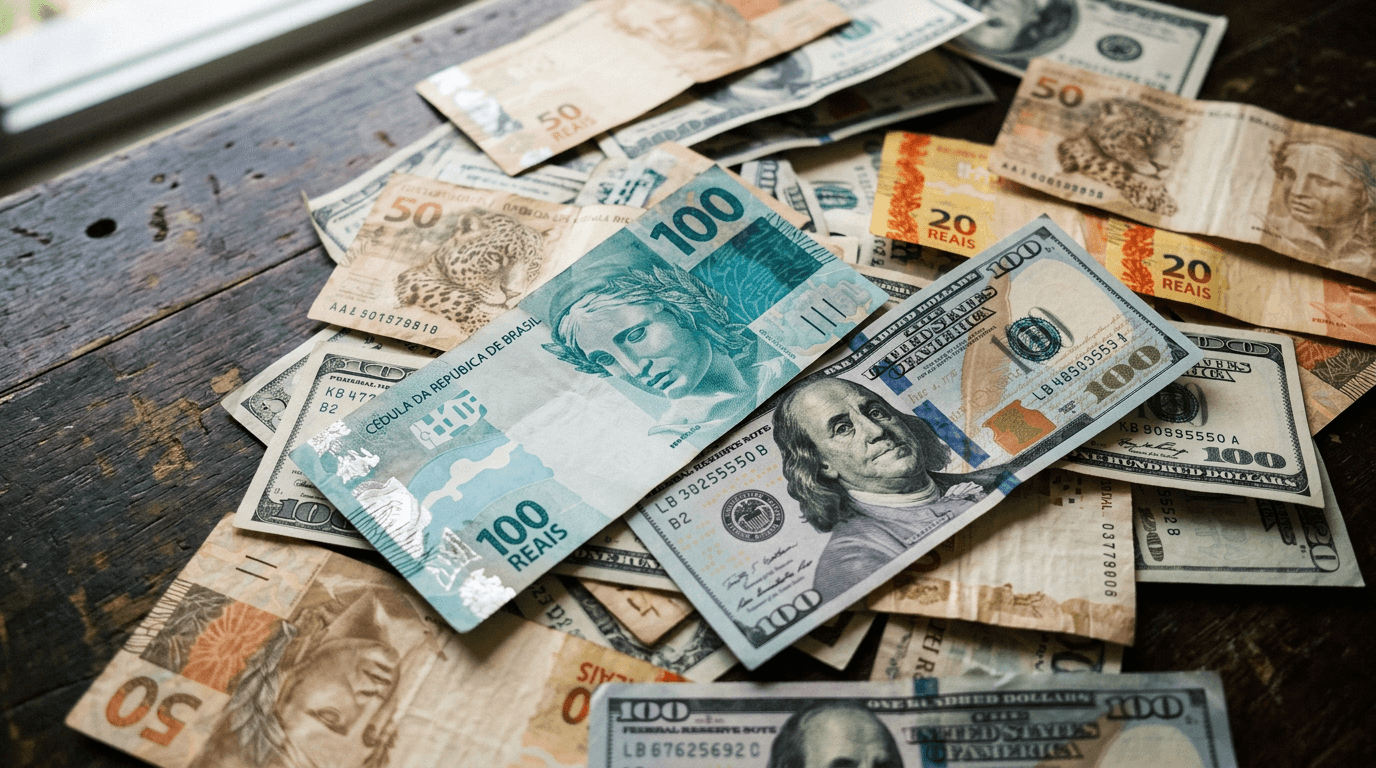
American retail investors holding broad emerging market funds or Latin American equities are seeing their portfolios squeezed by shifting political winds in South America. The Brazilian real, a major anchor for regional asset valuations, has abruptly reversed its recent gains, directly dragging down the value of US-listed funds that track the region's largest economy.
On October 20, 2026, the brazil real vs dollar exchange rate weakened to near 5.05 reais per U.S. dollar. This retreat erased a significant portion of the real's recent 4% rally, which had pushed the currency to a five-month high of 4.98 reais per dollar on October 5, 2026 [marketscreener.com, investing.com]. The sudden shift reflects deepening market anxiety over the country's fiscal outlook just days before a highly contested presidential runoff election [marketscreener.com].
The political landscape is driving the currency's volatility. In the first round of voting on October 4, 2026, right-wing Senator Flávio Bolsonaro—the eldest son of former President Jair Bolsonaro—secured a surprising lead with 47.03% of the vote [americasquarterly.org]. He edged out the incumbent, leftist President Luiz Inácio Lula da Silva, who took 45.16% [americasquarterly.org]. The narrow gap has set up a high-stakes runoff election on October 25, 2026, leaving international investors highly sensitive to the candidates' competing economic visions [freiheit.org].
Adding to the market's fiscal jitters, Brazil's Planning Ministry announced on October 19, 2026, that budget adjustments required to fund President Lula's recently proposed campaign measures will total approximately 20 billion reais ($3.95 billion) for the 2027 budget [marketscreener.com]. Lula's proposals, aimed at winning over voters ahead of the vote, include a 15% increase to the Bolsa Família welfare program and free nationwide weekend public transport [marketscreener.com].
While the Planning Ministry emphasized that this 20 billion reais adjustment represents slightly more than 1% of the total primary expenditures subject to Brazil's constitutional spending limits, foreign exchange traders remain wary [marketscreener.com]. The government maintains it can accommodate these new programs by reallocating existing funds without breaching its overall spending cap or abandoning its primary budget balance target [businessupturn.com]. However, the prospect of increased welfare spending, combined with the tight polling, has reignited concerns over Brazil's long-term commitment to fiscal discipline [businessupturn.com].
In your brokerage app
For retail investors, this currency depreciation directly reduces the dollar-denominated returns of Brazilian assets. If you hold the iShares MSCI Brazil ETF, a prominent exchange-traded fund listed in New York that tracks large and mid-sized Brazilian companies, its net asset value is highly sensitive to the brazil real to usd exchange rate. When the real weakens against the dollar, the underlying value of the fund's holdings decreases for US-based investors, even if local stock prices in São Paulo remain unchanged.