Fed rate pause leaves 9.75-point yield gap on Brazil real
The Federal Reserve's rate hold at 4.0% and Brazil's central bank pause at 13.75% preserve a massive yield gap that shapes the brazil real to usd exchange rate.
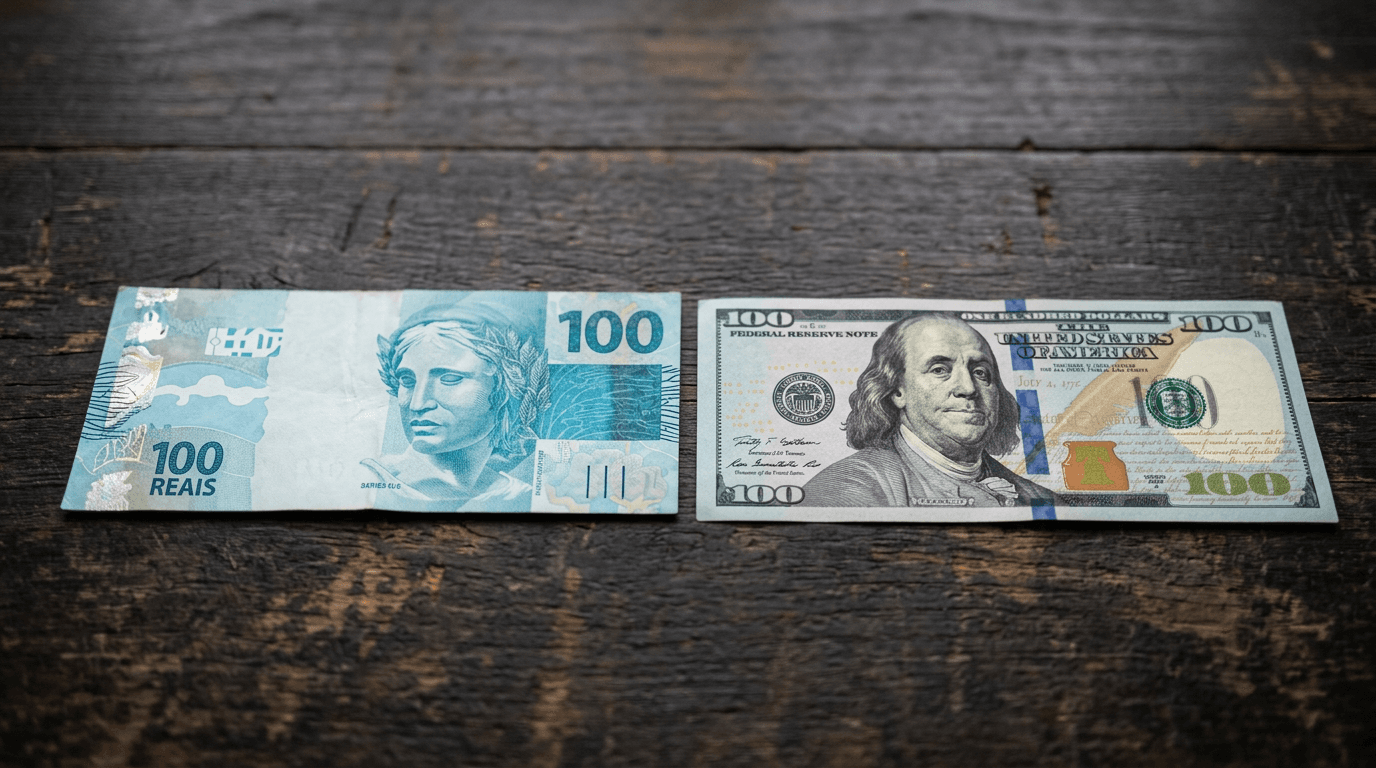
The interest rate on a standard U.S. savings account or short-term Treasury bill might feel comfortable now that the Federal Reserve has set its benchmark federal funds upper target at 4.0%. But for global macro investors looking at international bond markets, that rate is only half of a much larger equation. The difference between what the Fed pays and what foreign central banks offer is the primary engine driving global currency swings and international fund performance.
In Brazil, that equation is heavily tilted. On November 4, 2026, the Central Bank of Brazil's monetary policy committee, known as Copom, voted unanimously to pause its own rate-cutting cycle, keeping its benchmark Selic rate at 13.75%. With the Fed holding its upper target at 4.0%, the yield gap between the two countries stands at a massive 9.75 percentage points—exactly where it was 30 days ago.
This 9.75-point spread represents the premium investors earn, or pay, for holding Brazilian assets instead of ultra-safe U.S. Treasuries. In the world of foreign exchange, this gap feeds the "carry trade," where investors borrow in low-yield currencies like the dollar to buy high-yield assets denominated in the Brazil real. When the gap is wide, it typically supports the brazil real vs usd valuation; when it narrows, capital tends to flow back to the safety of New York.
Inflation and Fiscal Friction
The decision by Brazilian central bank chief Gabriel Galípolo and his fellow policymakers to halt rate cuts at 13.75% reflects growing domestic anxieties. Brazil's official consumer inflation preview, the IPCA-15, ticked up to 4.62% for the 12 months through October 2026, breaching the government's upper tolerance limit of 4.5%.
At the same time, international investors are closely watching the political risk surrounding public spending. Following the reelection of President Luiz Inácio Lula da Silva, the central bank has faced mounting pressure from members of the ruling left-wing Workers' Party to lower borrowing costs. However, the central bank's independent board has made it clear that it cannot resume cutting rates until the government delivers concrete fiscal tightening measures to anchor long-term inflation expectations.
For retail investors, this means Brazilian interest rates are likely to remain elevated for longer, keeping the yield gap wide but exposing the currency to volatility if fiscal reforms stall.
In your brokerage app
U.S. retail investors can trade this interest rate spread directly through exchange-traded funds listed in New York. The iShares MSCI Brazil ETF, which tracks large and mid-sized Brazilian equities, is highly sensitive to both the brazil real to usd exchange rate and local interest rate decisions. Additionally, investors looking for direct exposure to local-currency debt can access the VanEck Brazil Sovereign Bond ETF, which holds government bonds paying the high yields generated by the 13.75% Selic rate.