
Brazil Markets Rally as Conservative Shift Reshapes Runoff Projections
The Brazilian real and local equities advanced as investors adjusted to a stronger-than-expected conservative showing in the first-round election.
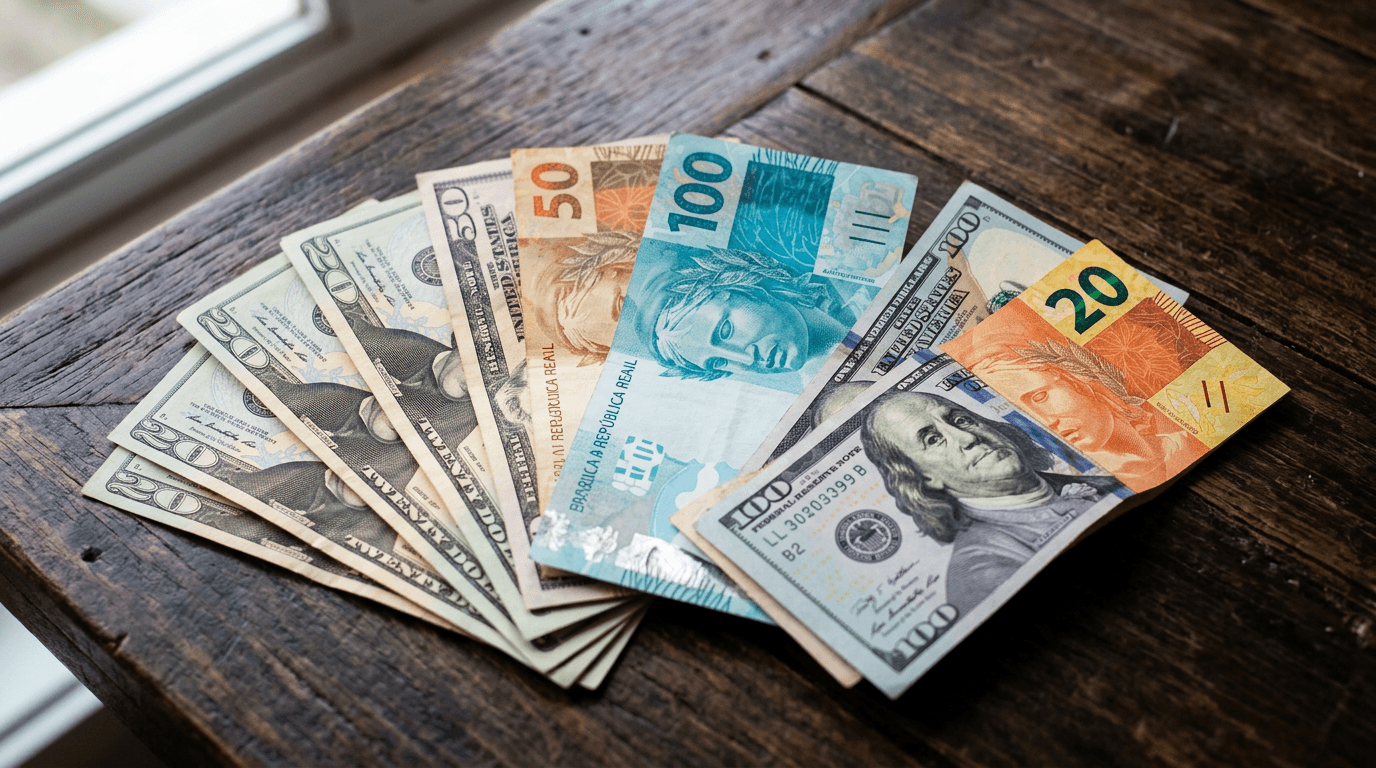
The Brazilian real and local equities advanced on Monday, October 5, 2026, as international and domestic investors adjusted their projections for the country's economic policy trajectory. The market movement followed the official release of first-round presidential election results by the Superior Electoral Court (TSE) late Sunday, October 4. The tally revealed a stronger-than-expected performance by conservative challenger Senator Flávio Bolsonaro, who secured 47.03% of the valid votes, ahead of the 80-year-old incumbent leftist President Luiz Inácio Lula da Silva, who finished with 45.16%.
Because neither candidate crossed the 50% threshold required for an outright victory in the first round, the two rivals are set to face off in a decisive runoff election scheduled for October 25, 2026. The tight margin of less than two percentage points—representing roughly 2.2 million votes—marks the closest first-round presidential gap in Brazil's modern democratic history. The outcome defied final pre-election polling from major institutes like Datafolha and Quaest, which had consistently projected Lula leading the first-round race.
The market’s positive reaction reflects a reassessment of political risk and fiscal policy expectations. Beyond the head-to-head presidential race, Flávio Bolsonaro’s right-wing Liberal Party (PL) achieved significant down-ballot victories, securing 19 of the 54 Senate seats contested on Sunday. This legislative shift, alongside conservative gubernatorial sweeps in key economic hubs like São Paulo, suggests that regardless of who wins the presidency on October 25, the next administration will face substantial institutional pressure from a conservative-dominated Congress to curb public spending and maintain fiscal discipline.
Following the publication of the official results, the Brazilian real strengthened against the U.S. dollar, with the exchange rate dropping toward 4.99 on October 5 from around 5.22 immediately prior to the vote. Financial analysts noted that the strong showing by the center-right and conservative coalitions reduces the likelihood of aggressive, unhedged fiscal expansion. The upcoming three-week campaign is expected to center on public security, which polls show is the top concern for voters, alongside debates over tax reform and administrative spending.
With approximately 7.8% of the first-round electorate having voted for third-party candidates, both campaigns are now pivoting to win over moderate swing voters. While President Lula’s Workers' Party (PT) is attempting to build a broad coalition to protect social welfare programs, the Bolsonaro campaign is focusing on economic liberalization, administrative reform, and tougher anti-crime measures.
What it touches
The sudden appreciation of the Brazilian real directly influences major Brazilian American Depositary Receipts (ADRs) traded on U.S. exchanges. A stronger local currency typically improves the dollar-denominated earnings of domestically focused Brazilian giants, such as financial institutions Itaú Unibanco (NYSE: ITUB) and Banco Bradesco (NYSE: BBD). Conversely, large commodity exporters like state-controlled oil firm Petrobras (NYSE: PBR) and mining giant Vale (NYSE: VALE) may experience compressed profit margins in local currency terms, though their valuations remain highly sensitive to broader shifts in state intervention policies and the evolving regulatory outlook ahead of the October 25 runoff.