
Brazil Real Decouples from Global Dollar Trend on Shifting Election Trade
The Brazilian Real recently moved against the global strengthening of the US Dollar, driven by a domestic "electoral trade" focused on reduced political risk premium ahead of the presidential vote.
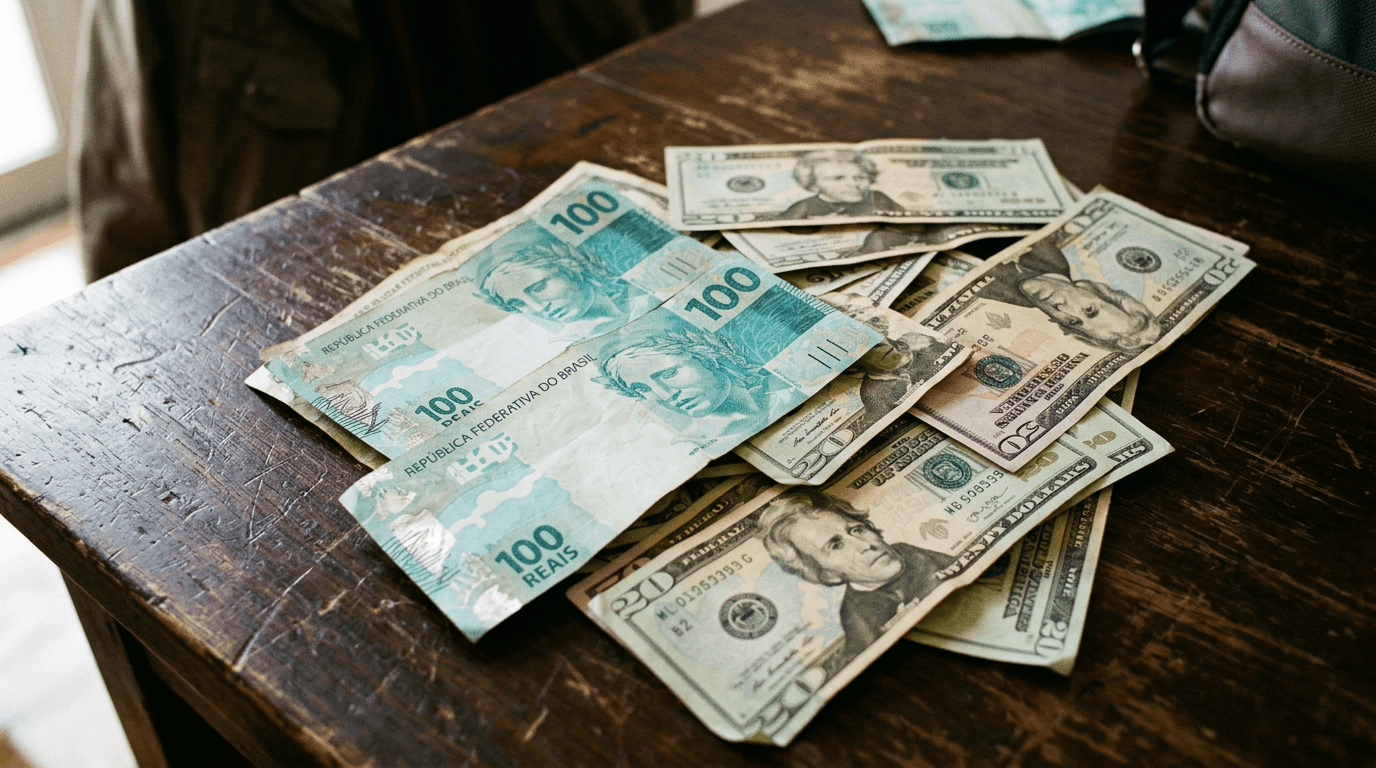
The Brazilian Real (BRL) has recently defied a worldwide trend of US Dollar strength, with the currency's movements now overwhelmingly driven by shifting domestic political calculations ahead of the October presidential election. This 'decoupling' reflects an 'electoral trade' where investors are repositioning based on a perceived change in political risk premium, not on global interest rate differentials. As of midday, the USD/BRL exchange rate stood at 5.0912, moving 0.61% higher today but remaining highly volatile as markets absorb the latest political signals.
This unusual strength in the Brazil Real—at a time when many other emerging market currencies are weakening against the dollar—is being attributed to a fundamental shift in investor perception regarding the country's political risk. Analysts suggest the presidential race has tightened, with polls indicating a potentially more balanced and competitive contest than previously assumed. This increased competition is leading some to price in a higher probability of a new administration, or a continued one with more constrained political capital, that would adopt a more conservative fiscal policy.
For investors, a reduction in the perceived fiscal risk translates directly into a lower national risk premium. This premium is essentially an extra charge—a higher interest rate or a weaker currency—that foreign investors demand to hold a country's assets to compensate for uncertainty, primarily surrounding the government's ability to manage its vast public debt. When this perceived risk declines, the demand for the BRL rises, causing the currency to appreciate.
The market is tracking every signal from the campaign trail, particularly the shifting dynamics between current President Luiz Inácio Lula da Silva, who is seeking a fourth non-consecutive term, and his main challengers. Lula's base-case scenario for investors—a fourth term alongside a divided Congress—could still keep pressure on the Real, given historical concerns over spending and reluctance toward aggressive fiscal cuts. However, any poll showing a material shift in favor of candidates perceived to be more fiscally conservative, such as São Paulo Governor Tarcísio de Freitas or others, tends to immediately compress that risk premium, strengthening the BRL.
Looking ahead, the volatility in the USD BRL rate is expected to continue until the October election. Investors are now heavily focused on the release of new, credible political polls and the sentiment expressed on political betting platforms to gauge the next swing in this election-driven currency dynamic. The ultimate direction of the Brazilian economy and the Brazil Real will be determined not by the US Federal Reserve's actions, but by the ballot box.
What it touches
The heightened focus on Brazil’s political risk premium directly affects traded assets. The USD/BRL exchange rate is a key component in valuing Brazilian assets held by international investors. Any appreciation in the Real, such as the one recently observed, increases the dollar-denominated value of domestic stocks and bonds, including the iShares MSCI Brazil ETF (EWZ). Conversely, today’s slight weakening of the Real (+0.61%) applies modest downward pressure on the returns for foreign holders of these assets.