
Brazil’s Farm Sector Adopts AI and Cloud to Overcome Rural Connectivity Gaps
Brazil's vast agribusiness sector, known as Agro 4.0, is leveraging specialized AI and cloud technology to process data offline and meet rising global demand for sustainability and traceability.
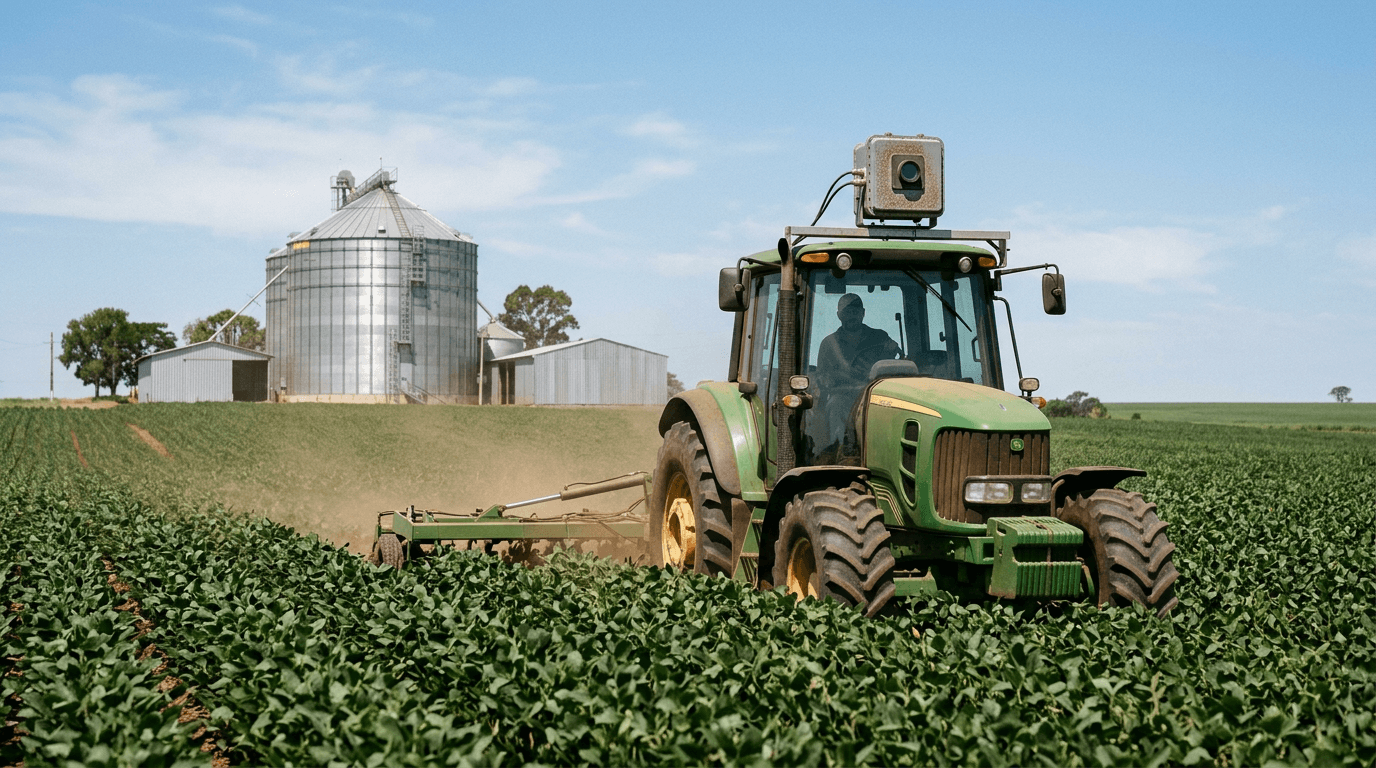
Brazil's massive agricultural sector is moving into a new phase of strategic intelligence, leveraging Artificial Intelligence (AI) and cloud-based systems to boost efficiency and comply with rising global demands for sustainability. This push, often referred to as "Agro 4.0," marks a shift toward data-driven farming, even as much of Brazil’s vast rural interior continues to lack reliable internet access.
The primary challenge in digitizing a country whose grain output is pushing record highs is the perennial issue of rural connectivity. To overcome this, AgTech developers in Brazil are creating cloud-based systems and specialized 'AI Agents' designed to process data from sensors, machinery, and satellite imagery offline. This system allows for critical, real-time analysis of things like soil conditions and machine performance to happen locally on the farm, with the aggregated data syncing to the cloud only when a connection becomes available.
A major driver behind this technological urgency is the global market's increasing focus on environmental stewardship and traceability. Importers, particularly the European Union, are enacting stricter regulations that require digital proof of origin and compliance with ESG (Environmental, Social, and Governance) indicators, such as avoiding links to deforestation. AI is critical to this effort, being deployed to close the "traceability gap" in complex supply chains—for instance, by detecting and mapping the network of silos and storage facilities where product origin is often obscured.
By using AI for real-time analysis and optimization, farmers gain insight into the best time to apply inputs like fertilizer or pesticide, monitor crop health more closely, and even inform strategic business decisions like when to sell commodities. While connectivity remains an obstacle, initiatives like the government’s recent BRL 2.3 billion ($444.2 million) investment plan in AI infrastructure aim to solidify Brazil’s technological base and accelerate the widespread adoption of these solutions.
What it touches
The intense investment in Brazil's AgTech sector creates direct market exposure for investors. This includes specialized agribusiness funds (Fiagros) and IT companies focused on agricultural solutions, as well as firms that provide digital credit and financing to the sector (AgFintechs). The digital transformation directly impacts major publicly traded agribusiness companies that must meet these new efficiency and traceability standards, such as protein giant JBS (JBS N.V.) and farmland/sugar producer Adecoagro (AGRO), which saw their shares trade at $12.59 (-0.24%) and $11.77 (-4.54%) respectively, in recent trading.