
What Brazil's agricultural sector demands from the next president
As Brazil heads to the polls, its powerful agribusiness sector is demanding robust climate insurance, debt relief, and stable credit to counter soaring interest rates and extreme weather.
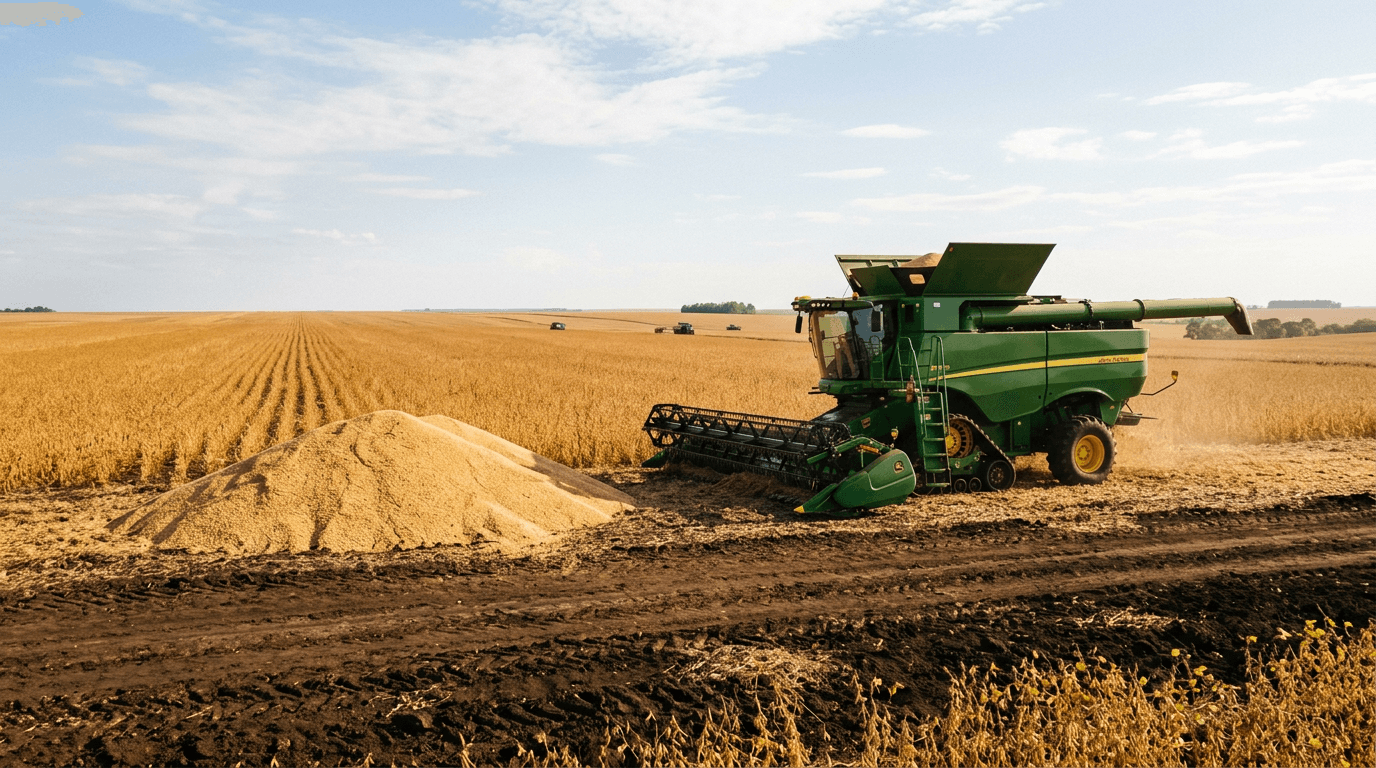
As Brazil's presidential election gets underway with the first round of voting on Sunday, October 4, 2026, the country's massive agricultural sector is presenting the next administration with a steep list of demands. Agribusiness accounts for roughly a quarter of Brazil's economy and represents a dominant force in global food security, making the domestic policy debate highly consequential for international commodity markets. Squeezed by high domestic interest rates and escalating climate disasters, farmers are demanding a permanent federal crop insurance framework, predictable rural credit, and massive investments in logistical infrastructure to remain competitive against the United States.
The demands come at a critical juncture for brazil agricultural production. While the country is expected to harvest a record 6.5 billion bushels of soybeans for the 2025–2026 season, producers are grappling with severe financial strains. Years of elevated borrowing costs under the central bank's high benchmark Selic rate have triggered a wave of judicial recovery filings and debt defaults across the countryside. To mitigate these risks, sector leaders are calling for a substantial expansion of the Rural Insurance Premium Subsidies Program (PSR). Agribusiness lobbies argue that the current federal budget for crop insurance is vastly insufficient to protect growers from the severe droughts and erratic rainfall patterns that have repeatedly devastated harvests in key agricultural states like Rio Grande do Sul and Mato Grosso.
The leading presidential candidates have offered contrasting visions for how to address these systemic challenges. Incumbent President Luiz Inácio Lula da Silva, representing the left-wing Workers' Party (PT), has focused his platform on state-backed family farming and aligning agricultural credit with environmental preservation. Under his administration, the massive Plano Safra—the government's primary rural credit mechanism—has increasingly tied subsidized interest rates to low-carbon farming practices and compliance with the Forest Code. Lula's campaign supports targeted debt restructuring but insists on distinguishing between different classes of borrowers, prioritizing smallholders and family farms.
Conversely, the opposition platforms, led by conservative Senator Flávio Bolsonaro of the Liberal Party (PL) and Ronaldo Caiado of the Social Democratic Party (PSD), are advocating for deregulation, stronger property rights, and private market credit solutions. Caiado has pledged to aggressively scale up the federal crop insurance subsidy to 4 billion reais ($772 million) by the end of his term, while criticizing the current administration's handling of farm debt. Bolsonaro has campaigned on streamlining the Plano Safra, expanding private securitization tools, and easing environmental licensing to lower production costs, while promising not to establish any new Indigenous land demarcations.
For global commodity buyers, the outcome of this political tug-of-war will shape the future of brazil agricultural exports. While a deregulatory approach under an opposition presidency could lower immediate operating costs for large-scale farmers, international analysts warn it could trigger a backlash from European and North American buyers increasingly sensitive to deforestation in the Amazon. Conversely, while Lula's green transition policies satisfy international environmental standards, local producers argue that overly rigid compliance rules, combined with a lack of robust state-funded safety nets, threaten the financial viability of the very farms that feed the world.
What it touches
The political debate over agricultural credit and environmental policy directly impacts major publicly traded agribusiness firms. Companies highly exposed to these policy shifts include global grain traders and meatpackers such as JBS (JBSS3), Marfrig (MRFG3), and SLC Agrícola (SLCE3), whose supply chains and international market access depend heavily on domestic environmental compliance and credit availability. Additionally, major agricultural machinery manufacturers and fertilizer importers are sensitive to changes in the annual Plano Safra credit allocations.