
Tyson Foods and JBS face margin risk as China floods Middle East
China's surging poultry exports are undercutting traditional suppliers in the Middle East, threatening margins for major US and Brazilian meatpackers.
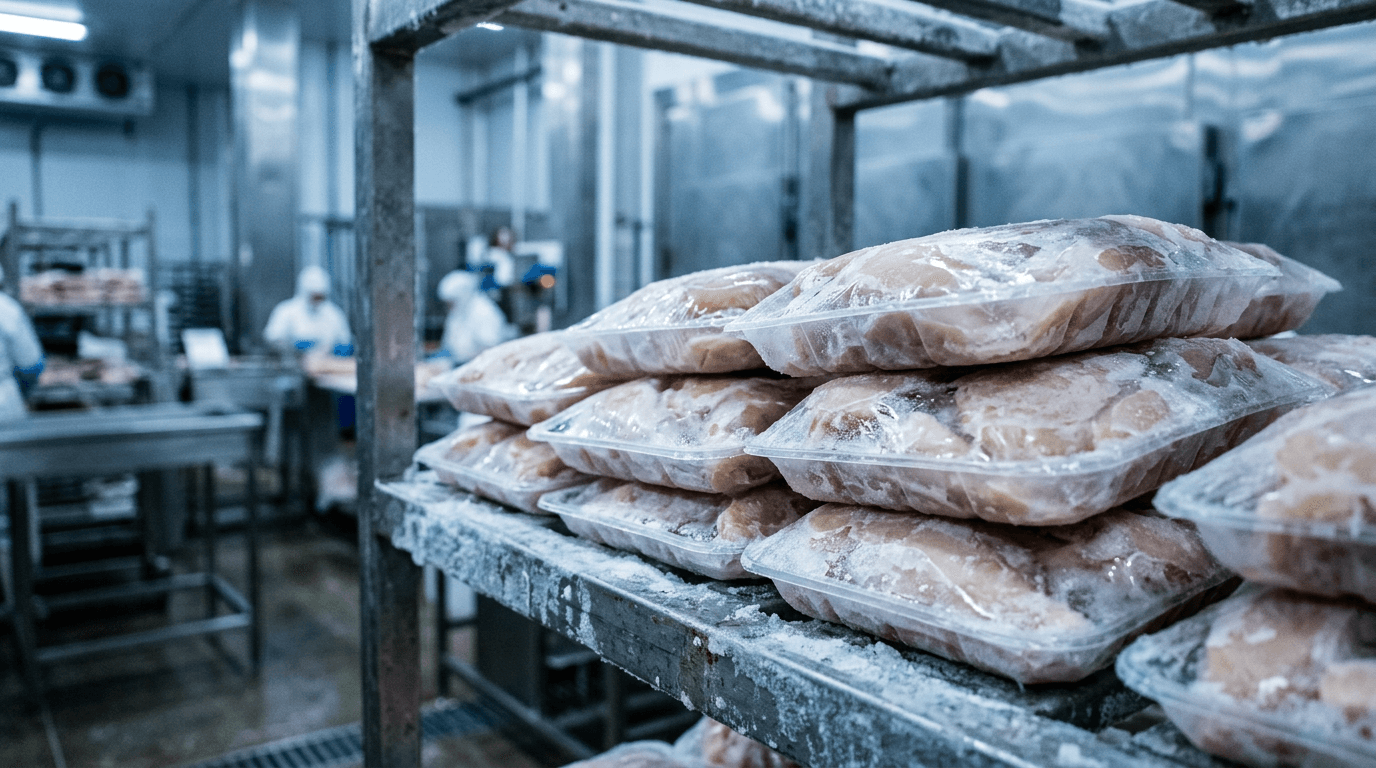
American retail investors holding shares of major global food companies may soon see pressure on poultry margins from an unexpected source. A massive domestic surplus of chicken in China is spilling over into lucrative international markets, driving down prices and directly challenging Western and South American meatpackers in regions they once dominated.
The shift is hitting the Middle East first. According to S&P Global Commodity Insights data from July 2026, Chinese poultry exports to Middle Eastern markets more than doubled year-over-year. In June 2026 alone, China shipped 12,066 metric tons of chicken to six key Gulf nations, including Kuwait, Qatar, the United Arab Emirates, and Saudi Arabia. This influx is creating structural pricing risks, with Chinese skin-on boneless chicken breast offered at $1,300 per metric ton FOB China in July 2026—undercutting Brazilian boneless skinless breast by a massive $1,400 per metric ton.
This rapid expansion is backed by a massive increase in Chinese production capacity. The U.S. Department of Agriculture (USDA) Foreign Agricultural Service forecasts that China’s poultry production will rise to 17.3 million tons in 2026, pushing it past Brazil to become the world's second-largest chicken meat producer behind the United States. Driven by expanding integrated producers and government subsidies, China's share of global chicken exports is expected to reach 9.5% in 2026, up from about 3% less than a decade ago, establishing it as the world's third-largest exporter.
While Brazil remains the global export leader with a 35% market share and the US holds 20%, according to USDA estimates, the sheer volume of cheap Chinese chicken breast is targeting the exact premium markets that Western companies rely on for high-margin growth. In Saudi Arabia, where Chinese imports were virtually zero in June 2025, shipments reached 567 metric tons by June 2026.
For global meatpackers, this means the era of easily raising prices to offset high logistics and feed costs in the Middle East may be coming to an end. As Chinese integrated poultry giants continue to build out overseas cold chains and diversify their customer bases, Western and Brazilian operators will have to choose between defending their market share through aggressive price cuts or surrendering volume to cheaper Asian competitors.
In your brokerage app
Investors holding shares of US-based Tyson Foods, which is listed in New York, or Brazilian meatpacking giant JBS, which operates globally and is also traded via US brokerages, should monitor how this intensifying competition affects international poultry margins. These stocks are widely held in broad agribusiness exchange-traded funds, such as the VanEck Agribusiness ETF, which tracks global livestock and agricultural companies.