
Rio Grande do Sul Allows Early Soybean Planting, Voids Federal Crop Insurance for Producers
Brazil's southernmost state, a major soybean producer, will allow farmers to plant soybeans two weeks early, but those who participate will forfeit coverage from the federal agricultural risk guarantee program.
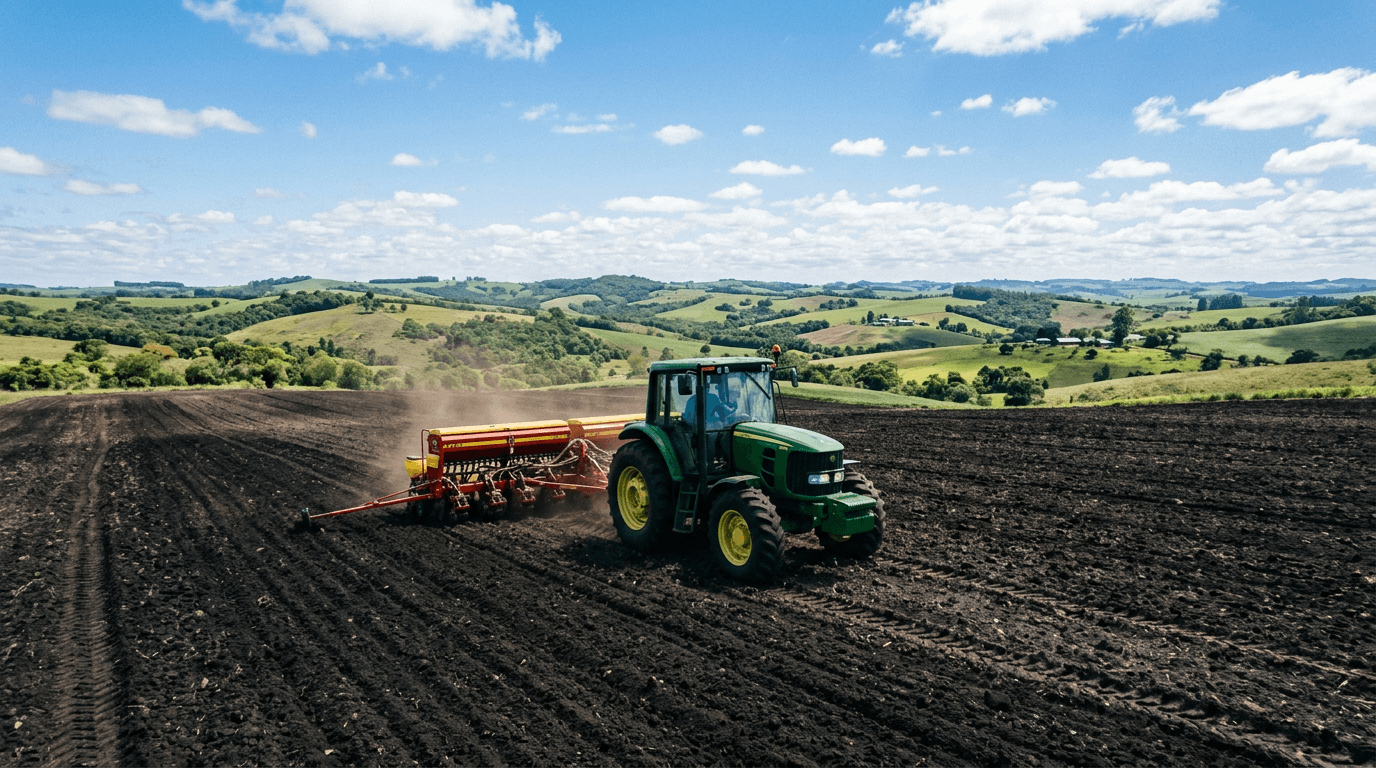
Soybean producers in the key Brazilian agricultural state of Rio Grande do Sul (RS) may begin planting their 2026/27 crop on September 15, two weeks ahead of the official October 1 start date, but must forfeit all federal crop insurance coverage for those early areas. The decision by the state's Secretariat of Agriculture, Livestock, Sustainable Production and Irrigation (Seapi) allows for an immediate shift in the planting calendar for a major global supplier, but only if producers take on the full climatic risk themselves.
The early planting authorization is a direct response to recent adverse weather conditions that have complicated crop establishment in past harvests, particularly in the Santa Rosa region. By moving the sowing date forward, producers aim to better time their crops to avoid poor weather later in the cycle. The move, however, puts fields outside the parameters of the Agricultural Zoning for Climatic Risk (Zarc), thereby invalidating coverage from the Agricultural Activity Guarantee Program (Proagro), Brazil's major federal risk guarantee program for farmers.
The state is also imposing a critical phytosanitary requirement: any farmer seeking to plant early must first submit a mandatory management plan to combat Asian Soybean Rust. The disease, caused by the fungus Phakopsora pachyrhizi, is considered the most serious threat to Brazil's soybean industry. The required plan mandates integrated strategies, such as the rotation of fungicides and the use of multi-site fungicides, to mitigate the risk of disease spread and resistance.
The state's move effectively treats the early planting as a pilot program. Seapi and Emater/RS, the state's rural extension service, will closely monitor the crops sown under this new rule. The data collected will be used to assess the impact of early sowing on yields and pest control, ultimately determining the relevance of a permanent calendar change or the adoption of distinct planting zones for the state’s future soybean crops.
What it touches
The change in the planting timeline in a state that is a key component of Brazil’s massive soybean output introduces a new supply-side variable to the global soybean supply chain. The decision shifts weather and disease risk from the federal government to individual producers, a risk that market participants will watch closely as the earliest-planted fields in Rio Grande do Sul become established and move toward maturity.