
Record El Niño Divides Brazil: Drought and Floods Threaten 2026/27 Soybean and Corn Crops
A potentially record-strong El Niño is creating a severe thermal contrast across Brazil, raising fears of planting delays and lower yields for key agricultural commodities like soy, corn, and coffee in the 2026/27 season.
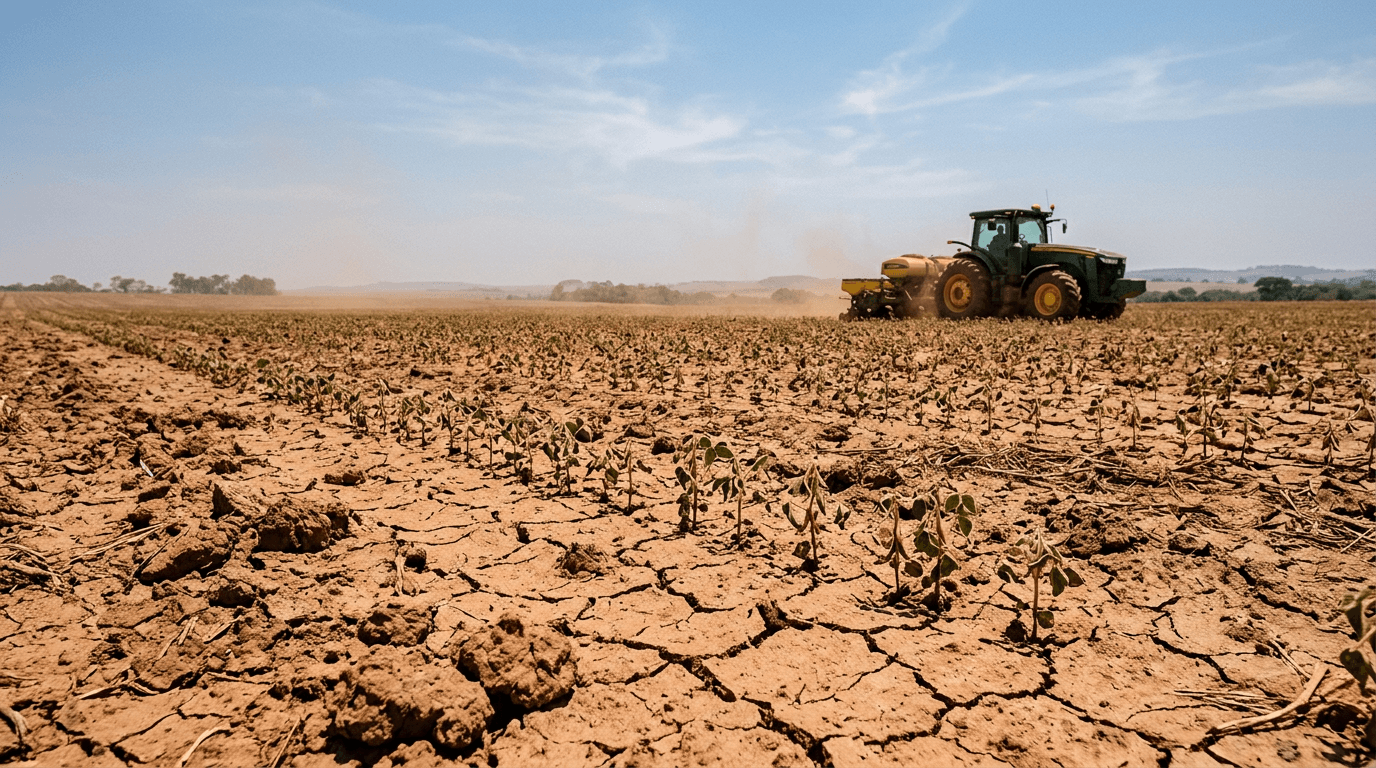
A potentially record-strong El Niño event is creating a dangerous thermal and hydrological split across Brazil, threatening a fundamental disruption to the 2026/27 agricultural planting and harvest cycle for global commodities including soybeans, corn, and coffee. Forecasters expect a severe contrast, with unseasonal heat and drought pushing temperatures toward 42°C in the North and Center-West, while the South braces for excessive rainfall, hail, and flooding that could exceed 150mm. The U.S. National Oceanic and Atmospheric Administration (NOAA) places a high probability on the El Niño persisting into early 2027, with a high chance it could reach a "very strong" or even "record-setting" intensity during the critical October to December planting window.
This "thermal contrast" creates opposite but equally damaging risks for Brazil's agricultural heartland. In the Center-West, which includes the massive grain-producing state of Mato Grosso, the typical El Niño pattern reduces rainfall, creating dry spells that directly delay the crucial soybean planting season. Data from key municipalities already show concerning conditions, with Sorriso in Mato Grosso recording only 9.3mm of rain in the last seven days and Luís Eduardo Magalhães in Bahia showing a scant 1.4mm. Delays in planting soybeans push the harvest later, in turn compressing the planting window for the high-volume second-crop safrinha corn, exposing it to greater risk of drought and lower yields later in the season.
Conversely, the south of the country is already receiving the heavy moisture typical of a strong El Niño. Excessive rainfall across states like Paraná and Rio Grande do Sul is raising the risk of waterlogging, fungal diseases, and hindering the preparation for the impending soybean crop. Cascavel, Paraná, for instance, has recorded 53.4mm of rain in the last seven days. The extreme weather pattern is not only impacting staple grains, but also perennial crops: the dry heat stress in the Southeast and Northeast poses a significant threat to Arabica coffee supply, where inadequate or erratic rainfall can cause flower abortion and uneven fruit setting, directly affecting the 2027 harvest.
Researchers at Embrapa, Brazil’s state-run agricultural research corporation, are urging producers to use the short window for early planning and adopt practices that mitigate risks like increased disease pressure and soil erosion. The consensus among analysts is that weather-driven supply shocks will be the primary factor in Brazil's 2026/27 production outlook. Producers will be watching the weather forecasts week-by-week, as the availability of rain in the coming weeks will be critical for determining the timing and pace of soybean planting.
What it touches The supply risks created by the severe El Niño weather pattern directly expose global commodity futures, particularly for Soybeans, Corn, and Coffee. Soybean futures are currently trading at 1303.5 ¢/bu, Corn at 527.5 ¢/bu, and Coffee (C) is down slightly at 277.2 ¢/lb. Local Brazilian agricultural companies and processors are exposed to volume and quality risks, with the Brazilian real trading at R$5.1569 to the U.S. dollar, up 0.35% as the country’s agricultural outlook takes on increased uncertainty.