
Key Brazilian Agribusiness Hub Faces Dry Spell, Threatening Start of New Soybean Crop
A five-day dry spell in Luís Eduardo Magalhães, Bahia, is raising concern over the start of Brazil’s 2026/27 soybean planting season in a critical agricultural region.
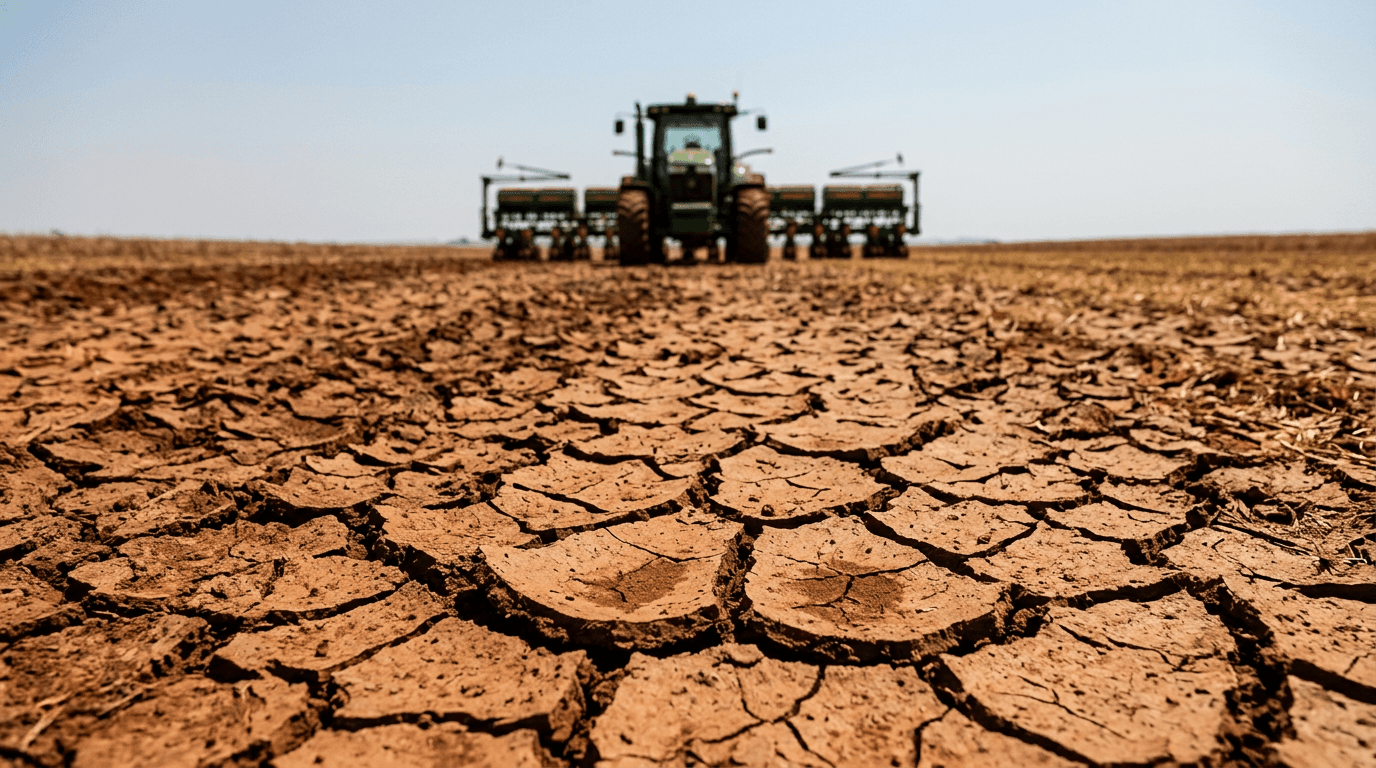
The start of Brazil’s crucial 2026/27 soybean planting season is under threat in one of the country's most vital agricultural centers as a lack of rain stalls field work. Luís Eduardo Magalhães in the state of Bahia, often called the "Capital of Agribusiness," has registered only 6.6 millimeters of rain over the last seven days and has gone five consecutive days without significant precipitation, raising the risk of significant planting delays. This dry spell is hitting as farmers in the region prepare to sow the world's largest Brazil soybean crop, a delay that could compress the growing cycle and lower yield potential.
Luís Eduardo Magalhães, or LEM, is a centerpiece of Brazil's burgeoning agricultural frontier, part of the MATOPIBA region that also covers parts of Maranhão, Tocantins, and Piauí. The city's economy is almost entirely built on technology-driven, large-scale farming, making it a critical source for Brazil soybean production and exports. Unlike more southern states, the planting window in Bahia begins with the arrival of the wet season, and farmers generally hold off on sowing until the soil has sufficient and consistent moisture to ensure seed germination. The current drought conditions stand in sharp contrast to the more favorable early-season rain seen in other areas, such as Cascavel, Paraná, which recorded 41.2mm over the same seven-day period.
A planting delay now, at the very beginning of the season, can have a domino effect on the entire agricultural cycle for the producers who supply the global market. A shortened soybean planting window means the main crop will be harvested later, pushing back the sowing of the second-season safrinha corn—a vital component of Brazil's overall grain output. Corn planted too late faces a higher risk of drought during its crucial development stages, amplifying the overall crop stress for Brazilian farmers.
Agricultural analysts and producers are now intensely focused on long-range forecasts, which may determine if the early-season dry patch develops into a more prolonged issue, similar to the erratic weather patterns of previous years. Consistent, establishing rainfall is required within the next few weeks for the MATOPIBA region to avoid a premature end to the planting window and maintain its projected record-setting output for the 2026/27 harvest.
What it touches
The prospect of a delayed Brazil soybean crop start in a key producing region can tighten global supply expectations and impact futures trading. Soybean futures currently trade at 1319.0 cents per bushel, and any sustained weather-related concerns typically pressure prices higher, while the Brazilian currency, the Real, is trading at 5.1985 to the U.S. Dollar.