
Key Brazil Soybean Region Hits Six Dry Days, Raising Early Crop Stress Alert
A dry spell in Luís Eduardo Magalhães, the "Wall Street of Soybeans" in Bahia, is stressing the start of the 2026/27 Brazil soybean planting campaign.
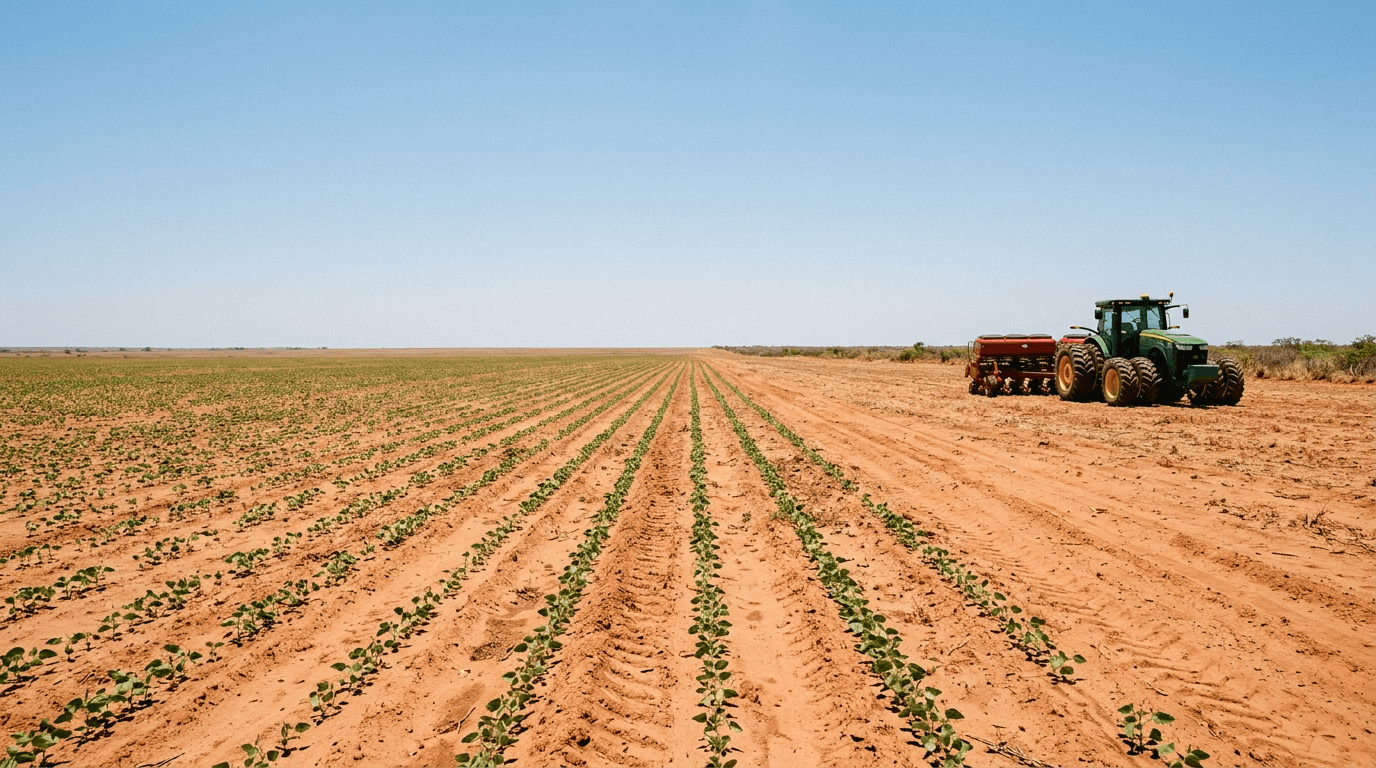
The start of Brazil's 2026/27 Brazil soybean production cycle is facing immediate weather risk as the critical farming hub of Luís Eduardo Magalhães in Bahia recorded six consecutive dry days and only 3.0 millimeters of rain over the past week. The combination of prolonged dry conditions and sparse rainfall is raising an early stress alert for the newly planted or preparing acreage in one of the country's most mechanized agricultural frontiers. This dry start directly follows the official opening of the planting window for the season, which is already shadowed by a strengthening El Niño weather pattern that historically brings drier and hotter weather to the northern and central farming regions.
Luís Eduardo Magalhães, often referred to as the “Wall Street of Soybeans,” is a principal city in the Matopiba region of the Cerrado biome, where modern agribusiness dominates the landscape. The area's importance to the global market is immense, though it is vulnerable to the dry conditions that are already manifesting. By contrast, other major producing areas show better conditions: Sorriso in Mato Grosso reported 31.3mm of rain over the last seven days, while Rio Verde in Goiás saw 25.6mm. The acute lack of moisture in Bahia, however, suggests the predicted El Niño effects—which analysts expect will favor southern Brazil but bring drought to the central states—are beginning to materialize earlier than many had hoped.
The main concern for farmers in Bahia and across the Matopiba region is that the current dry spell could be a prelude to an intensely hot and dry October and November, which is a key planting and early development window for the Brazil soybean crop. Some experts have warned that a misleading early rain, followed by a prolonged drought, could force expensive replanting or significantly curb initial yields. The high cost of inputs and credit are already straining farmer margins this year, making weather-related losses particularly painful as they gear up for the 2026/27 season.
The current situation is not yet critical for the overall crop, as the vast majority of Brazil soybean harvest acreage is typically planted in the coming weeks and months. However, the data from Bahia provides an essential early indicator of the soil moisture deficit that could accelerate under the influence of the strong El Niño. Analysts are closely watching weekly weather forecasts, as a significant shift in rainfall patterns will be needed within the next two weeks to alleviate the current stress and ensure a successful start to the planting season.
What it touches The risk to the newly planted Brazil soybean crop is providing support to the global commodity market. Soybean futures (¢/bu) were trading 0.32% higher at 1314.5, reflecting tighter potential supply. Meanwhile, the Brazilian currency, the Real, weakened slightly to 5.0956 per U.S. Dollar (+0.20%).