
Global Beef Market Braces for Squeeze as China Slams 67% Tariff on Brazil
Brazil has exhausted its annual beef quota to China, triggering a steep 55% surcharge that raises the total tariff to 67% and forces exporters to redirect supply.
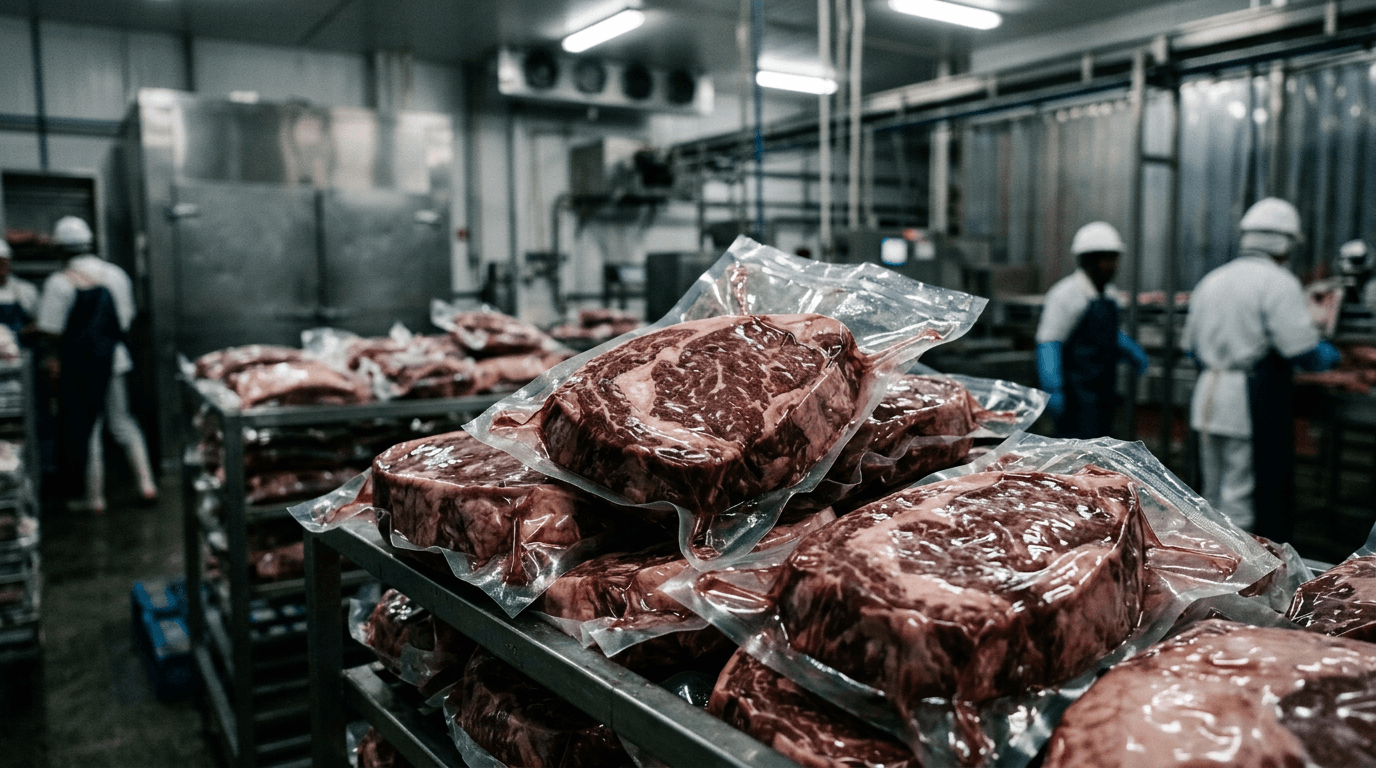
Global food supply chains and meatpacking stocks are bracing for a major realignment as the world’s largest beef exporter gets hit with a massive trade barrier in its primary market. Beginning October 1, 2026, shipments of Brazilian beef to China that exceed the annual low-tariff quota are subject to an additional 55% surcharge. Combined with China's standard 12% most-favored-nation duty, over-quota Brazilian beef now faces a total tariff of 67%.
The tariff hike was triggered after Brazil officially exhausted its annual low-tariff quota of 1.106 million tonnes of beef on September 29, 2026, according to data from China's General Administration of Customs. China's Ministry of Commerce announced the surcharge on September 30, 2026, effectively shutting Brazilian meatpackers out of their largest market for the final three months of the year. The safeguard program was originally introduced by Beijing in early 2026 to protect its domestic cattle producers from falling prices and oversupply amid a slowing domestic economy.
The sudden trade barrier is forcing major Brazilian beef exporters to quickly redirect excess volumes to alternative international markets. Exporters are shifting their focus to the United States, Chile, and Russia to offset the Chinese slowdown. This pivot comes after a high-stakes diplomatic effort failed; Brazilian President Luiz Inácio Lula da Silva had announced a bilateral agreement on September 21, 2026, to utilize Uruguay's unused Chinese quota allocation, but Beijing ultimately rejected the arrangement.
The immediate impact of the quota exhaustion has already registered in trade volumes. The Brazilian Association of Meat Exporting Industries (ABIEC) previously estimated that the 2026 quota would cover only about 65% of what Brazilian plants shipped to China in 2025, when China purchased 1.68 million tonnes of Brazilian beef. With the high-tariff wall now active, ABIEC projects that Brazil’s total beef export volumes will fall by approximately 10% in 2026.
For global livestock markets, this massive redirection of supply is expected to increase competition and pressure wholesale beef prices in alternative destinations, particularly the United States. U.S. domestic producers may face an influx of lean Brazilian beef imports, which could temporarily cap gains in domestic live cattle futures.
In your brokerage app
Investors holding global agricultural and meatpacking equities can track this development through JBS S.A. and Minerva S.A., both massive Brazilian meat exporters listed in New York as American Depositary Receipts, as well as the iShares MSCI Brazil ETF, which holds significant exposure to the country's dominant agribusiness sector.