
Dry Spell Hits Brazil’s Key Soybean Belt, Threatening 2026/27 Crop Planting Window
Key agricultural regions in Goiás and Bahia are facing drought conditions right at the start of the soybean planting season, raising crop-stress concerns.
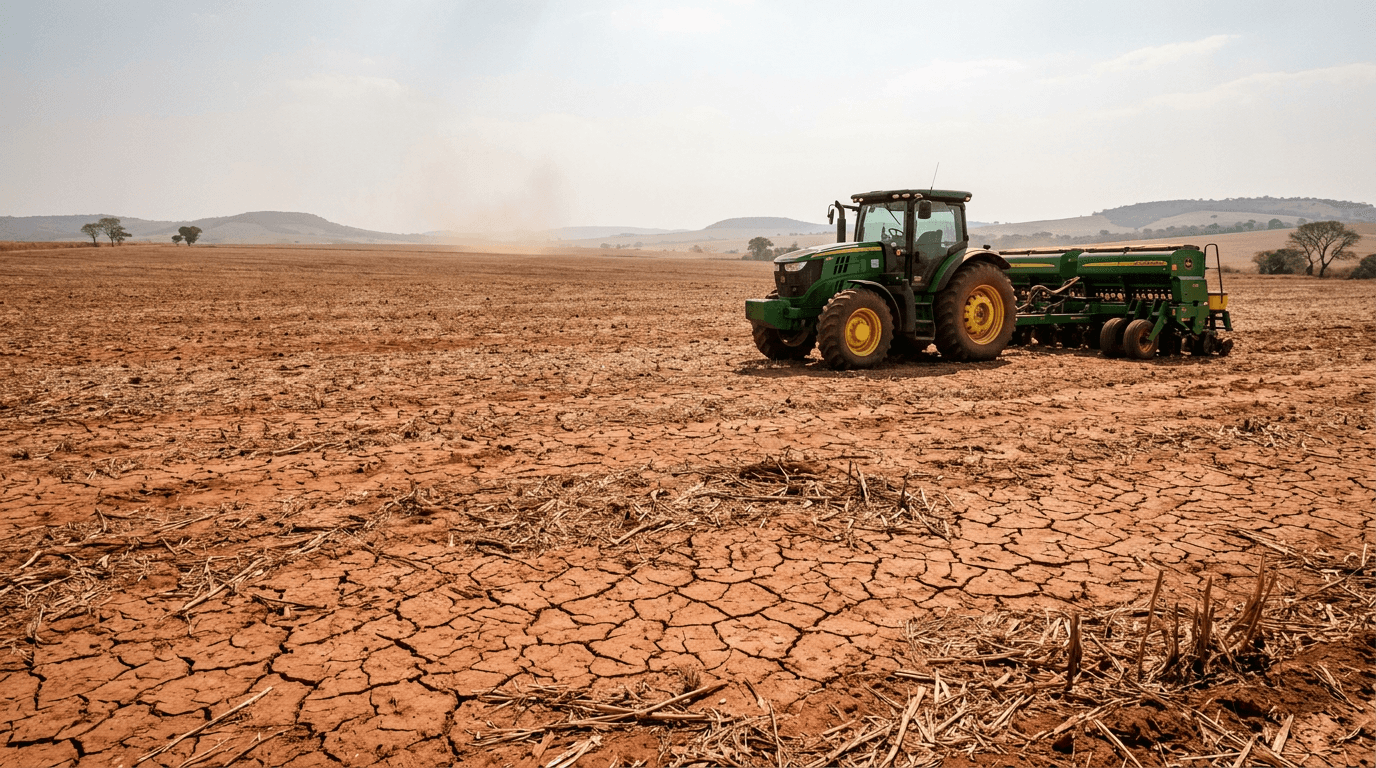
A critical dry spell is raising crop-stress risk for Brazil’s 2026/27 soybean crop, as key producing regions in the Central-West and Northeast receive insufficient rainfall to support the start of planting. The cities of Rio Verde in Goiás and Luís Eduardo Magalhães in Bahia, both major hubs in Brazil’s vast soybean belt, have registered five consecutive dry days or more, forcing farmers to delay sowing that should be taking place now. Rio Verde, a capital of agribusiness in the state of Goiás, recorded only 28.2 millimeters of rain over the last seven days, while Luís Eduardo Magalhães—part of the critical Matopiba agricultural frontier—saw a mere 11.7 millimeters in the same period.
The dry conditions are particularly concerning because they align with the official start of the soybean planting window, which for Goiás began on September 25 and for parts of Bahia, including the western region, began earlier in mid-September. The bulk of Brazil’s national crop is typically sowed between mid-September and the end of November, but insufficient soil moisture prevents proper seed germination. This delay is widely attributed to a potentially strong El Niño weather pattern, which forecasts suggest will bring below-normal rainfall to central and northeastern Brazil during this critical planting phase.
The states of Goiás and Bahia are vital to Brazil's status as the world’s top soybean exporter, together accounting for a significant portion of the national output. For a foreign reader, a crisis here is a supply risk to the global market. A delay in planting not only threatens the final yield of the soybean harvest but also tightens the planting window for the country’s crucial second-crop corn, known as safrinha, which is sowed immediately after the soybeans are harvested. If the soybeans go in late, the safrinha corn crop—which makes up roughly 75% of Brazil’s total corn production—faces greater exposure to dry weather and frost as it matures.
With the planting season now underway across the country, farmers and analysts will be watching weather forecasts closely for the first half of October. Widespread, sustained rain is necessary to recharge soil moisture and allow dryland planting to begin in earnest. The uncertainty surrounding the crop's development, coupled with high global commodity prices, is keeping the new season under tight scrutiny.
What it touches The threat of a diminished or delayed Brazilian soybean harvest often pushes global prices higher. As of today, soybean futures are trading at 1,319.0 cents per bushel, up 0.11%. The Brazilian currency, the Real, is trading at R$5.1985 to the U.S. dollar, an increase of 0.06% on the day, which helps insulate local producers from rising input costs but does little to alleviate the on-the-ground reality of dry soil.
Latest articles
Markets · PRO
Global Speculators Make Record Bet on Soybean Prices to Rise, Defying Brazilian Supply Glut
Published
NASDAQ · PRO
Brazilian Court Battle Over Protected Lands Hits Sigma Lithium, Sending Stock Down 4%
Published
Markets · PRO
Lula Reassures Business Elite on Fiscal Stability Days After Calling Surplus 'Nonsense'
Published