
Chinese Poultry Surge Threatens Brazil's Global Export Dominance
China's domestic chicken production grew over 9% in early 2026, creating an export surplus that directly challenges Brazilian meatpackers in global markets.
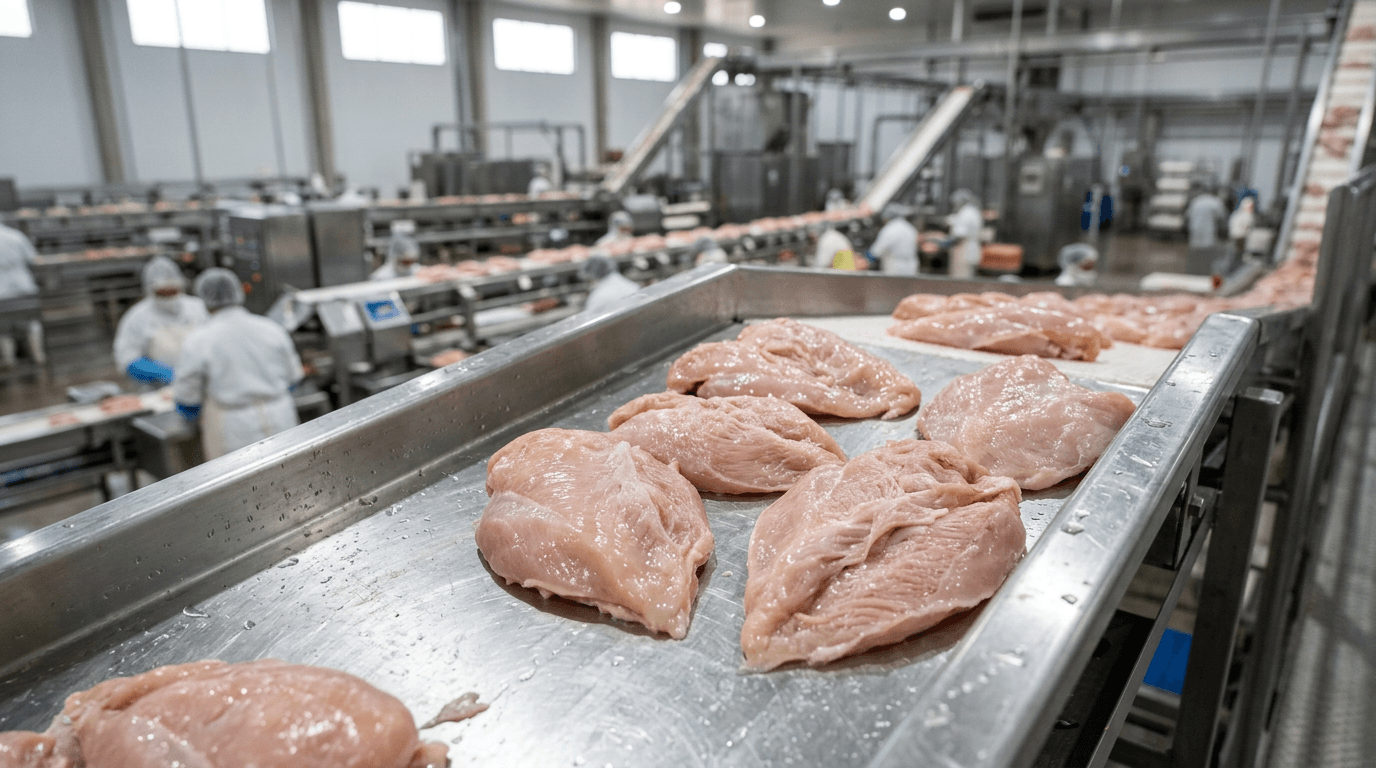
A quiet shift in global grocery supply chains is threatening to squeeze the profit margins of the world’s largest meat processing companies. China, traditionally one of the most lucrative export destinations for Western agricultural conglomerates, is rapidly scaling up its own domestic poultry production. This domestic expansion is leaving the country with a massive surplus of meat, turning a major customer into an aggressive global competitor.
According to data compiled by Rabobank, a Dutch multinational banking group specializing in food and agriculture, China's chicken meat production grew by more than 9% in the first half of 2026 compared to the same period in 2025. This growth built upon a 7% production increase recorded in 2025. Because Chinese consumers heavily favor dark meat cuts like thighs and wings, this production spike has left local processors with an enormous surplus of breast meat, which they are now aggressively exporting to international markets.
This export push directly challenges Brazil, the undisputed heavyweight of the global poultry trade. While Brazil exported approximately 5.3 million tons of chicken in 2025—more than five times China's export volume—the sudden influx of cheaper Chinese poultry is beginning to crowd key battleground markets. Rabobank projections show that China’s rising export volumes of in natura (raw) chicken cuts are now competing head-to-head with Brazilian exporters across price-sensitive markets in Asia, Africa, and the Middle East.
Despite emerging as a rival, China remains a vital customer for Brazilian agricultural trade. Between January and September 2026, China imported 420.4 thousand tons of Brazilian chicken, worth $1.15 billion. This dual dynamic of "customer and competitor" complicates the outlook for major South American meatpackers, who rely on high-volume Chinese demand to support their global margins.
The geopolitical and trade policy landscape adds another layer of risk. While Brazil's industry association, the ABPA, maintains that Brazilian poultry remains the most competitive in the world due to strict sanitary controls and lower grain costs, any long-term pricing pressure from Chinese exports could impact global meat valuations.
In your brokerage app
For retail investors, this shifting dynamic directly impacts major meatpacking stocks listed in New York. Brazil-based global food giants BRF S.A. and JBS S.A. (which operates in the US via over-the-counter shares) are highly exposed to global poultry pricing. Investors can track these dynamics through BRF S.A., which is listed in New York, or through diversified agribusiness exchange-traded funds that hold global consumer staples.