
Brazilian Court Weighs Rice Environmental Rules That May Raise Costs
On October 21, 2026, Santa Catarina's top court will rule on reinstating environmental licensing for rice farming, a move sector leaders warn could hike production costs.
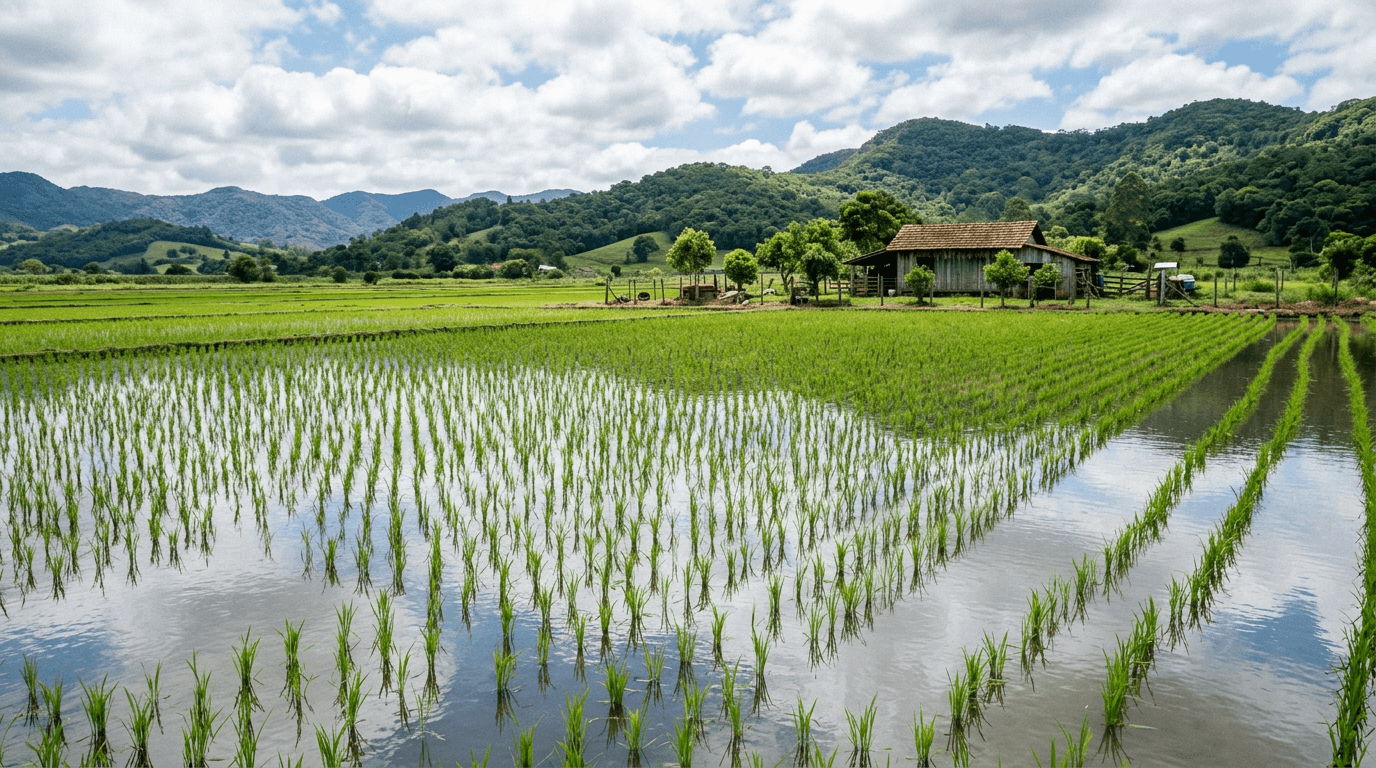
The cost of staple foods is facing a new regulatory hurdle that could soon ripple through agricultural supply chains and consumer prices. On October 21, 2026, the Court of Justice of Santa Catarina (TJSC) is scheduled to rule on whether to reinstate strict environmental licensing requirements for local rice farming. Agribusiness associations warn that restoring these mandates will dramatically increase bureaucratic hurdles and operational expenses for growers.
The legal battle centers on Santa Catarina, Brazil's second-largest rice-producing state. During the 2024/2025 crop cycle, local farmers harvested approximately 1.3 million tons of rice across nearly 6,000 rural properties, according to state agricultural data. The state's environmental council, CONSEMA, had previously exempted flood-irrigated rice cultivation and irrigation canal construction from the licensing process under Resolution 250/2024. However, the Public Prosecutor's Office of Santa Catarina (MPSC) challenged this exemption, arguing that flood irrigation requires rigorous oversight to prevent water contamination.
Local agricultural leaders are actively lobbying the court to reject the prosecutor's lawsuit, known as Direct Action of Unconstitutionality (ADI) No. 5038065-28.2026.8.24.0000. State lawmaker Zé Milton, who coordinates the state's Rice Production Chamber, has scheduled an October 20, 2026, meeting with TJSC President Rubens Schulz to outline the economic risks. Industry groups, including the Federation of Agriculture and Livestock of Santa Catarina (FAESC) and the Rice Industry Union (SindArroz-SC), emphasize that about 82% of the state's rice farms are small, family-run operations that lack the administrative budget to absorb complex environmental licensing fees and consulting costs.
Environmental Protection Versus Producer Margins
The prosecution's push for licensing is driven by environmental concerns over intensive water use. The MPSC cited a multi-year study showing pesticide residues in the water supply of 52% of Santa Catarina's municipalities between 2018 and 2023. Environmental advocates argue that formal licensing is a necessary preventive measure to protect public health and regional watersheds.
Conversely, farmers argue they are already heavily regulated through existing frameworks. Growers must comply with the federal Rural Environmental Registry (CAR), secure water-use permits, and obtain agronomic prescriptions for pesticide applications. Adding an overarching environmental license, they argue, duplicates existing paperwork without providing clear ecological benefits. Furthermore, local producers are already operating under tight margins, with production costs estimated between 75 and 78 reais per 50-kilogram bag, while market sales prices hover between 55 and 65 reais.
The court's decision on October 21, 2026, will serve as a key indicator of political and regulatory risk for the agricultural sector. A ruling in favor of the prosecutors could establish a legal precedent, prompting other major agricultural states in Brazil to impose similar bureaucratic requirements on grain production.
In your brokerage app
While individual family farms in southern Brazil are not publicly traded, broader regulatory shifts in the country's agricultural sector directly influence the performance of Brazilian equities. Investors tracking these regulatory risks can monitor the iShares MSCI Brazil ETF, an exchange-traded fund listed in New York that tracks the investment results of an index composed of Brazilian equities, exposing holders to the country's macroeconomic and regulatory environment.