
Chicago Soybean Futures Face Supply Risks From Dry Spell in Brazil
A five-day dry spell in Rio Verde, a major hub in Brazil's soybean belt, threatens soil moisture and raises crop-stress risks as planting gets underway.
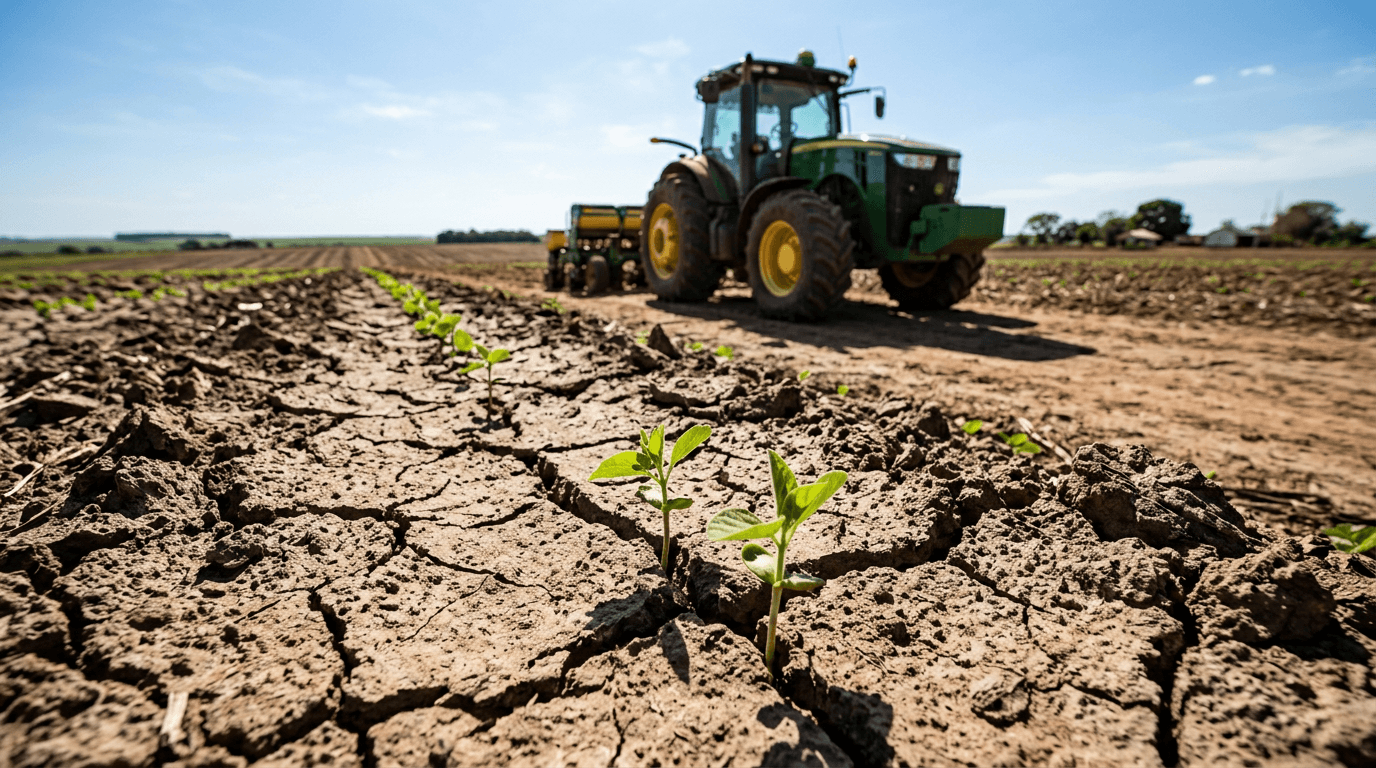
Global commodity markets are closely watching South American weather as dry conditions threaten to disrupt the early stages of the world's largest oilseed crop. On the Chicago Board of Trade, soybean futures traded at 1,261.25 cents per bushel on October 13, 2026, holding steady but highly sensitive to any supply disruptions that could drive up feed and food manufacturing costs in the United States.
The immediate threat is centered in Rio Verde, a key agricultural municipality in the central Brazilian state of Goiás. According to regional weather data, Rio Verde has experienced 5 consecutive dry days, registering just 11.7 mm of rainfall over the last week. This localized dry spell is raising concerns about soil moisture depletion in a region critical to the overall success of the country's harvest.
While Brazil's national soybean planting progress reached 15.6% of the projected area by October 9, 2026—slightly ahead of last year's pace according to data released on October 15, 2026, by the National Supply Company (Conab)—the margin for error is slim. Farmers are facing a highly cautious planting season. Conab's October 15 report projects that Brazil's total soybean planting area will expand by just 1.4% to 49.3 million hectares for the 2026/27 cycle, marking the slowest acreage expansion in two decades due to high production costs and tight margins.
High Stakes for Yield and Double-Cropping
Because Brazilian growers cannot rely on aggressive land expansion this year, global supply projections depend almost entirely on achieving high yields. Extreme heat and dry pockets, like those seen in Rio Verde, threaten to stress newly sown seeds and delay germination.
Furthermore, any delay in the primary soybean planting window directly threatens Brazil's second crop of the season. If soybeans are planted late, the subsequent "safrinha" corn crop—which is planted immediately after the soy harvest—will be pushed outside its ideal weather window, exposing it to dry winter conditions in early 2027.
Market participants are also keeping a close eye on speculative positioning. According to the Commodity Futures Trading Commission (CFTC) Commitment of Traders report for the week ending October 13, 2026, non-commercial managed money held 356,266 long contracts compared to 85,167 short contracts in Chicago soybeans. This heavily long positioning indicates that institutional investors are heavily exposed to upward price movements should the dry weather in central Brazil persist.
In your brokerage app
For retail investors looking to track the health of South American agricultural production, the Teucrium Soybean Fund is an exchange-traded product listed in New York that tracks Chicago soybean futures. Because the fund holds underlying futures contracts, its value is directly exposed to price swings driven by weather developments in major Brazilian agricultural hubs like Rio Verde.